


Blog
Why is the Mitsubishi HC-KFS43 Servo Motor a Market Standard?

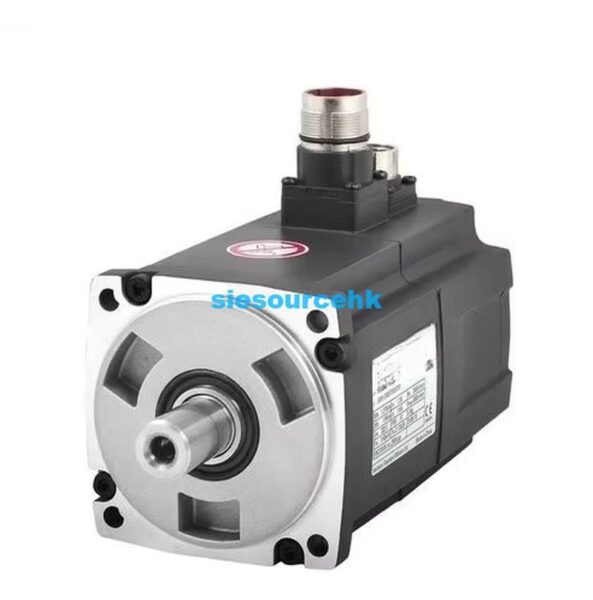
In the highly specialized domains of electronic component manufacturing and semiconductor equipment, motion control is synonymous with precision. The performance of every machine, from wafer handlers to automated inspection systems, hinges on the speed, accuracy, and repeatability of its motion components. Among the vast array of industrial servos, the Mitsubishi servo motor HC-KFS43 stands out as a component frequently specified by engineers for its reliable, compact, and high-response capabilities. This motor, part of Mitsubishi Electric’s renowned MELSERVO system, represents a crucial link in the chain of high-speed automation. For equipment builders, maintenance professionals, and procurement specialists, understanding why the Mitsubishi servo motor HC-KFS43 remains a market standard is key to ensuring machine uptime, minimizing maintenance costs, and maintaining the critical tolerances required in micro-scale production. This article explores the core features and strategic value of this specific motor in demanding high-tech applications.
Technical Excellence in a Compact Design
The enduring appeal of the Mitsubishi servo motor HC-KFS43 is rooted in a set of technical specifications that perfectly align with the rigorous demands of precision manufacturing.
The Role of Low Inertia Design
The “KFS” designation in the model name indicates that this motor belongs to a family engineered for extremely low inertia. In the context of semiconductor equipment, where rapid starts, stops, and reversals are commonplace (such as pick-and-place operations or robotic arm movements), low inertia is a necessity. A low-inertia motor, like the Mitsubishi servo motor HC-KFS43, can accelerate and decelerate extremely quickly with minimal overshoot or vibration. This characteristic directly translates into faster cycle times for the automated equipment, thereby increasing overall throughput and production efficiency—a critical factor in high-volume electronic assembly.
High-Resolution Encoder Feedback
Precision positioning requires accurate feedback, and the Mitsubishi servo motor HC-KFS43 is typically equipped with a high-resolution absolute encoder. This encoder provides highly detailed information about the motor shaft’s angular position, often down to hundreds of thousands of pulses per revolution. This high resolution is essential for maintaining the sub-micron level accuracy often required for component placement or laser alignment in electronic manufacturing processes. Furthermore, the use of an absolute encoder means the system retains its position information even after power cycling, eliminating the need for time-consuming homing procedures upon startup.
Strategic Application in Precision Industries
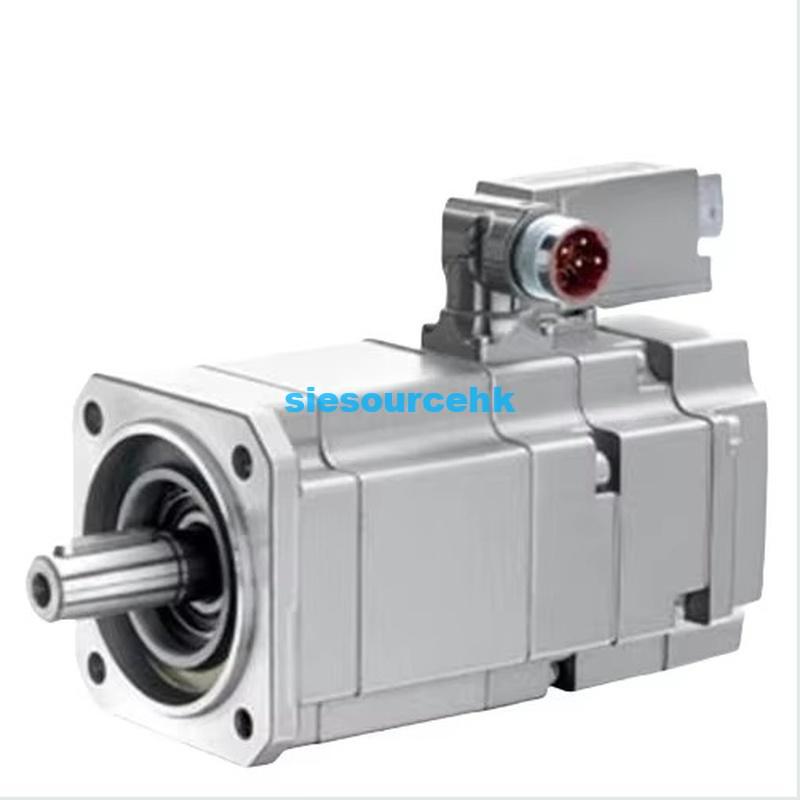
The specific features of the Mitsubishi servo motor HC-KFS43 make it an ideal choice for machinery operating within the sensitive environments of electronic and semiconductor facilities.
Optimized for Pick-and-Place Machinery
Modern surface mount technology (SMT) and semiconductor assembly lines rely on high-speed, high-accuracy pick-and-place robots to mount tiny components onto circuit boards or wafers. The compact size and rapid responsiveness of the Mitsubishi servo motor HC-KFS43 are perfectly suited for driving the X-Y gantries and Z-axis components in these systems. Its ability to achieve precise stops and immediate reversals minimizes mechanical settling time, which directly boosts the machine’s placement speed and overall productivity. When combined with a high-performance Mitsubishi servo amplifier, the motor forms a closed-loop system capable of executing complex motion profiles reliably over millions of cycles.
Ensuring Stability in Inspection and Alignment Systems
In quality control and inspection equipment—such as optical inspection machines or coordinate measuring machines (CMMs)—stability is as important as speed. The smooth, vibration-free operation inherent to the design of the Mitsubishi servo motor HC-KFS43 is crucial. Any slight mechanical tremor introduced by the motor could degrade the accuracy of high-resolution cameras or measurement sensors, leading to faulty readings or product rejection. Consequently, the motor’s minimal torque ripple and controlled, linear response ensure a stable platform for performing extremely delicate, high-magnification inspections.
Long-Term Reliability and System Integration
The value proposition of the Mitsubishi servo motor HC-KFS43 extends far beyond its immediate technical performance, encompassing aspects of system integration and long-term operational costs.
Seamless Integration with the MELSERVO Ecosystem
A significant benefit for users is the motor’s seamless compatibility within the broader Mitsubishi Electric MELSERVO system. This includes compatibility with various servo amplifiers, motion controllers, and PLCs (Programmable Logic Controllers). This comprehensive ecosystem ensures that engineers can configure, program, and diagnose the entire motion system using unified software tools. Such deep integration streamlines troubleshooting, simplifies spare parts inventory management, and allows for consistent, high-speed communication between all control components, which is vital for sophisticated multi-axis machines.
Durability and Reduced Maintenance Overhead
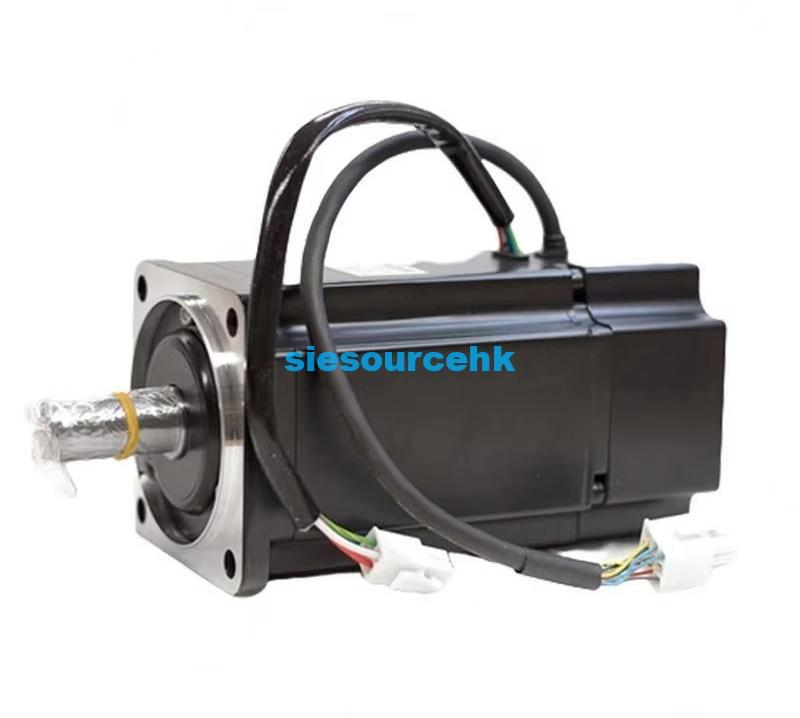
The continuous operation required in 24/7 manufacturing environments demands components capable of exceptional durability. The Mitsubishi servo motor HC-KFS43 is built with high-quality bearings and robust construction features designed to withstand intense, repetitive use. While no component lasts forever, this commitment to build quality translates into a longer operational life, reducing the frequency of unscheduled downtime. When replacement is necessary, the standardization and widespread availability of this model minimize procurement lead times, getting critical semiconductor equipment back into production faster.
Conclusion
The Mitsubishi servo motor HC-KFS43 maintains its status as a foundational component in the electronic and semiconductor industries due to its precise combination of low inertia, high-resolution feedback, and proven reliability. Its design is perfectly optimized for the rapid, accurate movements demanded by pick-and-place robotics and the stability required by high-magnification inspection systems. For equipment manufacturers and users who cannot compromise on accuracy or speed, investing in the Mitsubishi servo motor HC-KFS43 and the associated MELSERVO ecosystem provides a dependable, high-performance solution that supports efficient production and minimizes the risk of costly process variation.
| HC-KFS73 | HC-KFS43 | HC-KFS13E1BL-S18 | HC-KFS13E1BL-S18 |
| HC-KFS43 | HC-KFS43G1 1/12 | HC-KFS23K-S49 | HC-KFS23K-S49 |
| HC-KFS053D | HC-KFS13E1BL-S18 | HC-KFE73 | HC-KFE73 |
| HC-KFS43K | HC-KFS23K-S49 | HC-KFE73K | HC-KFE73K |
| HC-KFS43K | HC-KFE73 | HC-KFS43G1 1/12 | HC-KFS410-S50 |
| HC-KFS73 | HC-KFE73K | HC-KFS43 |
FAQ
Q1: What does the “HC-KFS” series designation indicate about the Mitsubishi servo motor HC-KFS43?
The “HC-KFS” designation on the Mitsubishi servo motor HC-KFS43 signifies that it is a low-inertia, general-purpose servo motor. The low-inertia design makes it exceptionally well-suited for applications requiring frequent, high-speed acceleration and deceleration, such as those found in demanding pick-and-place or feeder systems common in electronics manufacturing.
Q2: Why is low inertia important for motion control in semiconductor equipment?
Low inertia is crucial because it allows the Mitsubishi servo motor HC-KFS43 to change direction and speed almost instantaneously. In semiconductor equipment, this ability reduces cycle time, minimizes mechanical settling time after a stop, and ensures the extreme accuracy needed for handling delicate and high-value components without causing damaging vibrations or positional overshoot.
Q3: What kind of encoder is typically used with the Mitsubishi servo motor HC-KFS43, and why is it important?
The Mitsubishi servo motor HC-KFS43 typically uses a high-resolution absolute encoder. This is important because the encoder provides the exact position of the motor shaft, even after the power is turned off and back on. This high accuracy and absolute positioning capability are essential for maintaining the micron-level precision required in wafer processing and component alignment systems.