


Blog
Why Is Keyence Sensor FU-97P Vital for Precision?

In electronic component manufacturing and semiconductor fabrication, ultra-reliable detection is critical as components continue to shrink. The Keyence sensor FU-97P, part of the Tough Flex series, is a specialized fiber optic sensor head designed to deliver stable, high-precision performance in demanding environments such as wafer handling and high-speed assembly. For engineers and procurement professionals, understanding the capabilities of the Keyence sensor FU-97P is key to ensuring consistent throughput and minimizing downtime in modern automated production lines.
Technical Excellence of Fiber Optic Sensing
The fundamental appeal of the Keyence sensor FU-97P lies in its sophisticated fiber optic architecture, which allows it to outperform standard photoelectric sensors in tight spaces and harsh conditions.
The Resilience of Tough Flex Technology
One of the most significant hurdles in semiconductor equipment design is the constant movement of robotic arms and the limited spatial footprint available for sensor placement. The Keyence sensor FU-97P addresses this challenge through its “Tough Flex” fiber construction. Unlike standard fibers that may snap or lose signal integrity when bent sharply, this model is built to withstand repeated bending and tight radiuses. This flexibility ensures that the sensor can be routed through the most complex mechanical joints of a wafer-sorting robot without compromising the optical path. Consequently, manufacturers benefit from a longer service life and a drastic reduction in maintenance interventions, which is critical in cleanroom environments where every entry carries a risk of contamination.
High-Power Beam and Detection Stability
Precision in the semiconductor world often requires detecting transparent or highly reflective surfaces, such as silicon wafers or glass substrates. The optical design of the Keyence sensor FU-97P is optimized to provide a concentrated, high-power beam that ensures stable detection even when the target is slightly misaligned or tilted. By utilizing a finely tuned lens system within the fiber head, the sensor minimizes the “dead zone” often associated with fiber optics. This technical edge allows the Keyence sensor FU-97P to identify the presence of a wafer edge with sub-millimeter accuracy, facilitating the seamless transition of materials between different stages of the lithography or etching processes.
Strategic Applications in Semiconductor Fabrication
Integrating the Keyence sensor FU-97P into a production line offers more than just a simple “on/off” signal; it provides the foundational data necessary for complex automation.
Wafer Mapping and Edge Detection
In a typical wafer carrier or FOUP (Front Opening Unified Pod), wafers are stacked with very little clearance between them. The Keyence sensor FU-97P is frequently employed for wafer mapping, a process where the sensor head moves vertically to detect the presence and proper seating of each wafer in the rack. Because the fiber head is so compact, it can easily peer into narrow gaps. The precision of the Keyence sensor FU-97P ensures that the system can distinguish between a properly loaded wafer, a double-stacked slot, or a cross-slotted wafer. This prevents mechanical collisions that could lead to the destruction of thousands of dollars worth of silicon and hours of lost productivity.
Presence Sensing in Vacuum Chambers
The semiconductor manufacturing process often involves vacuum chambers where environmental conditions are extreme. One of the primary advantages of the Keyence sensor FU-97P is that the electronics are housed in a remote amplifier, while only the passive fiber head resides near the detection point. This separation allows the sensor to operate effectively in areas with high electromagnetic interference (EMI) or specialized gas environments. Furthermore, the stainless steel housing of the Keyence sensor FU-97P provides excellent chemical resistance, ensuring that the sensor does not outgas or degrade when exposed to the various cleaning agents used in high-tech fabrication facilities.
Enhancing Operational Longevity and ROI
Beyond the immediate technical specifications, the choice of the Keyence sensor FU-97P reflects a long-term commitment to operational excellence and cost-efficiency.
Simplified Integration and Maintenance
For equipment manufacturers, time-to-market is a critical metric. The Keyence sensor FU-97P is designed for rapid integration, featuring standardized mounting brackets and a straightforward connection to Keyence’s digital fiber amplifiers. This ecosystem allows for “one-click” calibration, where the sensor automatically adjusts its sensitivity to account for ambient light or fiber degradation over time. When a replacement is eventually needed, the consistent manufacturing tolerances of the Keyence sensor FU-97P mean that the new unit will perform identically to the old one, eliminating the need for extensive recalibration of the entire machine.
A Value-Driven Approach to Quality
Investing in high-end components like the Keyence sensor FU-97P aligns with the core values of modern manufacturing: safety, precision, and sustainability. By reducing the frequency of component failure, companies minimize industrial waste and energy consumption associated with machine restarts. Moreover, the superior accuracy of this sensor helps maintain the highest possible yield rates. In an industry where a fraction of a percentage point in yield can equate to millions of dollars in annual revenue, the reliability of a single sensor becomes a significant factor in a company’s overall financial health and market reputation.
Conclusion
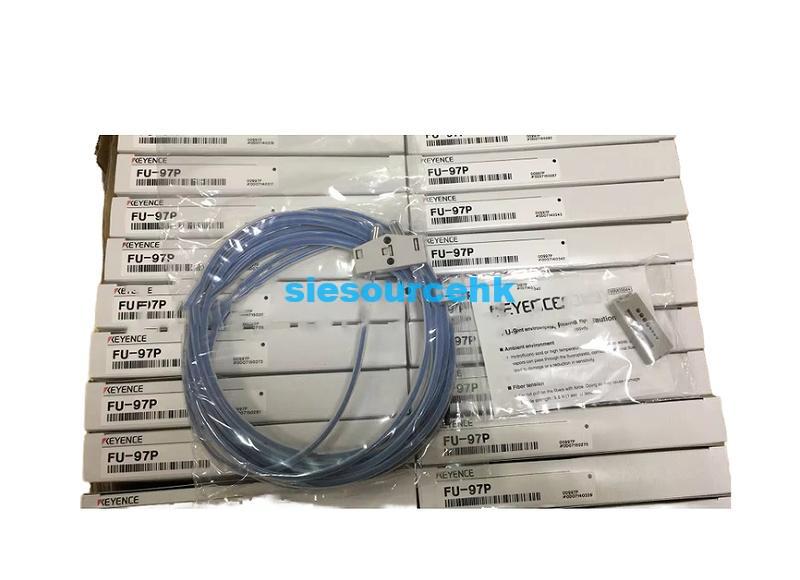
The Keyence sensor FU-97P represents a pinnacle of industrial sensing technology, bridging the gap between microscopic detection needs and rugged mechanical requirements. Its flexible fiber design, high-intensity optical output, and chemical-resistant construction make it an indispensable tool for the semiconductor and electronic component industries. By choosing the Keyence sensor FU-97P, manufacturers are not merely selecting a part; they are securing a vital link in their automation chain. This ensures that as the world of electronics continues to shrink and accelerate, their production capabilities remain steady, precise, and ahead of the competition.
| U-77V | FU-77TZ | FU-40 | FU-15 |
| FU-R67TG | FU-67V | FU-93Z | FU-16Z |
| FU-R67TZ | FU-35FZ | FU-4FZ | CF-SFU-20-B |
| FU-88 | FU-L51Z | FU-66 | FU-12 |
| FU-31 | FU-93Z | FU-35TZ | FU-2412 |
| FU-67TZ | FU-40 | FU-21X | FU-2412 |
| FU-53TZ | FU-77 | FU-52TZ | FU-86H |
FAQ
Q1: Can the Keyence sensor FU-97P be used with any fiber amplifier?
While the Keyence sensor FU-97P is a passive fiber head, it is optimized for use with Keyence’s FS-N series (NEO) digital fiber amplifiers. Using it within the Keyence ecosystem ensures that features like the “Tera Boost” and automatic maintenance functions work correctly, though it is physically compatible with most amplifiers that accept a standard 2.2mm diameter fiber.
Q2: How does the “Tough Flex” feature of the Keyence sensor FU-97P improve durability?
The Tough Flex technology used in the Keyence sensor FU-97P involves a specialized core and cladding structure that allows for a minimum bend radius of only 2mm. This means the fiber can be bent around sharp corners without the internal glass or plastic fibers cracking, which would otherwise cause a significant loss in light intensity and result in unstable detection.
Q3: Is the Keyence sensor FU-97P suitable for high-temperature applications?
The standard Keyence sensor FU-97P is rated for typical industrial temperature ranges (usually up to 60 or 70 degrees Celsius). For applications involving extreme heat, such as those found inside certain ovens or deposition chambers, Keyence offers specific heat-resistant models. However, for the majority of wafer handling and component assembly tasks, the FU-97P provides the perfect balance of flexibility and thermal stability.