


Blog
How to Source a Reliable Fanuc Servo Drive for Plants ?

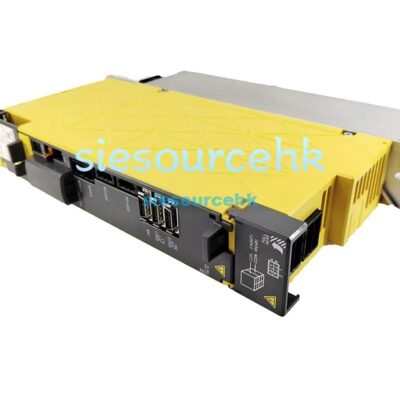
In the high-stakes world of modern CNC machining, selecting the right Fanuc servo drive is critical for maintaining operational uptime. Maintenance managers often face the challenge of sourcing replacement parts that match legacy systems without sacrificing modern performance standards. An incompatible drive or a faulty circuit board can lead to catastrophic motor failure and extended production delays. These technical disruptions directly impact your bottom line and can compromise the precision of high-value aerospace or automotive components. This guide provides a professional framework for evaluating drive specifications and board-level compatibility for your factory floor. By understanding the integration requirements of your motion control system, you can secure a resilient supply chain for your automation needs.
Why Fanuc Servo Drive Industrial Automation Matters
The primary driver for implementing fanuc servo drive industrial automation is the unparalleled precision it brings to complex multi-axis motion. Fanuc drives utilize high-resolution feedback loops that allow for sub-micron positioning accuracy in heavy-duty milling and turning operations. This level of control is essential for industries where tight tolerances are the standard for every production run.
Beyond precision, fanuc servo drive industrial automation provides superior energy efficiency through advanced power regeneration technology. Modern drives can capture excess energy during motor deceleration and feed it back into the power supply or other axes. This reduces overall factory power consumption and lowers the thermal load on your electrical cabinets in 2026.
Reliability is the third pillar of fanuc servo drive industrial automation that justifies its premium position in the market. These drives are engineered to withstand the harsh electrical noise and physical vibrations common in large-scale manufacturing plants. Investing in genuine Fanuc hardware ensures that your motion control backbone remains stable during high-speed, continuous-duty cycles.
Technical Standards for a Professional Fanuc Servo Drive
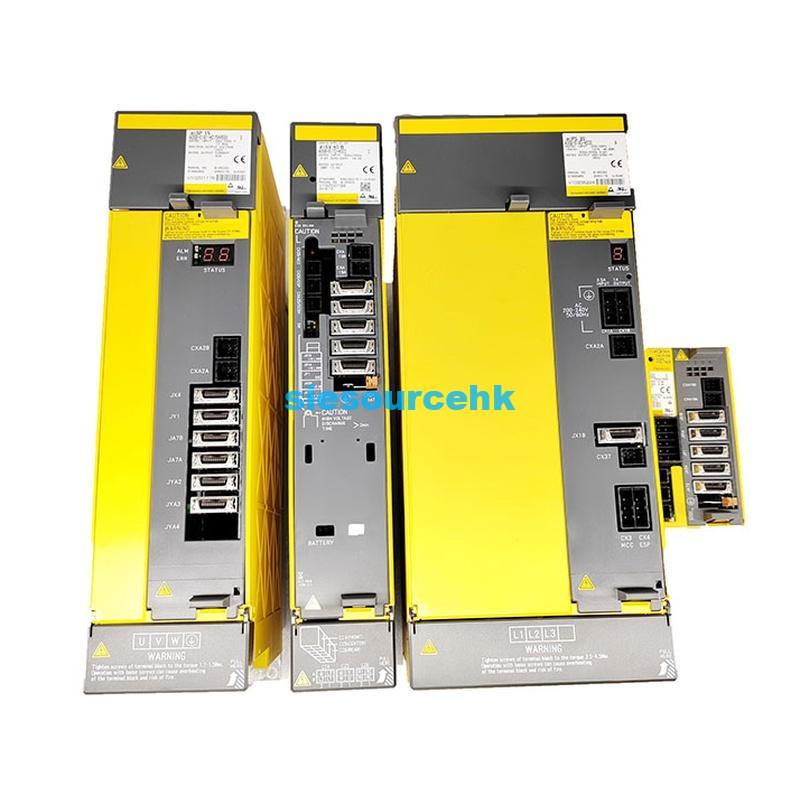
A professional-grade Fanuc servo drive must be evaluated based on its peak current capacity and communication protocol compatibility. Drives in the Alpha i or Beta i series utilize FSSB (Fanuc Serial Servo Bus) to transmit high-speed data between the CNC and the amplifier. You must ensure the drive’s firmware version is compatible with your existing CNC control software to avoid synchronization errors.
Thermal management is another critical technical specification for any Fanuc servo drive installed in a high-density cabinet. Advanced cooling fin designs and high-performance internal fans are required to dissipate heat generated during high-torque maneuvers. If a drive operates consistently above its rated temperature, the internal capacitors will degrade prematurely, leading to intermittent “Overcurrent” alarms.
Furthermore, the integration of safety functions like Safe Torque Off (STO) is now a standard requirement for industrial drives in 2026. A modern Fanuc servo drive allows for simplified safety circuit wiring while meeting international machinery safety standards. These features protect your human operators and reduce the risk of mechanical damage during emergency stop situations.
Evaluating Component Quality in Motion Control Sourcing
Sourcing a Fanuc servo drive often involves looking at individual internal components, such as the power modules and control boards. The health of the main circuit board determines the drive’s ability to process encoder signals and execute complex motion algorithms. For older systems, finding a verified replacement board is often the most cost-effective way to restore a drive to its original performance.
When purchasing a Fanuc servo drive, you should also inspect the condition of the terminal blocks and fiber optic connectors. Poor connections at these points are a frequent cause of “Communication Error” alarms that result in unplanned machine downtime. High-quality drives feature reinforced connection points that maintain signal integrity even in environments with high electromagnetic interference (EMI).
It is also important to consider the diagnostic capabilities of the Fanuc servo drive hardware you are selecting. Drives equipped with 7-segment LED displays or digital status indicators allow your maintenance team to identify fault codes instantly. This rapid diagnostics capability is essential for minimizing Mean Time to Repair (MTTR) in a high-volume production environment.

Strategic Selection of Automation Control Hardware
Choosing the right hardware requires a balance between the current machine requirements and the need for future scalability. For specialized repairs, you may need to source a specific Fanuc Board A20B-8101-0770 to match your amplifier series. Having a reliable source for these specific part numbers is the key to maintaining a diverse fleet of CNC machines.
A professional procurement strategy should also account for the availability of technical documentation and support for each drive model. Reliable vendors provide detailed wiring diagrams and configuration parameters to ensure a smooth installation process. This technical transparency reduces the risk of incorrect wiring that could lead to a short circuit in the servo system.
Ultimately, the goal of sourcing a Fanuc servo drive is to achieve a seamless blend of speed, torque, and reliability. If a vendor cannot verify the testing history of their electronics or provide a clear warranty, the risk to your production line is too great. Quality assurance in the sourcing process is what distinguishes a world-class maintenance operation from a reactive one.
Summary of Fanuc Servo Drive Strategic Value
Selecting a high-performance Fanuc servo drive is essential for any facility focused on fanuc servo drive industrial automation. By prioritizing drives with high-speed FSSB communication and robust thermal designs, you ensure the longevity of your CNC equipment. Consistent sourcing of verified boards and amplifiers protects your plant from the high costs of unplanned downtime in 2026.
FAQ
1. How do I identify the correct Fanuc servo drive part number?
The part number is typically located on a yellow or white sticker on the side of the drive housing, beginning with “A06B”. You must match this exact number with your existing unit to ensure physical and electrical compatibility with your machine. Using a drive with a different suffix can lead to incorrect current scaling and potential motor damage.
2. Why is fanuc servo drive industrial automation preferred for CNC machines?
It is preferred because it offers a fully integrated ecosystem where the CNC, drive, and motor are designed to communicate natively. This integration eliminates the latency issues found in mixed-vendor systems and allows for more aggressive acceleration and deceleration curves. This native communication is the foundation of Fanuc’s reputation for high-speed machining reliability.
3. Can I replace a circuit board within a Fanuc servo drive myself?
Yes, but it requires strict adherence to ESD (Electrostatic Discharge) safety protocols to prevent damaging the sensitive microchips. You must also ensure that any jumpers or DIP switch settings on the new board are identical to the original configuration. Failure to correctly set these parameters can cause the drive to malfunction or fail to communicate with the CNC.
4. What are the most common alarm codes for a Fanuc servo drive?
Common alarms include Alarm 8 (High Current), Alarm 9 (Abnormal Heat), and Alarm A (L/C External Disconnect). These codes generally indicate an issue with the power supply, an overloaded motor, or a failure in the internal cooling system. Consult your Fanuc maintenance manual to cross-reference specific codes with the required troubleshooting steps.
5. How long is the typical lifespan of a Fanuc servo drive in 2026?
In a well-maintained, climate-controlled environment, a drive can reliably operate for 10 to 15 years. The lifespan is largely determined by the health of the cooling fans and the quality of the incoming power. Regularly cleaning the air filters and checking the terminal tightness can significantly extend the life of your servo amplifiers.
Reference Sources
Fanuc Global – Industrial Automation Product Standards
International Society of Automation (ISA) – Motion Control Systems
| A20B-2900-0380 | A20B-2100-0220 | A20B-8200-0843 | A20B-2200-0750/02A |
| A20B-2901-0360 | A20B-2101-0012 | A20B-8101-0790 | A20B-2102-0650 |
| A20B-2900-0160 | A20B-8200-0393 | A20B-8201-0087 | A20B-8201-0085 |
| A20B-2900-0400 | A20B-8200-0843 | A20B-8201-0086 | A20B-8201-0088 |