


Blog
How High Response Servo Drive Improves Sync?

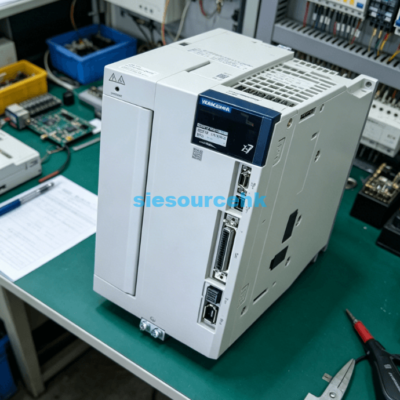
Industrial precision in 2026 relies heavily on the coordination of moving parts. A High Response Servo Drive acts as the primary engine for this coordination. It translates complex controller commands into precise motor actions. High responsiveness is no longer just an advantage. It is a strict requirement for modern manufacturing.
Synchronization ensures that multiple axes work as a single unit. If one axis moves independently, the entire process fails. A High Response Servo Drive addresses this by reducing command delays. It processes data at incredible speeds to maintain alignment. This technology is vital for robotics and CNC systems.
The demand for throughput continues to grow globally. Faster machines require drives that can keep up. Older systems often struggle with high-speed synchronization. Modern drives offer the processing power needed for complex paths. This article explores how these drives redefine precision.
Why Response Time Matters in Multi-Axis Synchronization?
Timing is the foundation of any multi-axis motion system. Each motor must react to the master controller simultaneously. A High Response Servo Drive minimizes the time gap between signal and action. This reduction in latency prevents mechanical misalignment. Even a microsecond delay can cause a visible defect.
1. Eliminating Following Errors during High-Speed Motion?
Following error is the difference between commanded and actual position. High-speed operations often amplify these errors significantly. A High Response Servo Drive uses fast loops to correct deviations. It monitors the motor position thousands of times per second. This constant adjustment keeps the error near zero.
2. Managing Dynamic Loads and External Disturbances?
External forces can disrupt the synchronization of a machine. For instance, a cutting tool might meet unexpected resistance. A High Response Servo Drive detects this load change instantly. It adjusts the torque output to maintain the correct speed. This immediate reaction prevents the axis from falling behind.
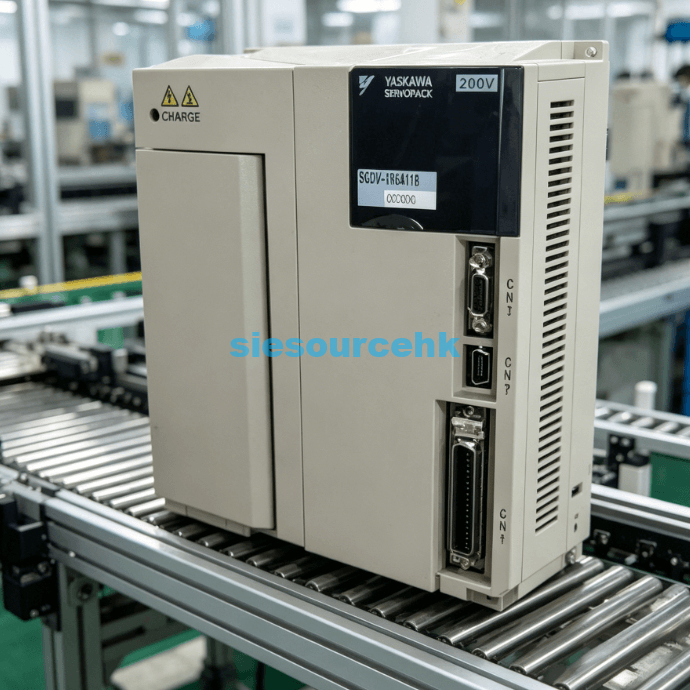
How High Response Servo Drive Technology Enhances Precise Motion Control?
The effectiveness of a High Response Servo Drive depends on its bandwidth. Bandwidth refers to the speed of the control loop frequency. Higher bandwidth allows the drive to track faster changes. This capability is the core of high-performance motion control. It ensures that the motor faithfully follows every command.
1. The Impact of High-Speed Sampling Rates?
Sampling rates determine how often the drive reads feedback data. In 2026, top-tier drives utilize sampling cycles of 62.5 microseconds. A High Response Servo Drive processes this data to update current loops. Fast sampling reduces the “staircase” effect in digital signals. This results in much smoother motor rotation and better sync.
2. Utilizing Advanced Vibration Suppression Techniques?
High-speed movement often creates unwanted mechanical resonance. This resonance can destroy synchronization and damage components. A High Response Servo Drive includes digital notch filters. These filters identify and cancel specific vibration frequencies. The drive maintains stability even during aggressive acceleration.
| Performance Metric | Standard Drive (2026) | High Response Servo Drive | Synchronization Benefit |
|---|---|---|---|
| Speed Loop Bandwidth | 1.2 kHz | 3.2 kHz | 60% faster reaction time |
| Current Sampling Rate | 125 μs | 62.5 μs | Smoother torque delivery |
| Encoder Support | 20-bit | 24-bit | Higher positioning resolution |
| Settling Time | 15 ms | 2 ms | Increased cycle frequency |
Quantifying Performance in 2026 Automation
The data proves that high-response hardware delivers superior results. Increasing speed frequency response to 3.1 kHz reduces settling time. In many tests, settling time drops from 10 ms to 1 ms. This allows for more “pick and place” actions per minute. A High Response Servo Drive maximizes the efficiency of every second.
Furthermore, torque ripple is reduced by nearly 70% in high-end drives. Torque ripple causes tiny speed fluctuations that ruin synchronization. By smoothing these fluctuations, the drive ensures linear motion. This is critical for applications like high-quality 3D printing. Precision is maintained even at the limits of motor speed.
Communication jitter also affects how drives synchronize over a network. A High Response Servo Drive optimized for 2026 standards handles jitter effectively. It uses distributed clocks to synchronize all drives on the bus. This ensures every motor starts and stops at the same nanosecond. Such precision was impossible with older analog technology.
How to Choose the Right Servo Drive for 2026 Projects?
Selecting the correct drive requires a deep understanding of your application. You must first determine the required peak acceleration for your machine. If your process involves rapid direction changes, bandwidth is the priority. A High Response Servo Drive will handle these transitions without losing sync. This choice directly impacts your final product quality.
Compatibility with high-resolution encoders is another vital factor to check. Modern 24-bit encoders provide over 16 million pulses per revolution. Your drive must be capable of processing this high-density data. It ensures that the feedback loop is as accurate as possible. This level of detail is necessary for sub-micron synchronization.
System integration also plays a role in your selection process. You should look for platforms that offer comprehensive tuning tools. For example, Yaskawa Servo Systems & Motion Control provides advanced auto-tuning features. These tools help you reach the drive’s maximum potential quickly. A well-tuned system is more reliable and efficient.
Consider the environmental conditions of your production facility. High-performance drives generate heat and require efficient cooling. Ensure the drive you choose has a robust thermal design. This prevents performance degradation during long shifts in 2026 environments. A stable drive is the key to consistent synchronization.
Finally, evaluate the long-term support and software ecosystem available. High-quality drives often come with sophisticated diagnostic software. This software helps you monitor synchronization health in real-time. Choosing a reputable brand ensures you have access to future updates. It protects your investment as automation technology continues to evolve.
Summary
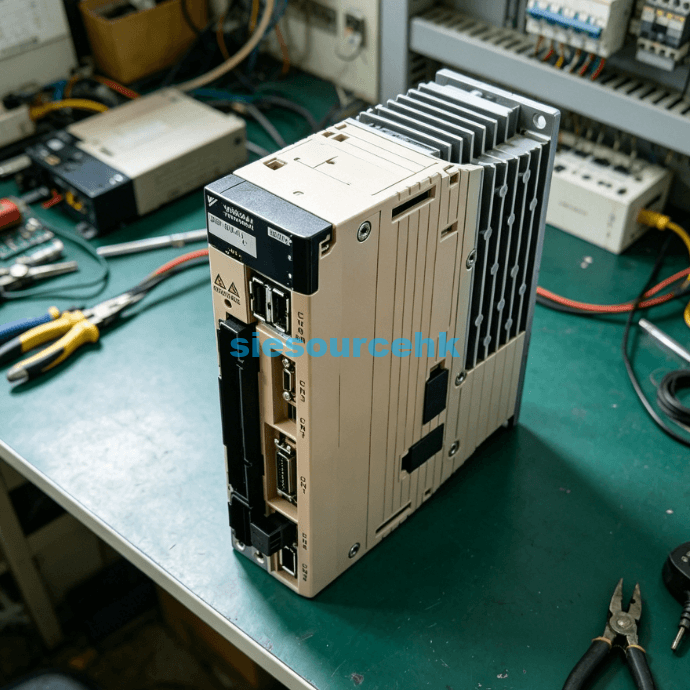
A High Response Servo Drive improves synchronization by maximizing bandwidth and reducing latency. It utilizes high-speed sampling and vibration suppression to maintain perfect alignment across multiple axes. These technical advantages lead to faster cycle times and higher precision. Investing in high-response technology is the best way to future-proof your 2026 automation systems.
PRO TIP
When configuring a High Response Servo Drive, always perform a mechanical resonance analysis. High-bandwidth drives can occasionally excite mechanical weaknesses in your machine frame. Using the drive’s built-in “notch filter” auto-tuning will suppress these vibrations. This ensures the highest possible gain without compromising mechanical stability.
| SGDV-1R6A21B | SGDV-7R6A21A | SGDV-180A21A | SGDV-8R4D21A |
| SGDV-1R9D21A | SGD7S-590A11A | SGDV-3R8A11A | SGDV-120A11A |
| SGDV-1R6A11B | SGDV-2R8A11A | SGDV-7R6A11A | SGDV-780A01A |
| SGDV-5R4D11A | SGDV-330A01A | SGDV-120DE1A002000 | SGDV-7R6A01A002000 |
| SGDV-2R8A11B | SGDV-120A21A | SGDV-2R8A21B | SGDV-200A21A |
FAQ
1. What exactly is a High Response Servo Drive?
A High Response Servo Drive is a motor controller with high bandwidth. It processes feedback and commands much faster than standard industrial drives. This allows for extremely tight control over motor position and speed. It is specifically designed for high-precision, multi-axis synchronization tasks.
2. How does high bandwidth improve synchronization?
High bandwidth allows the drive to track rapidly changing command signals. It reduces the phase lag between the controller and the motor. This means all motors in a system stay aligned during acceleration. Without high bandwidth, motors would deviate during high-speed transitions.
3. Can I use these drives with any motor?
High-response drives work best with motors equipped with high-resolution encoders. The drive needs precise data to utilize its fast processing power. In 2026, most users pair them with matched permanent magnet motors. This combination ensures the best possible synchronization and energy efficiency.
4. Why is settling time important for synchronization?
Settling time is the time needed for the motor to stop vibrating. A High Response Servo Drive reduces this time through advanced algorithms. Faster settling means the next synchronized move can begin sooner. This directly increases the overall throughput of the manufacturing machine.
5. Do these drives require special communication protocols?
Yes, they typically require high-speed industrial Ethernet protocols like EtherCAT. These protocols provide the low-latency data path necessary for high response. They allow the master controller to talk to all drives simultaneously. This is the foundation of modern, network-based multi-axis synchronization.