



Blog
SMC DFS60B-S1AA01000 Encoder: Technical Principles & Actuator Guide

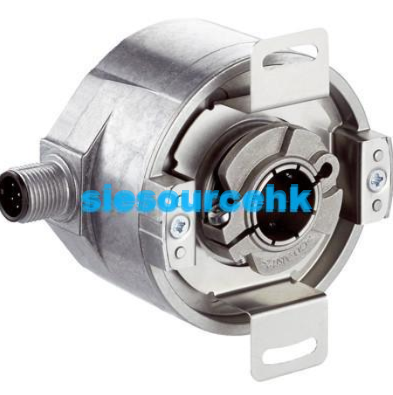
In the landscape of industrial automation, precision is the primary currency. The ability to monitor, adjust, and maintain the position of an electric actuator determines the efficiency of an entire production line. Central to this capability is the encoder—a sophisticated feedback device that translates mechanical motion into digital signals.
The DFS60B-S1AA01000 SMC Encoder (often integrated within SMC’s high-performance electric actuator ecosystems) represents a specific intersection of high-resolution incremental feedback and industrial-grade durability. However, to understand its value, one must look deeper into the mechanics of optical sensing, signal processing, and the evolving preference for battery-less absolute systems in modern motion control.
Understanding the Role of Encoders in Motion Control
An encoder is essentially a bridge between the physical and digital worlds. In an electric actuator system, the motor provides the force, but the encoder provides the “sight.” Without this feedback loop, the controller cannot verify if the actuator has reached its target position or if it is moving at the correct velocity.
The DFS60B-S1AA01000 belongs to a class of high-resolution encoders designed for rigorous environments. It is categorized as an incremental encoder, which means it generates a specific number of pulses per revolution (PPR). By counting these pulses, the drive system calculates distance, while the frequency of the pulses determines the speed.
Technical Breakdown: DFS60B-S1AA01000 Specifications
When analyzing an industrial encoder, the nomenclature reveals the engineering constraints and capabilities. The DFS60B-S1AA01000 follows a standardized logic that defines its mechanical and electrical interface.
- Resolution (01000): This unit provides 1,000 pulses per revolution. In a quad-count configuration (evaluating both rising and falling edges of A and B channels), this translates to 4,000 distinct positions per 360-degree rotation.
- Mechanical Interface (S1): This typically denotes a servo flange with a solid shaft (often 10mm diameter). Solid shaft designs are favored in applications involving high radial and axial loads.
- Electrical Interface (AA): This indicates a TTL/RS-422 interface. RS-422 is a differential signal protocol, which is highly resistant to electromagnetic interference (EMI)—a common requirement in environments with large motors and high-voltage cabling.
- Performance Grade (B): The “B” designation often refers to the mid-to-high range of resolution and temperature tolerance within its series, balancing cost-efficiency with high-speed processing capabilities.
The Evolution Toward Battery-less Absolute Encoders
While incremental encoders like the DFS60B are industry staples, there is a significant technological pivot toward battery-less absolute encoders for electric actuators. Understanding the difference is critical for project managers and engineers.
The Incremental Constraint
Traditional incremental encoders lose their position data when power is disconnected. Upon restarting, the actuator must perform a “homing” sequence—moving to a physical limit switch to re-establish its zero point. In complex machinery, this homing process can be time-consuming and, in some cases, risky if the mechanism is under load.
The Absolute Advantage
Absolute encoders assign a unique digital code to every possible position of the shaft. Even if the power is cut and the shaft is moved manually, the encoder immediately knows its exact location upon power-up.
The “Battery-less” Innovation
Historically, absolute encoders used a small lithium battery to maintain position data when the main power was off. However, batteries introduce a failure point; they require periodic replacement and can leak or fail in extreme temperatures.
Modern SMC electric actuators often utilize battery-less absolute encoders. These systems typically use:
- Gearing Mechanisms: A series of internal micro-gears that mechanically track the number of rotations.
- The Wiegand Effect: A process where the movement of a magnet induces a pulse of electricity in a wire, providing just enough power for the encoder to write its new position to non-volatile memory without an external battery.
Integrating Encoders with Electric Actuators
The synergy between the DFS60B-S1AA01000 and an electric actuator (such as the SMC LEY or LEFS series) is governed by the feedback loop.
When an instruction is sent to the motor, the encoder monitors the shaft’s rotation in real-time. If the encoder detects a discrepancy between the commanded position and the actual position (often caused by excessive load or mechanical obstruction), the controller can trigger an alarm or adjust the torque.
| Feature | DFS60B-S1AA01000 (Incremental) | Battery-less Absolute Encoder |
| Position Retention | Lost at power-off | Retained indefinitely |
| Homing Requirement | Mandatory after power cycle | Not required |
| Maintenance | Low | Extremely Low (No battery to change) |
| Signal Protocol | TTL / RS-422 | EnDat, SSI, or Proprietary |
| Complexity | Simple / Standardized | High / Integrated |
Ingress Protection and Industrial Durability
In manufacturing, “clean” environments are rare. Encoders must withstand dust, coolant, and vibration. The construction of the DFS60B series typically adheres to high IP (Ingress Protection) ratings, such as IP65 or IP67.
- IP65: Protection against dust ingress and low-pressure water jets.
- IP67: Fully dust-tight and capable of withstanding temporary immersion in water.
Furthermore, the bearing design is crucial. High-speed rotation generates heat; the DFS60B is engineered with precision ball bearings that allow for operating speeds often exceeding 6,000 RPM while maintaining signal integrity.
Application Logic: Where Precision Meets Purpose
The choice to use a high-resolution encoder like the DFS60B-S1AA01000 is usually driven by specific application requirements:
- Packaging Machinery: In high-speed bottling or wrapping, the timing of the actuator must be synchronized within milliseconds. 1,000 PPR ensures that the synchronization is fluid and jitter-free.
- Automotive Assembly: When robots are positioning heavy chassis parts, the incremental feedback allows for micro-adjustments to ensure perfect alignment before welding.
- Electronics Testing: In semiconductor handling, the movements are minute. High-resolution feedback prevents the actuator from “overshooting” and damaging fragile silicon wafers.
Signal Integrity in High-EMI Environments
One of the most overlooked aspects of encoder selection is electromagnetic compatibility (EMC). In a factory setting, the cables for an encoder often run parallel to high-power motor cables.
The DFS60B-S1AA01000 uses differential signaling (A, A, B, B, Z, Z). In this configuration, each signal is sent twice: once in its original state and once as an inverted signal. If a “spike” of electrical noise hits the cable, it affects both signals equally. At the receiver end, the difference between the two is calculated, effectively cancelling out the noise. This is why the RS-422 interface is standard for long-distance cable runs in industrial automation.
FAQ
1. Can I replace an incremental encoder with an absolute encoder on my existing SMC actuator?
Generally, no. The motor controller (drive) must be designed to interpret absolute signals. Incremental encoders use pulse counting, while absolute encoders use data protocols (like SSI or BiSS). Replacing one with the other usually requires a different controller and motor wiring.
2. What does the “Z” or “Index” channel do in the DFS60B-S1AA01000?
The Z-channel provides a single pulse exactly once per revolution. This is used by the controller as a reference point to establish a precise home position or to verify that the pulse count hasn’t drifted due to interference.
3. Why is “battery-less” becoming so popular in electric actuators?
Sustainability and maintenance costs. For a factory with 500 actuators, changing 500 batteries every two years is a massive logistical burden. Battery-less systems eliminate this task and remove the risk of “memory loss” failures due to dead batteries.
4. How does vibration affect the DFS60B-S1AA01000?
The DFS60B series is designed with shock and vibration resistance in accordance with international standards (e.g., DIN EN 60068-2-27). However, excessive vibration can lead to “pulse jitter,” where the encoder sends false signals. Proper mechanical coupling (using flexible couplings) is essential to isolate the encoder from motor vibration.
5. What is the difference between a solid shaft and a hollow shaft encoder?
The DFS60B-S1 is a solid shaft encoder, which connects to the motor via a coupling. Hollow shaft encoders fit directly over the motor shaft. Solid shafts are generally more robust and easier to replace without disassembling the motor, while hollow shafts are more compact.
Reference Sources
- IEC 60529: Degrees of protection provided by enclosures (IP Code). Official Standard
- SMC Corporation: Technical Guide to Electric Actuators and Feedback Systems. SMC Global
- SICK Sensor Intelligence: DFS60 Incremental Encoder Technical Data Sheet. SICK Data Portal
- IEEE Xplore: “Comparative Analysis of Wiegand Effect in Battery-less Sensing Applications.” IEEE Research
- ISO 9001:2015: Quality management systems for manufacturing industrial sensors. ISO.org