


Blog
ATV1200C 700/085 Variable Speed Drive by Schneider: Guide

The ATV1200C 700/085 Variable Speed Drive by Schneider belongs to Schneider Electric’s Altivar 1200C family of medium-voltage drives.
Unlike conventional low-voltage variable frequency drives, the ATV1200C platform is designed for high-power motor control in industrial facilities. Schneider Electric lists the ATV1200C range from 275 kVA to 20 MVA, with configurations covering several medium-voltage levels.
For engineers evaluating an ATV1200C 700/085, the important questions are not simply its model number or rated power. The motor voltage, load profile, control method, cooling arrangement, installation environment, and system configuration must also match the application.
What Is the ATV1200C 700/085 Variable Speed Drive?
The ATV1200C 700/085 is a medium-voltage variable speed drive associated with Schneider Electric’s Altivar 1200C platform.
Its primary function is to regulate the speed and torque of a medium-voltage motor by controlling the electrical frequency and voltage supplied to the motor.
Schneider’s ATV1200C documentation covers configurations from 275 kVA to 20,000 kVA and multiple voltage classes, including 3.3 kV, 4.16 kV, 6 kV, 6.6 kV, 10 kV, and 11 kV.
The exact electrical configuration should therefore be verified against the drive nameplate and the applicable Schneider documentation rather than inferred only from the model designation.
Key characteristics of the ATV1200C platform
| Characteristic | ATV1200C |
|---|---|
| Drive type | Medium-voltage variable speed drive |
| Power range | 275 kVA to 20 MVA |
| Typical voltage classes | 3.3–11 kV configurations |
| Motor types | Asynchronous and synchronous motors |
| Control functions | Vector and U/F control |
| Communication options | Modbus, Ethernet/IP, Profibus, Profinet and others |
| Typical applications | Pumps, fans, compressors, conveyors and heavy industrial processes |
| Main configuration factors | Motor rating, voltage, load, environment and system topology |
These characteristics come from Schneider Electric’s current ATV1200C product information and technical documentation.
How Does an ATV1200C Medium-Voltage Drive Work?
A medium-voltage drive controls motor speed by changing the frequency and voltage delivered to the motor.
The ATV1200C uses a power-conversion architecture with a transformer and modular power-cell structure. Schneider describes phase shifting on the transformer secondary winding as part of the design used to reduce input harmonics.
The simplified operating sequence is:
- Medium-voltage AC input enters the drive system.
- The input transformer provides the required voltage conversion and phase-shift arrangement.
- Power cells perform the required power conversion.
- The control system determines the required output voltage and frequency.
- The motor receives controlled power according to the commanded operating point.
This architecture is particularly relevant when a facility needs variable-speed control for motors operating at substantially higher power than typical low-voltage drives.
The ATV1200C programming documentation also supports motor-control functions for both asynchronous and synchronous motors, including vector control and U/F control.
Why Use the ATV1200C for High-Power Industrial Motors?
The main reason to use a medium-voltage drive is to control a high-power motor without treating the motor as a simple fixed-speed load.
Variable-speed control can be useful when process demand changes continuously.
For example, a pump does not always need to operate at full speed. Reducing motor speed can change flow and pressure while avoiding unnecessary operation at maximum speed.
The same principle applies to fans, compressors and other rotating equipment.
Typical benefits include:
- Controlled motor acceleration and deceleration
- Variable-speed operation
- Improved process control
- Reduced mechanical stress during starting
- Integration with industrial automation systems
- Monitoring and diagnostic functions
- Support for high-power motor applications
The actual energy savings depend on the application and load profile. A variable-speed drive should not be assumed to deliver a fixed percentage of energy savings in every installation.
Where Is the ATV1200C 700/085 Used?
The ATV1200C is intended for demanding industrial environments rather than small machine-control applications.
Schneider identifies industries and applications including cement, water treatment, coal mining, power generation, petroleum and metallurgy in its ATV1200C selection documentation.
Pumps and water systems
Large water pumps often operate under changing flow requirements.
A medium-voltage drive can adjust motor speed according to the process demand instead of relying entirely on mechanical throttling.
This can be useful in municipal water systems, industrial water treatment and large pumping installations.
Fans and ventilation systems
Large industrial fans may require different airflow levels during normal production, startup or process changes.
Speed control allows the motor operating point to follow these requirements more closely.
Compressors
Industrial compressors can have significant power requirements.
Variable-speed control can help match compressor operation to changing process demand, provided the motor, compressor and drive are correctly coordinated.
Conveyors and material handling
Large conveyors may require controlled starting to reduce mechanical shock.
A medium-voltage drive can provide controlled acceleration while supporting the required production speed.
Heavy process equipment
The ATV1200C is also relevant to continuous industrial processes where motor speed directly affects production parameters.
This includes applications in cement, mining, metallurgy and other energy-intensive industries identified by Schneider Electric.
ATV1200C 700/085 Selection: What Should Engineers Check?
The model designation alone should not be used to determine whether a drive is suitable for a particular motor.
A correct selection starts with the complete electrical and mechanical operating conditions.
| Selection factor | Why it matters |
|---|---|
| Motor voltage | Must match the configured drive voltage class |
| Motor power | Determines the required drive capacity |
| Motor current | Important for continuous and overload operation |
| Motor type | Asynchronous and synchronous motors may require different settings |
| Load profile | Constant-torque and variable-torque loads behave differently |
| Starting requirements | Determines acceleration and current requirements |
| Speed range | Affects motor cooling and control requirements |
| Environment | Temperature, altitude, dust and humidity affect installation |
| Cooling | Required cooling arrangement depends on system configuration |
| Communication | Must match the plant automation architecture |
Schneider’s selection guide specifically provides output-current ratings, motor-power information, cabinet dimensions, connection requirements and environmental characteristics for ATV1200C configurations.
Do not select only by kVA
A common engineering mistake is selecting a medium-voltage drive only from the motor’s nominal power.
The application load is equally important.
A conveyor with high starting torque has different requirements from a centrifugal pump. A compressor with frequent acceleration may also impose different operating demands.
The correct selection therefore considers motor rating + load characteristics + operating conditions, rather than motor power alone.
Control and Communication Capabilities
Modern medium-voltage drives increasingly operate as part of a larger automation system.
The ATV1200C provides an HMI interface and supports multiple industrial communication options. Schneider lists interfaces and protocols including Modbus RTU, Modbus TCP, Ethernet/IP, Profibus, Profinet and DeviceNet.
This allows the drive to exchange operating information with a plant control system.
Typical information can include:
- Motor speed
- Operating status
- Fault conditions
- Drive parameters
- Control commands
- Diagnostic information
The ATV1200C programming manual also describes functions including PID regulation, droop control, analog I/O, digital I/O and commissioning procedures.
For an industrial automation project, communication compatibility should therefore be checked before installation rather than treated as a secondary consideration.
What Makes the ATV1200C Different From a Low-Voltage VFD?
The most important difference is the electrical scale and system architecture.
A conventional low-voltage VFD may control a motor at several hundred volts. The ATV1200C is designed for medium-voltage applications and substantially higher power levels.
| Factor | Low-voltage VFD | ATV1200C |
|---|---|---|
| Electrical class | Low voltage | Medium voltage |
| Typical application scale | Small to large machines | High-power industrial systems |
| Power range | Generally lower | 275 kVA to 20 MVA |
| System architecture | Compact drive | Transformer and modular power-cell system |
| Installation | Often standalone | Requires coordinated MV system design |
| Typical industries | General automation | Heavy industrial processes |
The ATV1200C selection guide covers configurations up to 20,000 kVA, demonstrating the scale of applications for which the platform is intended.
This distinction matters when searching for an ATV1200C 700/085 Variable Speed Drive by Schneider because the product should be evaluated as part of a complete medium-voltage electrical system, not as a standalone low-voltage inverter.
Product Page and Model Verification
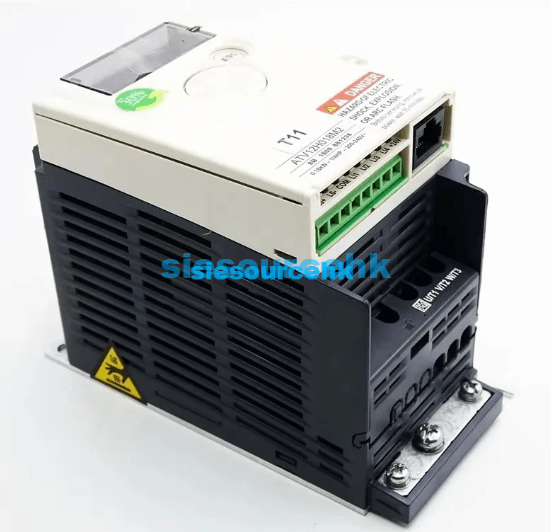
The product page for the ATV1200C 700/085 Variable Speed Drive by Schneider identifies the unit within the site’s Altivar drive category and presents it as an individual product available for purchase. The page also describes the broader Altivar family as covering motor-control applications including pumps, fans, compressors and conveyors.
For an exact 700/085 configuration, however, buyers and engineers should verify the nameplate and technical documentation before treating any secondary product listing as a complete specification.
Important details to confirm include:
- Exact voltage rating
- Rated current
- Motor power compatibility
- Frequency
- Drive configuration
- Power-cell arrangement
- Cooling method
- Cabinet configuration
- Communication options
- Physical dimensions
- Installation requirements
This is particularly important for medium-voltage equipment because apparently similar model designations can represent different system configurations.
FAQ
Is the ATV1200C 700/085 a medium-voltage drive?
Yes. The ATV1200C is Schneider Electric’s medium-voltage variable speed drive family, covering configurations from 275 kVA to 20 MVA.
What applications are suitable for the ATV1200C?
Typical applications include large pumps, fans, compressors, conveyors and heavy industrial processes. Schneider identifies sectors such as cement, water treatment, mining, power generation, petroleum and metallurgy.
Can the ATV1200C control synchronous motors?
Yes. Schneider’s ATV1200C programming documentation covers motor control for both asynchronous and synchronous motors.
What voltage levels does the ATV1200C support?
Schneider’s selection documentation covers configurations including 3.3 kV, 4.16 kV, 6 kV, 6.6 kV, 10 kV and 11 kV. The applicable voltage must be confirmed for the specific configuration.
Does the ATV1200C support industrial communication?
Yes. Schneider lists communication options including Modbus RTU, Modbus TCP, Ethernet/IP, Profibus, Profinet and DeviceNet.
Is ATV1200C 700/085 interchangeable with another ATV1200C model?
Not automatically. Different ATV1200C configurations can have different electrical ratings and system characteristics. Replacement should be based on the motor, voltage, current, load, configuration and existing installation requirements.
Reference Sources
- Schneider Electric — ATV1200C Product Range
Schneider Electric Altivar 1200C
Official product-family information, operating characteristics and communication options. - Schneider Electric — ATV1200C Selection Guide, MVD05101-EN
ATV1200C Selection Guide
Selection, ordering, voltage classes, power range, applications and technical configuration information. - Schneider Electric — ATV1200C Programming Manual
ATV1200C Programming Manual
Programming, motor control, PID, commissioning and operating functions. - Schneider Electric — ATV1200C Installation and Maintenance Manual
ATV1200C Installation & Maintenance Manual
Installation, wiring, cooling, maintenance and safety information. - SieSource — ATV1200C 700/085 Product Page
ATV1200C 700/085 Variable Speed Drive by Schneider
Product-page information for the specific model referenced in this article.