



Blog
Why is the ABB Inverter ACS800 Still a Leading Drive Solution?

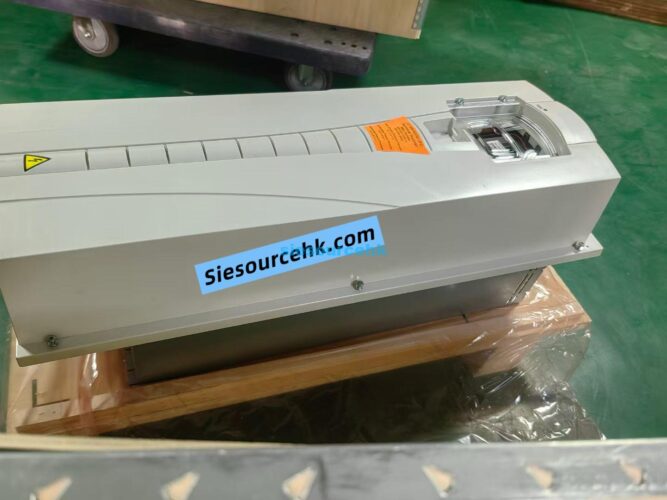
In the specialized fields of electronic components, industrial automation, and semiconductor manufacturing, the precise control of motors is not merely a matter of efficiency; it is a prerequisite for product quality and operational stability. Among the many Variable Speed Drives (VSDs) available, the ABB Inverter ACS800 series has consistently established itself as a benchmark for high-performance motor control. First introduced as a robust and versatile platform, the ACS800 remains relevant today due to its legendary reliability, flexibility across a wide power range, and, most importantly, its utilization of ABB’s proprietary Direct Torque Control (DTC) technology. This drive is frequently deployed in mission-critical applications where failure is simply not an option. For engineers, procurement specialists, and end-users dealing with sophisticated machinery, understanding the core capabilities and long-term value of the ABB Inverter ACS800 is essential for maintaining a resilient and high-performing operational infrastructure.
The Technological Edge of the ABB Inverter ACS800
The enduring popularity of the ABB Inverter ACS800 is primarily attributable to its advanced control strategy, which revolutionized AC motor control when it was introduced. This technology allows the ACS800 to deliver superior performance compared to conventional vector or scalar control methods.
Mastering Direct Torque Control (DTC) Technology
The cornerstone of the ACS800’s performance is Direct Torque Control (DTC). DTC is an advanced control method that directly controls the motor’s magnetic flux and torque without relying on conventional pulse-width modulation (PWM) frequency control. Instead, it measures the motor current and voltage, estimates the motor’s torque and flux, and then selects the optimal voltage vector to apply to the motor’s stator. This process happens exceptionally fast—with correction cycles running in microseconds—resulting in extremely rapid torque response and highly accurate speed control. Furthermore, DTC eliminates the need for speed sensors in many applications, simplifying installation and reducing component costs while still achieving near-servo performance. This level of responsiveness is vital in applications requiring dynamic load handling and quick system correction.
Achieving Optimal Motor Performance and Energy Efficiency
The precision offered by DTC translates directly into significant operational benefits. The ABB Inverter ACS800 achieves extremely tight speed and torque accuracy, typically better than 0.5% without an encoder. This accuracy is critical in processes like pump and fan systems, where constant speed is necessary for predictable flow, or in conveyor systems where synchronization is mandatory. Moreover, DTC helps maximize energy efficiency. By precisely controlling the motor’s flux, the drive ensures the motor operates at its optimal efficiency point across the entire speed and load range, often leading to substantial energy savings when compared to older or simpler VSD technologies.
Applications in Electronics and Semiconductor Manufacturing
The stringent requirements for precision, cleanliness, and uptime in the electronic components and semiconductor industries make them an ideal environment for the ABB Inverter ACS800. Its robust design and high performance capabilities directly address industry challenges.
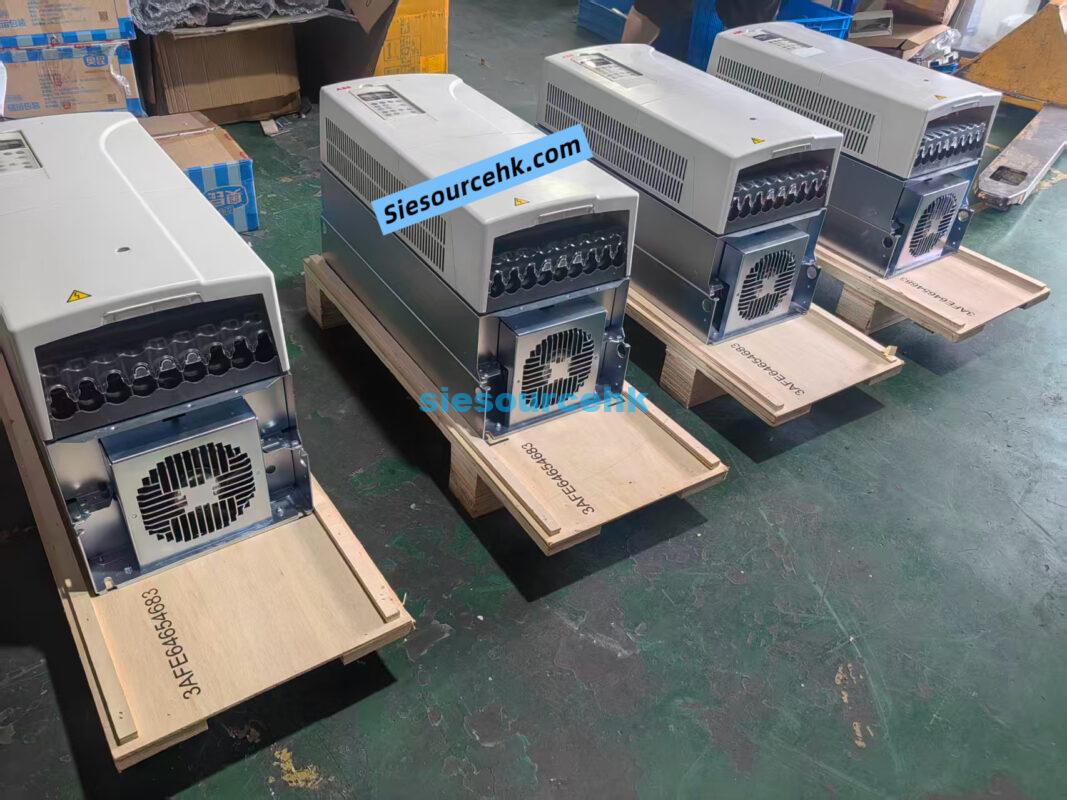
Precision Control in Wafer Handling and Processing
In semiconductor fabrication, the movement of silicon wafers through various processing steps—etching, deposition, and cleaning—requires extremely smooth, accurate, and repeatable motion. Any torque ripple or speed fluctuation can lead to defects and reduced yield. The ABB Inverter ACS800 is frequently used to drive the highly sensitive motors powering these wafer handling robots and conveyor systems. Its DTC technology ensures minimal torque pulsations, guaranteeing the smooth acceleration and deceleration required to prevent damaging or misaligning the delicate wafers. The drive’s reliability is a key factor, as downtime in a fabrication plant can cost millions per hour.
Managing High-Performance Pump and Fan Systems
Many processes in component manufacturing rely on precise control of air quality, temperature, and chemical delivery systems. The ABB Inverter ACS800 is deployed to regulate the speed of fans used in cleanrooms, where maintaining constant, particle-free airflow is non-negotiable. Similarly, the drives control high-pressure pumps that move cooling fluids or process chemicals. The drive’s ability to maintain high speed accuracy and handle complex load profiles ensures that these critical utilities operate consistently, preventing fluctuations that could compromise the integrity of the manufactured electronic devices. The drive’s built-in filtering capabilities also help minimize harmonic distortion, maintaining a clean power supply essential for sensitive electronic equipment.
Robustness, Reliability, and System Integration
Beyond technological superiority, the ABB Inverter ACS800 offers features that ensure its longevity and seamless integration into complex industrial infrastructures, a key factor for procurement specialists.
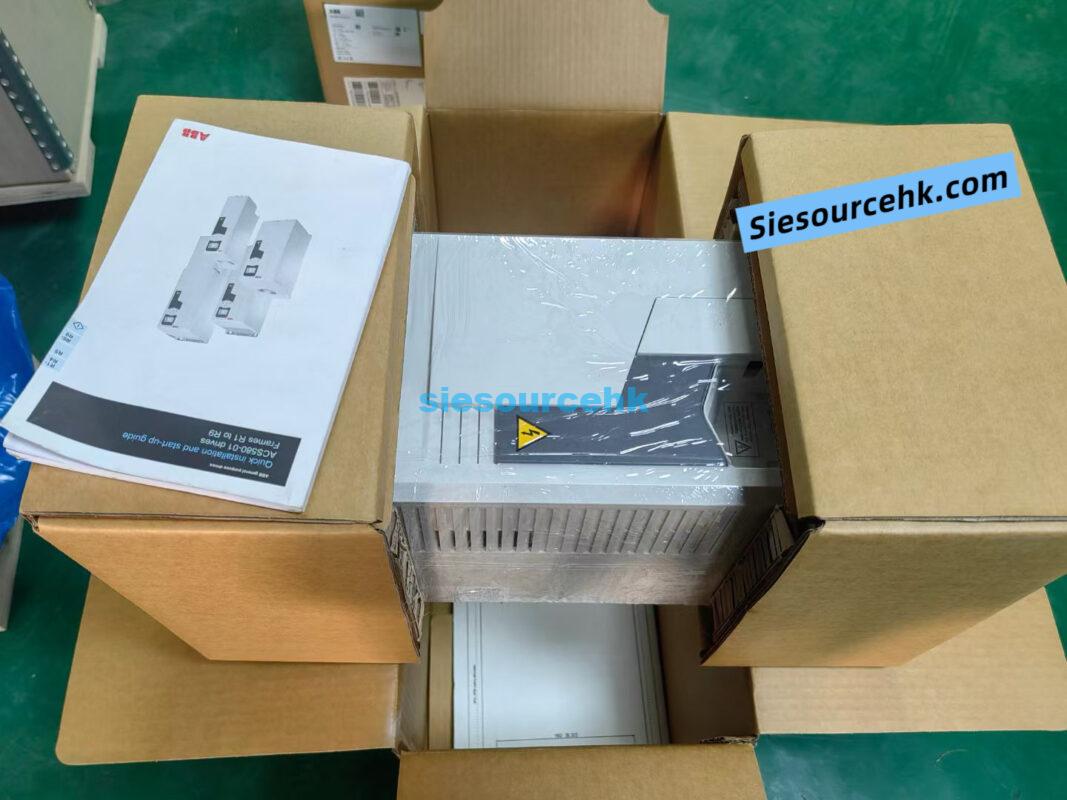
Modularity and Ease of Maintenance
The ACS800 platform is designed with a high degree of modularity. Components such as the control unit, power unit, and filter modules are often designed to be easily accessible and replaceable. This modular construction simplifies servicing and reduces Mean Time To Repair (MTTR), which is a critical performance indicator in high-stakes manufacturing environments. The drives are also available in various configurations, including wall-mounted, cabinet-built, and regenerative units, allowing engineers to select the exact physical and functional format required for their specific application. This design flexibility extends the service life and reduces maintenance overhead.
Seamless Integration with Plant-Wide Networks
Modern automation systems rely on fast, reliable communication between components. The ABB Inverter ACS800 supports an extensive range of fieldbus communication protocols, including Profibus, DeviceNet, Modbus, and EtherNet/IP. This broad compatibility allows the drive to be effortlessly integrated into existing or new plant-wide Distributed Control Systems (DCS) and Programmable Logic Controllers (PLCs). Its ability to communicate detailed diagnostic information—such as fault history, status codes, and operating parameters—in real-time supports predictive maintenance strategies and enhances overall system visibility, a non-negotiable requirement for modern industrial plants.
Conclusion
The ABB Inverter ACS800 remains a dominant force in high-performance motor control, particularly in precision-focused industries like electronic components and semiconductor manufacturing. Its foundation in revolutionary Direct Torque Control (DTC) technology delivers speed and torque accuracy essential for delicate wafer handling and stable process utility management. By combining this technical superiority with robust modular design and unparalleled network compatibility, the ACS800 offers immense long-term value. For procurement teams and engineers prioritizing uptime, reliability, and process precision, selecting the ABB Inverter ACS800 is a strategic choice that secures efficiency and safeguards product quality against the backdrop of demanding industrial conditions.
| ACS800-01-0120-3+E200+ON664 | ACS800-01-169A-3+P944+D150+N5050+FPN0-21+FEN-11+N8015 | ACS800-01-0100-3+P901+D150+N671+L502+K454 | ACS800-01-0020-5+E202+L502 |
| ACS800-104-320-3+V991 | ACS800-01-0140-5+P901 | ACS800-01-0100-3+D150+P901 | ACS800-01-0020-5+E200 |
| ACS800-104-0580-7+E205+V991 | Acs800-04-0165-3 | ACS800-01-0120-3 | ACS800-01-0025-3+D150+P901 |
| ACS800-104-0050-5+Q967 | Acs800-04-0165-3 | ACS800-01-0120-3+D150 | ACS800-01-0016-3+E202+K454+L503 |
| ACS800-01-0075-3+P901 | ACS800-01-0135-3 | ACS800-01-0075-3+E210+P901 | ACS800-04-0011-3+K454+L503 |
| ACS800-104-0580-7+E205+V991 | ACS800-04-120 | ACS800-01-0060-3 | ACS800-U1-0009-5+D150+E202+P901 |
| ACS800-04-0120-3+D150+J400+P901 | ACS800-04-0170-3+D150+N652+P901 | ACS800-01-0050-3+E202+K454+L503 |
FAQ
Q1: What is the main benefit of Direct Torque Control (DTC) in the ABB Inverter ACS800?
The main benefit of Direct Torque Control (DTC) is its ability to provide extremely fast and highly accurate torque response without the need for a speed sensor (encoder) in most applications. This results in precise speed regulation, excellent dynamic performance, and reduced motor noise, making the ABB Inverter ACS800 ideal for applications that require rapid changes in load or speed.
Q2: Does the ABB Inverter ACS800 require an external filter for harmonic reduction?
The ABB Inverter ACS800 typically incorporates advanced filtering technology to meet power quality standards. Many configurations come with built-in AC chokes or harmonic filtering capabilities designed to minimize the total harmonic distortion (THD) drawn from the main power supply. While some specialized or highly sensitive installations may require additional external filtering, the integrated solutions in the ACS800 often provide sufficient harmonic mitigation.
Q3: Is the ABB Inverter ACS800 still supported and available, given that newer ABB models exist?
Yes, the ABB Inverter ACS800 is still fully supported by ABB and is actively available in the market, often providing robust replacement parts or serving as the preferred solution for specific high-power or high-performance legacy systems. While newer generations like the ACS880 are available, the proven reliability and unique DTC performance of the ACS800 ensure its continued relevance and essential support for users worldwide.