


Blog
Can Schneider Single Phase VFD Protect AC Motors?

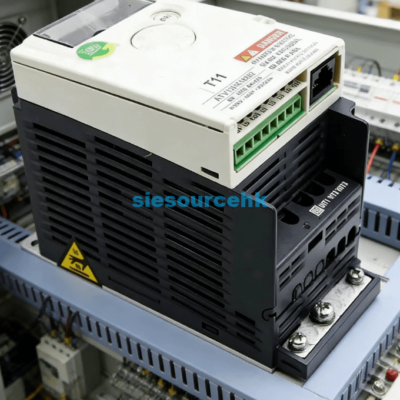
I have spent over a decade advising engineers on industrial reliability and motion control strategies. The most common question I receive is whether a Single Phase VFD Schneider can truly protect a three-phase AC motor. A Schneider Single Phase VFD provides comprehensive motor protection by preventing overloads, short circuits, and phase losses while managing thermal stress. By converting single-phase power into a controlled three-phase output, these drives act as an intelligent barrier between the power grid and your machinery.
Modern industrial environments demand equipment that does more than just vary speed. The Altivar series, such as the ATV12, integrates sophisticated logic to monitor motor health in real-time. This drive ensures that the motor operates within its safe torque and current limits. I have seen countless instances where a Single Phase VFD Schneider saved expensive motors from catastrophic failure during voltage fluctuations. Using these drives is not just about control; it is a strategic investment in hardware longevity.
How Schneider Single Phase VFD Safeguards Motor Longevity?
The internal software of a Single Phase VFD Schneider utilizes advanced algorithms to calculate motor thermal state. It does not just measure raw current; it predicts heat accumulation based on operating patterns. This proactive approach prevents the insulation breakdown that causes 40% of all motor failures. Below are the specific ways these drives ensure protection:
- Thermal Overload Protection: The drive tracks the “I-squared-t” value to prevent the motor from overheating during prolonged heavy loads.
- Short-Circuit Prevention: Integrated sensors detect output phase-to-phase shorts in milliseconds, cutting power before damage occurs.
- Phase Loss Protection: It monitors the output to ensure the motor never runs on only two phases, which leads to immediate burnout.
- Under-voltage and Over-voltage Monitoring: The VFD stabilizes performance by tripping safely if input power drifts beyond ±10% of nominal levels.
Real-Time Fault Detection and Diagnostics
A Single Phase VFD Schneider features a clear display that reports specific fault codes immediately. For example, an “OHF” code warns of drive overheating, while an “OLC” indicates a process overload. This diagnostic capability allows maintenance teams to fix issues before they lead to permanent motor damage. In my experience, these digital safeguards are far more accurate than traditional thermal relays.
Torque Limiting and Smooth Acceleration
Unlike direct-on-line starters, a VFD allows for customized ramp-up times. This “soft start” reduces the mechanical shock on motor bearings and connected gearboxes. By limiting the starting current to 150% of nominal value, the drive prevents the massive heat spikes associated with traditional startup methods. Smooth motion control directly correlates to a significant reduction in long-term maintenance costs.
Why Schneider VFD Modbus Communication Enhances Reliability?
Integrating a Schneider VFD with Modbus communication allows for centralized monitoring of entire production lines. This digital protocol provides more than just speed commands; it transmits critical performance data to a PLC or HMI. I believe that data visibility is the strongest form of preventive maintenance in modern factories. Engineers can use this information to detect early signs of mechanical wear, such as a steady increase in motor current.
Centralized Motor Health Monitoring
With a Schneider VFD with Modbus communication, you can remotely access variables like motor temperature and energy consumption. This setup allows operators to respond to alarms without being physically present at the machine. Data from the Modbus link can be logged to analyze trends and predict failures before they happen. This level of connectivity is essential for facilities adopting Industry 4.0 standards.
Reduced Wiring Complexity and Noise
Modbus uses a simple twisted-pair cable to handle multiple drives simultaneously. This reduces the need for complex analog wiring, which is often prone to electromagnetic interference. A Schneider VFD with Modbus communication ensures that the control signals remain crisp and accurate even in noisy industrial environments. Less wiring also means fewer physical points of failure, increasing the overall reliability of the automation system.
The Role of the Heat Sink Cooled Variable Speed Drive Schneider
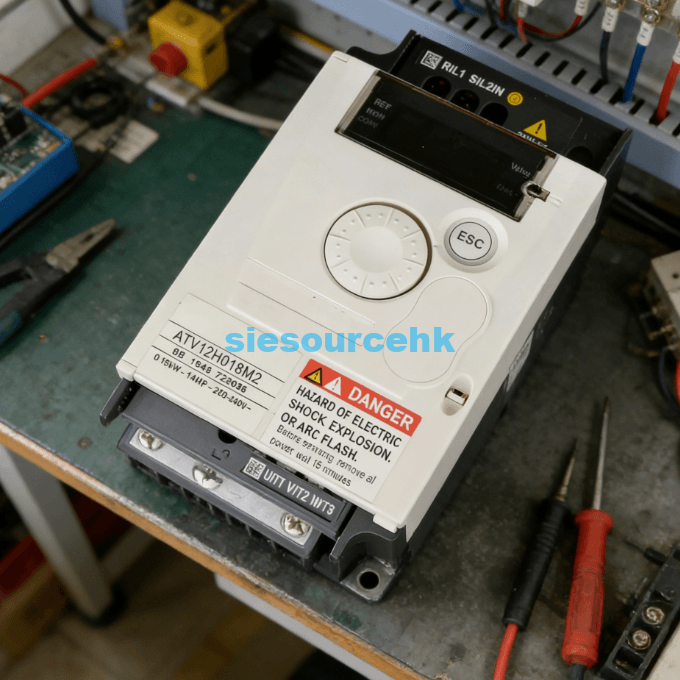
Thermal management is the primary factor determining the lifespan of industrial electronics. A Heat sink cooled variable speed drive Schneider, like the Altivar 12H series, utilizes passive cooling to ensure stability. This design is particularly valuable in environments where cooling fans might fail due to dust or humidity. Passive cooling requires less maintenance and eliminates the noise generated by high-speed fans.
Passive Thermal Dissipation Efficiency
The Heat sink cooled variable speed drive Schneider relies on a large aluminum base plate to pull heat away from the power transistors. This design allows for a compact footprint while maintaining a wide operating temperature range. According to technical data, these drives can operate at up to 50°C without derating the output current. This robustness makes them ideal for enclosed control cabinets where airflow is limited.
Durability in Harsh Industrial Conditions
In my professional view, a fanless Heat sink cooled variable speed drive Schneider is superior for textile or woodworking applications. Fans often suck in fibers and debris, leading to internal overheating and fires. By using a base-plate cooled design, Schneider protects the internal PCB from environmental contaminants. This engineering choice ensures that the drive—and the motor it controls—remains operational for much longer cycles.
Sourcing Strategies for Wholesale Industrial Automation Drives Schneider
Finding a Reliable supplier of SIE series controllers or Schneider drives is crucial for maintaining a consistent supply chain. When purchasing in bulk, you must verify that the vendor provides authentic products with full technical support. Wholesale industrial automation drives Schneider should always come with updated firmware and original documentation. I suggest evaluating suppliers based on their inventory levels and their ability to provide rapid technical assistance.
When searching for Wholesale industrial automation drives Schneider, prioritize partners who understand the technical nuances of the ATV12 series. A top-tier distributor should offer guidance on choosing between different cooling methods and power ratings. They act as a bridge between the manufacturer and your engineering team, ensuring that you get the right hardware for your specific motor protection needs.
How to Judge if the ATV12H018M2X Fits Your AC Motor?
Choosing the correct drive depends on your motor’s rated power and your specific environmental constraints. If you are running a small 0.18 kW motor on a single-phase 230V line, the ATV12H018M2X is the gold standard. You must judge the drive based on its current rating—in this case, 1.4A—and ensure it exceeds your motor’s full-load amperage.
When you evaluate a supplier, check their technical documentation for the Schneider VFD with Modbus communication integration. The ability to provide wiring diagrams and Modbus register maps is a sign of a professional vendor. In my experience, the Altivar 12 series is the most cost-effective way to add high-level protection to small motors. By selecting a drive with a built-in heat sink, you also reduce the risk of fan-related maintenance issues.
The final judgment should always focus on the “Protection Level.” Look for drives that offer IP20 ratings for cabinet mounting and integrated EMC filters. These features prevent electrical noise from affecting other nearby sensors. By choosing a Single Phase VFD Schneider from a verified source, you protect both your motor and your entire control network from unforeseen electrical stress.
Summary
The Single Phase VFD Schneider is an essential tool for protecting AC motors against electrical and thermal failures. Through the use of Schneider VFD with Modbus communication, facilities gain the visibility needed for predictive maintenance. Additionally, a Heat sink cooled variable speed drive Schneider provides the durability required for harsh conditions. Utilizing these drives from a reputable source ensures long-term operational success and minimal downtime for your industrial processes.
| ATV930D22N4 | ATV930D30N4Z | ATV61HC40N4 | ATV320U04M2C |
| ATV312HU22N4 | ATV61HD18N4 | ATV71HD18N4 | ATV71HD90N4 |
| ATV312HU075N4 | ATV312HU30N4 | ATV310HD22N4E | ATV71HD90N4 |
| ATV31HU15M2 | ATV31HU30N4A | ATV320U06M2C | ATV320U11N4B |
| ATV312HU11M2 | ATV61HD15N4 | ATV71HD22N4Z | ATV930D45N4 |
| ATV930D30N4 | ATV930D45N4 | ATV32HU30N4 | ATV930D75N4 |
| ATV930D30N4Z | ATV71HD22N4Z | ATV320U40N4B | ATV930D75N4 |
FAQ
1. Does a Schneider Single Phase VFD require a neutral wire for motor protection?
No, most Single Phase VFD Schneider units operate on a two-wire L/N or L1/L2 connection (200-240V). The motor protection logic is handled internally by monitoring the current flow through the three output phases. The drive does not need a neutral connection to the motor itself to detect faults or overloads.
2. Can I use a single-phase VFD to run a motor that is larger than the drive’s rating?
This is never recommended. If the motor’s current draw exceeds the VFD’s rating, the Single Phase VFD Schneider will trigger an “Overcurrent” or “Overload” trip immediately. Using an undersized drive can lead to premature component failure in the VFD and will not provide adequate protection for the motor.
3. How does the “Modbus Communication” help in saving energy?
A Schneider VFD with Modbus communication allows the PLC to adjust motor speed based on real-time demand. For example, in a pumping system, the PLC can lower the frequency during low-flow periods. This precise control can lead to energy savings of up to 30%, which can be monitored directly through the Modbus registers.
4. What is the benefit of a “Heat Sink Cooled” drive over a “Fan Cooled” drive?
The primary benefit is reliability. A Heat sink cooled variable speed drive Schneider has no moving parts in its cooling system. This eliminates the risk of fan failure, which is the leading cause of drive overheating. It is also more resistant to dusty environments where fans would otherwise clog and fail.
5. Why is the ATV12H018M2X popular for small industrial machines?
This specific Single Phase VFD Schneider is popular because of its extremely compact size and high reliability. It offers high torque at low speeds and includes Modbus as a standard feature. For small conveyors, pumps, and mixers, it provides professional-grade motor protection without the high cost of larger industrial drives.
Reference Sources
Schneider Electric – Altivar 12 User Manual and Specifications
IEEE – Standards for Variable Frequency Drive Motor Protection
NEMA – Application Guide for AC Adjustable Speed Drive Systems