



Blog
Servo Motor Working Principle & Control Mechanisms

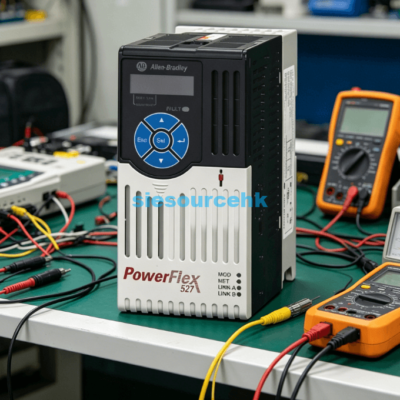
In the world of industrial automation, precision is the most critical factor for success. A servo motor is a self-contained electrical device that rotates parts of a machine with high efficiency. These motors are famous for their ability to maintain precise angular or linear positions. Unlike standard motors, they do not just spin; they follow specific commands to reach a target location.
The fundamental servo motor working principle relies on a sophisticated closed-loop system. This system uses feedback to constantly adjust the motor’s performance and correct any errors. Because of this accuracy, these devices are essential in robotics, CNC machinery, and automated manufacturing. They provide the torque and speed necessary for complex tasks while ensuring consistent repeatability.
Modern industries rely on high-performance hardware to provide these complex motion solutions. Manufacturers design motors that handle intense industrial workloads while maintaining sub-millimeter precision. Understanding how these components interact is the first step toward mastering automated motion control.
How Does a Servo Motor Work?
To understand the servo motor working principle, one must look at the internal components. Every unit contains a DC or AC motor, a gear reduction unit, a position-sensing device, and a control circuit. The sensing device, usually an encoder or resolver, acts as the “eyes” of the system. It monitors the output shaft’s current position and sends data back to the controller.
The process begins when the control circuit receives a signal representing the desired position. It compares this target value with the actual position reported by the feedback sensor. If a difference exists, the controller generates an error signal to move the motor. This continuous adjustment loop ensures the motor reaches and stays at the intended coordinate.
Pulse Width Modulation in Control
Pulse Width Modulation (PWM) is the primary method used to control the motor’s movement. The width of the electrical pulse determines the duration of power sent to the motor coils. By varying these pulses, the controller manages the speed and direction of the rotation precisely. This method allows the motor to respond to changes in load almost instantaneously.
| Feature | Description | Typical Value |
| Rotation Angle | Range of movement | 90° to 360° (or continuous) |
| Feedback Type | Mechanism for correction | Encoder / Resolver |
| Input Signal | Type of control command | PWM (Pulse Width Modulation) |
| Position Accuracy | Precision level | Within +/- 0.01mm |
Key Components and Control Mechanisms
The servo motor working principle depends heavily on the integration of its electrical and mechanical parts. The encoder is perhaps the most vital component in the assembly. High-end models often feature high-resolution absolute encoders that track position even after power loss. This eliminates the need for complex homing sequences during machine startup.
Gearing mechanisms also play a significant role by increasing torque while reducing speed. Small motors can move heavy loads because the internal gears multiply the force exerted by the rotor. However, quality gears must have low backlash to prevent errors in the feedback loop. This mechanical integrity is what separates industrial-grade servos from hobbyist versions.
Electronic Amplification and Drivers
Electronic amplifiers or drivers act as the brain of the entire operation. These units take low-power control signals and transform them into high-power currents for the motor. Advanced drivers utilize complex algorithms to tune the motor’s response. This tuning prevents vibrations and ensures smooth motion even at high speeds.
Data shows that industrial servo systems often operate at frequencies up to 16 kHz. This high frequency allows the controller to make thousands of adjustments every second. Consequently, the motor can maintain a constant speed even if the physical load changes suddenly. Such reliability is crucial for tasks like 3D printing or high-speed packaging.
Why Closed-Loop Feedback is Essential
The core of the servo motor working principle is the feedback loop, often called a closed-loop system. In an open-loop system, like a standard stepper motor, the controller sends a command and assumes it is followed. If the motor stalls or misses a step, the controller never knows. This leads to inaccuracies that can ruin a production batch.
In a closed-loop servo system, the encoder provides real-time data to the servo drive. If the motor is pushed off course by an external force, the drive detects the variance. It immediately increases power to the motor to fight the resistance and return to the correct path. This self-correcting behavior provides the high reliability required for safety-critical applications.
Predictive Maintenance and Intelligence
Modern servo drives also monitor parameters like current draw and internal temperature. By analyzing this data, the system can predict mechanical failures before they happen. For example, a sudden spike in current might indicate a jammed gear or a worn bearing. This intelligence makes servos a key part of predictive maintenance strategies in “Smart Factories.”
Selecting the Right Servo System for Industrial Needs
Choosing a servo motor requires a deep understanding of your specific application requirements. You must consider the torque-to-inertia ratio, which determines how fast the motor can accelerate. If the motor is too small for the load, it will overheat or fail to reach the target position. Conversely, an oversized motor wastes energy and increases costs unnecessarily.
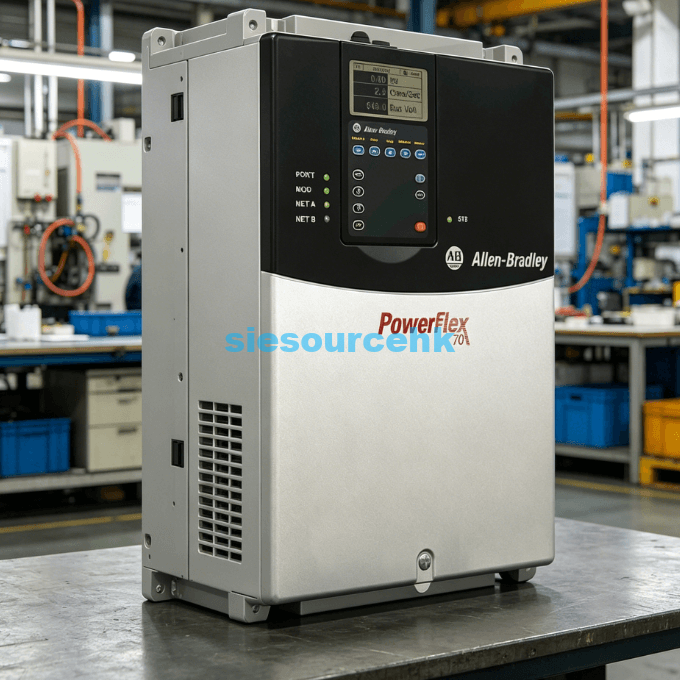
Compatibility with existing hardware is another major factor in the selection process. For those using Rockwell environments, selecting compatible Allen-Bradley servo drivers and motors ensures seamless integration with Logix-based controllers. These systems are optimized for high-speed EtherNet/IP communication and integrated safety features.
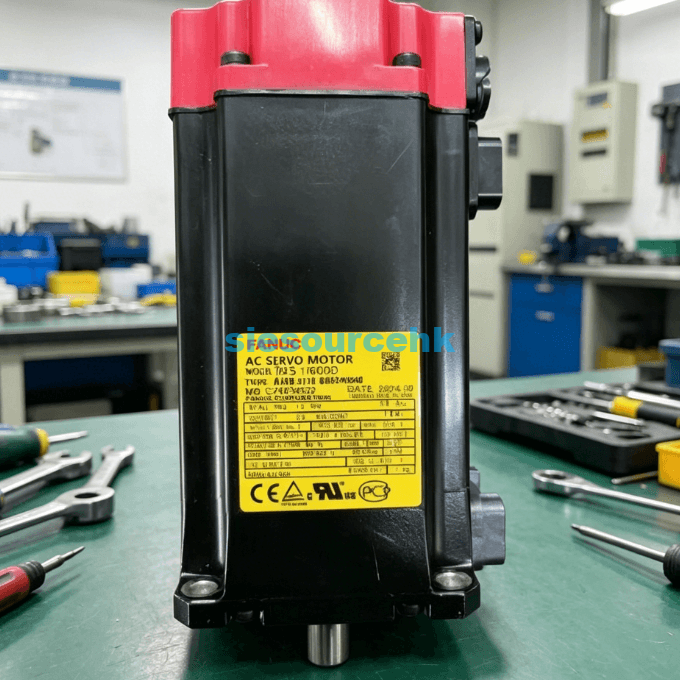
In heavy-duty machining environments, the requirements shift toward high-torque capabilities. Systems like Fanuc servo spindle motors are often the standard for high-speed CNC machining and robotic arms. Their design focuses on maintaining extreme precision even under the heavy stress of metal cutting or rapid assembly lines.
Furthermore, advanced electronics assembly often requires ultra-high resolution and compact footprints. The Mitsubishi Melservo servo systems are highly praised for their “One-Touch” tuning, which simplifies the setup of complex motion paths. These units can feature up to 26-bit encoders, providing the minute detail needed for semiconductor manufacturing.
When looking at premium brands, consider the following technical benchmarks:
Allen-Bradley: Best for integrated safety and high-speed industrial network communication.
Fanuc: Ideal for high-torque spindle applications and extreme precision in milling and heavy robotics.
Mitsubishi: Known for ultra-high encoder resolution and compact drive footprints for space-constrained cabinets.
Summary
The servo motor working principle revolves around using feedback to achieve high-precision motion control. By combining a motor, encoder, and controller, these systems ensure that mechanical movements perfectly match electronic commands. This technology provides the accuracy, speed, and reliability necessary for modern automated industrial processes.
FAQ
1. How does a servo motor differ from a stepper motor?
A servo motor uses a closed-loop system with feedback, while a stepper motor typically operates in an open-loop. Servos are better for high-speed, high-torque applications where accuracy is non-negotiable.
2. What is the role of the encoder in the servo motor working principle?
The encoder tracks the actual position of the motor shaft and sends this data to the controller. This allows the system to correct errors in real-time and maintain perfect positioning.
3. Can servo motors rotate continuously?
Yes, while many servos are designed for specific angles, industrial continuous rotation servos can spin indefinitely. These are often used for conveyor belts or drive wheels in mobile robotics.
4. What signal is used to control a servo motor?
The most common control signal is Pulse Width Modulation (PWM). The length of the pulse tells the motor exactly where to move or how fast to rotate.
5. Why do servo motors have three wires?
Standard small servos use three wires: power, ground, and a control signal wire. Industrial servos may have more wires to accommodate high-voltage power and separate feedback data lines.
Reference Sources
Rockwell Automation (Allen-Bradley): Motion Control and Servo Motors Overview
Fanuc Corporation: Industrial Robot and Servo Motor Technology
Mitsubishi Electric: MELSERVO Servo System Technical Documentation