



Blog
Siemens 3RV2021-4NA15 Specs: 23–28A Motor Protection Circuit Breaker Guide

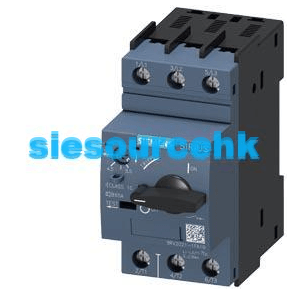
The Siemens 3RV2021-4NA15 is a SIRIUS 3RV2 motor protection circuit breaker with an adjustable overload release range of 23–28 A, a 364 A instantaneous short-circuit release, and a Class 10 trip characteristic. This S0-size device uses screw terminals and includes one normally open and one normally closed transverse auxiliary contact. It is designed to protect motor circuits against overload and short-circuit conditions, provided its ratings match the motor and the installation’s available fault current.
Siemens 3RV2021-4NA15 Technical Specifications
The most important selection parameters are the adjustable current range, short-circuit release threshold, trip class, and switching capacity. These values determine whether the breaker is appropriate for the intended motor circuit.
| Parameter | Specification |
|---|---|
| Manufacturer | Siemens |
| Product family | SIRIUS 3RV2 |
| Complete model number | 3RV2021-4NA15 |
| Product type | Motor protection circuit breaker |
| Frame size | S0 |
| Overload release adjustment range | 23–28 A |
| Trip characteristic | Class 10 |
| Instantaneous short-circuit release | 364 A |
| Terminal connection | Screw terminals |
| Auxiliary contact configuration | 1 NO + 1 NC, transverse-mounted |
| Switching capacity | Standard switching capacity; verify the applicable short-circuit rating for the installation |
For the manufacturer’s product information, consult the Siemens Industry Mall listing for 3RV2021-4NA15. Confirm the latest datasheet and applicable electrical ratings before installation.
What Does the 3RV2021-4NA15 Protect Against?
The 3RV2021-4NA15 combines motor overload protection with short-circuit protection in a manually operated protective switching device. It can disconnect a motor circuit when the monitored electrical conditions exceed the device’s protection thresholds.
These two protection functions address different problems:
- Overload protection: Responds to sustained excessive current that can cause motor windings to overheat.
- Short-circuit protection: Responds to high fault currents that require rapid interruption.
- Manual switching: Allows the operator to switch the protected circuit using the device’s operating mechanism.
A motor protection circuit breaker does not eliminate the need to assess the complete electrical installation. Cable sizing, available fault current, upstream protection, coordination with downstream equipment, and applicable electrical codes must all be considered.
Understanding the 23–28A Current Range and Class 10 Trip
How should the 23–28A setting be selected?
The adjustable overload release range is the defining parameter of this model. The setting should be selected according to the motor’s nameplate current and the manufacturer’s application instructions, not simply the motor’s nominal power.
For example, if a motor’s rated current is 25 A under the intended operating conditions, that value falls within the device’s adjustment range. The final setting still depends on the motor data, starting method, ambient conditions, and applicable protection requirements.
A motor rated at 18 A would fall below the specified adjustment range, while a motor rated at 32 A would exceed it. In either case, another suitably rated device should be evaluated rather than forcing the setting outside the approved range.
What does Class 10 mean?
Class 10 identifies the overload trip characteristic under specified test conditions. It is relevant when evaluating motor starting behavior because a motor can draw substantially more current during acceleration than during normal operation.
Class 10 should not be interpreted as a universal ten-second trip time at every overload current. Actual tripping behavior depends on the magnitude and duration of the current, the device’s thermal state, and the manufacturer’s time-current characteristics.
Why does the 364A short-circuit release matter?
The 364 A value identifies the specified instantaneous short-circuit release threshold. It is different from the breaker’s ultimate or rated short-circuit breaking capacity.
Before selecting this breaker, engineers must verify that its short-circuit breaking rating and any required backup protection are suitable for the prospective fault current at the installation point. The 364 A threshold alone does not establish whether the device can safely interrupt every possible fault.
Applications in Industrial Motor Control
The 3RV2021-4NA15 can be considered for motor circuits whose operating current falls within its 23–28 A adjustment range and whose fault protection requirements are met.
- Pump motors: Protection for suitable pump drives in water handling and industrial process systems.
- Fans and ventilation equipment: Motor circuit protection for industrial air movement systems.
- Conveyors: Protection for appropriately rated motors used in material handling.
- Production machinery: Motor protection in equipment such as mixers, auxiliary machinery, and processing lines.
These are potential applications rather than a guarantee of suitability for every installation. Motor starting current, duty cycle, ambient temperature, fault level, and required coordination can affect the final choice.
3RV2021-4NA15 Replacement and Selection Checklist
When replacing an existing motor protection circuit breaker, verify the full ordering number and electrical requirements instead of relying on appearance or frame size alone.
- Check the motor nameplate: Confirm rated current, voltage, operating duty, and starting characteristics.
- Verify the adjustment range: Ensure the required overload setting falls within 23–28 A.
- Confirm short-circuit protection: Review the prospective fault current, breaking capacity, and upstream coordination requirements.
- Check accessories: Confirm the required 1 NO + 1 NC auxiliary contacts and their mounting arrangement.
- Inspect the installation: Verify terminal compatibility, wiring requirements, panel space, and mounting arrangements.
- Review the complete configuration: Check whether the circuit uses a contactor, overload coordination arrangement, or other accessories that must remain compatible.
For a related example from the same Siemens motor-protection family, see the Siemens 3RV2011-1DA10 specifications and motor protection guide. That model has a different 2.2–3.2 A adjustment range, so it is not a direct substitute for the 3RV2021-4NA15.
When the motor circuit also requires a separate switching device, review the Siemens 3RT6015-1AN21 power contactor as a related component. A contactor performs switching duties and should not be treated as a replacement for the motor protection breaker.
Where to Source Siemens Motor Protection Components
For replacement or maintenance projects, begin by confirming the complete part number and the required product condition. If you are sourcing additional Siemens control equipment, the Siemens low-voltage control and distribution category provides a starting point for exploring related components.
When requesting a quotation for the 3RV2021-4NA15, provide the full model number, quantity, destination, and any relevant motor or installation details. Confirm product availability and delivery arrangements directly before scheduling maintenance or replacement work.
Conclusion
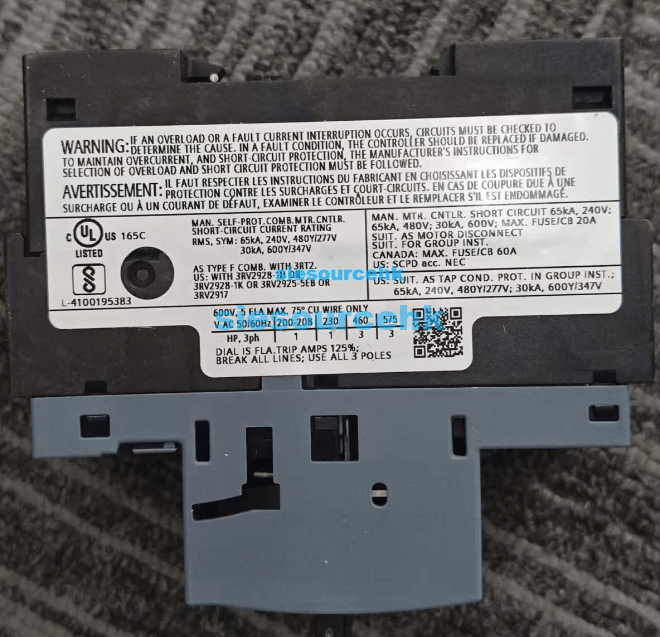
The Siemens 3RV2021-4NA15 is a Class 10 SIRIUS 3RV2 motor protection circuit breaker with a 23–28 A adjustable overload release, a 364 A instantaneous short-circuit release, screw terminals, and 1 NO + 1 NC auxiliary contacts. The correct choice depends on matching the motor’s rated current and starting characteristics while confirming the installation’s short-circuit protection requirements. Always use the complete model number and current Siemens documentation when selecting a replacement.
Frequently Asked Questions
What is the current adjustment range of the Siemens 3RV2021-4NA15?
Its adjustable overload release range is 23–28 A. The setting should be selected according to the motor nameplate and applicable protection requirements.
What does the 364 A rating mean?
It is the specified instantaneous short-circuit release threshold. It is not the same as the breaker’s rated short-circuit breaking capacity.
What does Class 10 mean on this motor protection breaker?
Class 10 identifies the overload trip characteristic under defined test conditions. Actual trip time varies with current magnitude and the device’s thermal state.
Can the 3RV2021-4NA15 be used with any 25 A motor?
Not automatically. The current falls within its adjustment range, but voltage, starting conditions, fault current, coordination, and installation requirements must also be checked.
Can the 3RV2011-1DA10 replace the 3RV2021-4NA15?
No, not as a direct replacement based on the published current ranges. The 3RV2011-1DA10 has a 2.2–3.2 A adjustment range, substantially below the 23–28 A range of the 3RV2021-4NA15.