


Blog
Siemens Industrial PLC: Guide to Programmable Controllers

In my experience as an automation consultant, choosing a control system is the most critical decision for any factory. I have seen many facilities struggle with unexpected downtime due to unreliable hardware. This is why the Siemens Industrial PLC remains a top choice for professionals globally. These systems provide the backbone for complex machinery and high-speed production lines.
A siemens programmable logic controller is designed to handle harsh electrical environments while executing precise logic. Whether you are managing a small water treatment plant or a massive automotive assembly line, reliability is non-negotiable. I often advise clients that the initial cost of a high-quality controller is offset by years of stable operation.
This article explores the technical foundations of these controllers and how they improve industrial efficiency. We will examine the architecture, software capabilities, and selection criteria for your next project. My goal is to help you understand why these devices are considered the gold standard in modern automation.
Understanding the Siemens Programmable Logic Controller
A siemens programmable logic controller is a ruggedized computer used for industrial automation. Unlike standard computers, these devices are built for continuous operation in extreme temperatures and high vibration. They monitor inputs from sensors and control outputs to actuators based on a custom program.
According to the International Electrotechnical Commission (IEC), specifically standard IEC 61131-3, PLCs must follow specific programming languages. Siemens strictly adheres to these standards, ensuring that engineers can use Ladder Logic or Structured Text. This standardization makes it easier for teams to maintain and troubleshoot systems across different regions.
The architecture of a Siemens Industrial PLC is typically modular, allowing for easy expansion. You can add digital or analog modules as your system grows. This flexibility prevents the need to replace the entire control system when a new machine is added.
Compliance with Global IEC Standards
Adherence to IEC 61131-3 is a hallmark of the siemens programmable logic controller. This standard defines the programming languages and data types used in industrial automation. By following these rules, Siemens ensures that their code is portable and recognizable by trained professionals worldwide. This reduces the learning curve for new engineers entering the field.
The Role of the Central Processing Unit
The CPU is the brain of any Siemens Industrial PLC. It executes the user program and manages the communication between all connected modules. High-performance CPUs can process thousands of logic instructions in less than a millisecond. This speed is essential for applications requiring high-precision timing, such as synchronized motion control.
Hardware Modularity and Scalability
Siemens offers various form factors to fit different cabinet sizes and power requirements. Small, compact units are ideal for simple machine control. Larger, rack-based systems are used for plant-wide control architectures. This scalability allows businesses to start small and expand their automation footprint as needed.
Key Benefits of a Siemens Industrial PLC
The primary reason to choose a Siemens Industrial PLC is its robust communication capabilities. These controllers use Profinet, an Ethernet-based protocol that allows for high-speed data exchange. I have found that Profinet significantly simplifies the wiring process in large factories.
Data integrity is another major advantage of a siemens programmable logic controller. Siemens integrates diagnostic functions directly into the hardware. If a wire breaks or a module fails, the PLC can report the exact location of the fault. This feature minimizes “mean time to repair” (MTTR), which is a vital metric for production managers.
Furthermore, the longevity of Siemens hardware is remarkable. Many systems installed twenty years ago are still running today. Siemens provides a clear “lifecycle” for their products, giving users ample warning before a series is discontinued. This long-term support is rare in the rapidly changing world of technology.
Advanced Networking and Profinet Integration
Profinet is the backbone of the Siemens Industrial PLC ecosystem. It supports real-time communication between the controller, HMI panels, and frequency drives. This integration allows for seamless data flow across the entire production floor. It also supports wireless communication for mobile robotics and AGVs.
Rugged Design for Challenging Environments
Industrial environments are often filled with dust, moisture, and electromagnetic interference. A siemens programmable logic controller is tested to meet high NEMA (National Electrical Manufacturers Association) standards. The circuitry is protected against power surges and noise from nearby motors. This durability ensures that the logic execution remains stable regardless of external conditions.
Security and Intellectual Property Protection
Modern automation faces increasing cybersecurity threats. Siemens includes password protection and block encryption features in their controllers. You can protect your proprietary logic from being copied or modified by unauthorized users. These security layers are essential for maintaining a competitive edge in manufacturing.
Comparing Different Siemens PLC Families
Navigating the various families of a siemens programmable logic controller can be daunting. The Simatic S7-1200 is generally the entry-level choice for basic logic tasks. It is a compact controller with integrated I/O, making it cost-effective for small projects.
For more complex requirements, the Simatic S7-1500 is the flagship Siemens Industrial PLC. It offers much higher processing power and a built-in display for local diagnostics. I recommend the S7-1500 for large-scale integration and motion control applications. It handles complex mathematical operations with ease.
There are also specialized “F-series” controllers for safety-critical applications. These are used to manage emergency stops and light curtains. By combining standard control and safety in one unit, you can reduce the complexity of your electrical cabinet.
S7-1200: The Compact Powerhouse
The S7-1200 is the versatile choice for “Basic Controllers” within the Siemens range. It features an integrated Profinet interface for easy connection to other devices. This controller is perfect for standalone machines where space is limited. Its high-speed counters and pulse outputs make it surprisingly capable for its size.
S7-1500: The Flagship of Industrial Automation
If your project requires high-end performance, the S7-1500 is the logical step. It features a fast backplane bus and enhanced system diagnostics. This Siemens Industrial PLC can manage hundreds of axes of motion simultaneously. Its large memory capacity allows for extensive data logging and recipe management.
Distributed I/O Systems (ET 200)
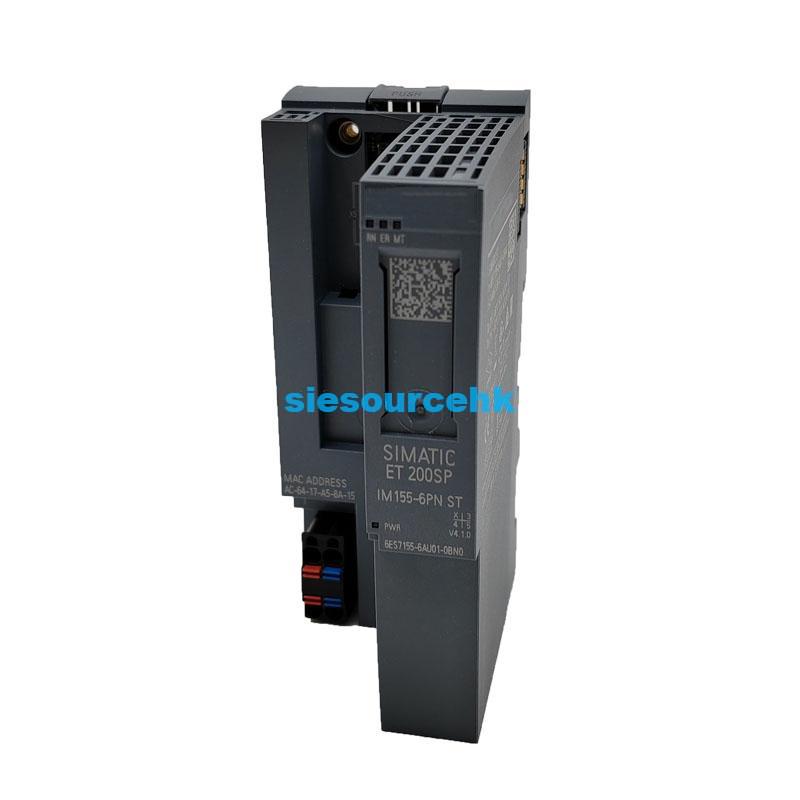
Sometimes, you don’t need a full controller at every point of a machine. The ET 200 series allows you to place inputs and outputs near the sensors while communicating back to a central siemens programmable logic controller. This “distributed” approach reduces the amount of heavy cabling required. It improves signal quality by shortening the distance between sensors and modules.
Identifying Authentic Siemens PLC Components
When purchasing a Siemens Industrial PLC, authenticity is a major concern. The market is often flooded with counterfeit or refurbished units passed off as new. Using non-authentic parts can lead to catastrophic system failures or voided warranties. I always recommend verifying the serial numbers and the condition of the factory seals.
Reliable controllers should come from reputable sources that specialize in industrial automation. If you are looking for specific hardware, you might check the 6ES7122-1BB00-0AA0 CPU model to ensure you are getting original parts. This specific model is often a core component in many Siemens-based systems.
For a broader selection of modules and accessories, browsing a Siemens PLC category can help you build a complete system. Selecting a vendor that understands the technical nuances of these controllers is essential. They can provide the necessary documentation and support to ensure a smooth installation process.
Summary
The Siemens Industrial PLC stands as a testament to German engineering in the automation sector. By choosing a siemens programmable logic controller, you invest in long-term reliability and global support. Whether you use the compact S7-1200 or the powerful S7-1500, these devices ensure your industrial processes remain efficient and secure.
FAQ
1. What software is used to program a Siemens Industrial PLC?
The standard software is TIA Portal (Totally Integrated Automation). It provides a single environment for programming the PLC, designing the HMI, and configuring the network.
2. Is a Siemens programmable logic controller compatible with other brands?
Yes, they support standard protocols like Modbus TCP and OPC UA. This allows them to communicate with third-party drives, sensors, and SCADA systems.
3. How long do Siemens PLCs typically last?
In a clean environment, these controllers can last over 20 years. However, regular maintenance and proper cooling are necessary to maximize their lifespan in industrial settings.
4. What is the difference between a PLC and a PAC?
While the terms are often used interchangeably, a PAC (Programmable Automation Controller) usually offers more advanced processing and multitasking capabilities. Many higher-end Siemens models are technically classified as PACs.
5. Can I update the firmware on my Siemens Industrial PLC?
Yes, Siemens regularly releases firmware updates to improve security and add features. These can be downloaded from the official Siemens support site and uploaded via TIA Portal.
Reference Sources
IEC (International Electrotechnical Commission): Standard 61131-3 for Programmable Controllers.
Wikipedia: Programmable Logic Controller History and Development.
NEMA (National Electrical Manufacturers Association): Standards for Industrial Control and Systems.
| 6ES7222-1HF22-0XA0 | 6ES7142-4BF00-0AA0 | 6ES7274-1XF30-0XA0 | 6ES7195-1GF30-0XA0 |
| 6ES7972-0AB01-0XA0 | 6ES7144-4GF01-0AB0 | 6ES7028-0ES87-2DA1 | 6ES7416-5HS06-0AB0 |
| 6ES7450-1AP01-0AE0 | 6ES7145-4FF00-0AB0 | 6ES7274-1XF30-0XA0 | 6ES7195-1GF30-0XA0 |
| 6ES7222-1HF22-0XA0 | 6ES7142-4BF00-0AA0 | 6ES7431-0HH00-0AB0 | 6ES7416-5HS06-0AB0 |
| 6ES7972-0AB01-0XA0 | 6ES7322-1HH01-0AA0 | 6ES7274-1XA30-0XA0 | 6ES7392-1AM00-0AA0 |
| 6ES7288-1SR60-0AA1 | 6ES7313-5BE01-0AB0 | 6ES7532-5ND00-0AB0 | 6ES7331-7KF02-0AB0 |
| 6ES7328-0AA00-7AA0 | 6ES7321-1BH10-0AA0 | 6ES7531-7TF00-0AB0 | 6ES7321-7BH01-0AB0 |
| 6ES7718-1CB07-1AD1 | 6ES7274-1XF30-0XA0 | 6ES7532-5ND00-0AB0 | 6ES7195-7HC00-0XA0 |