



Blog
How to Stop Allen Bradley Drive Motor Vibration?

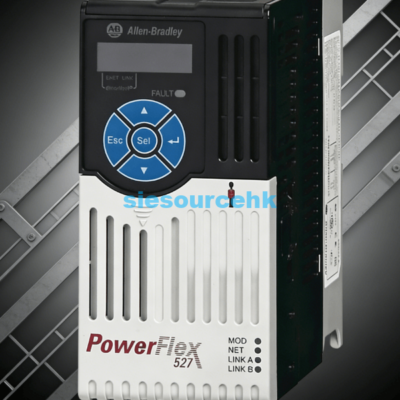
Motor vibration in an allen bradley drive system is a serious issue that disrupts industrial production. To stop the vibration, you must identify if the cause is mechanical resonance or improper electronic gain tuning. Most vibration problems occur when the drive’s control loop frequency matches the machine’s natural frequency. Performing an autotune and setting up notch filters can eliminate up to 90% of high-frequency oscillations.
Excessive shaking often leads to audible noise and increased heat in the motor windings. If an allen bradley drive continues to operate under high vibration, the bearings may fail prematurely. Reducing vibration levels to below 2.8 mm/s velocity follows international standards for healthy industrial operation. Engineers must balance high-speed performance with system stability to ensure long-term reliability.
The first step in any troubleshooting process is to check the physical mounting of the motor. Loose bolts or misaligned couplings are frequent culprits for low-frequency vibration. Electrical noise can also distort the feedback signal, leading to erratic motor behavior. Understanding these technical nuances allows you to restore the seamless productivity your facility requires.
How to Tune an Allen Bradley Variable Frequency Drive for Stability
Tuning an allen bradley variable frequency drive requires a systematic approach to motor control logic. Most modern units offer a built-in “Autotune” feature that calculates motor resistance and inductance. This process allows the drive to build an accurate mathematical model of the connected motor. Using the Static or Rotate Tune function can improve torque response and reduce low-speed vibration.
If vibration occurs only at specific speeds, the software can be configured to bypass those frequencies. This is a common solution for fans or pumps that have a natural resonant point. By skipping these frequencies, the motor never stays long enough at the problematic speed to build up vibration. This keeps the entire system within safe operating limits without expensive hardware changes.
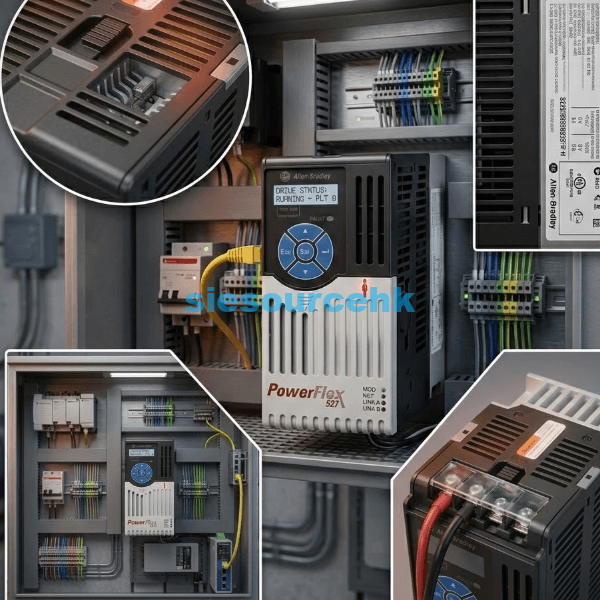
Implementing Skip Frequencies in VFDs
An allen bradley frequency drive allows users to define “Jump Frequencies” or “Skip Frequencies” in the parameter list. This prevents the motor from running at specific RPMs that cause the machine to shake.
- Identify the exact Hertz range where the vibration is most severe using a tachometer.
- Navigate to the “Skip Frequency” parameters in the drive’s programming menu (usually parameters like P047).
- Set the center frequency to the identified vibration point to prevent the motor from dwelling there.
- Define a “Skip Bandwidth” to cover the entire resonant range, typically between 2 to 5 Hz.
- Test the machine to ensure it transitions through this range without any hesitation or noise.
- Monitor the output current to ensure the skip does not cause current spikes during acceleration.
Adjusting Acceleration and Deceleration Ramps
Fast ramp times can trigger vibration in systems with high inertia loads. If the allen bradley variable frequency drive starts or stops too quickly, the load may “bounce” against the gears. Increasing the acceleration time allows the system to overcome inertia gradually and smoothly. S-Curve acceleration profiles can also help by smoothing the transition at the start and end of speed changes.
Reducing Oscillation in Allen Bradley Servo Drive Systems
An allen bradley servo drive operates with a much higher feedback speed than a standard VFD. Because of this precision, even a small mechanical play can cause the servo to “hunt” for its position. This hunting manifests as a high-pitched buzz or constant micro-vibrations in the motor housing. Engineers typically use “Notch Filters” to target and suppress these specific high-frequency resonance points.
Modern Allen Bradley hardware, such as the Kinetix series, features advanced “Load Observer” technology. This software feature automatically compensates for changes in load inertia in real-time. By enabling Load Observer, the drive can suppress vibration even as the mechanical conditions change during operation. This is ideal for robotic arms or packaging machines that handle varying weights.
Tuning Gain Settings for Precision
The “Proportional” and “Integral” gains determine how fast the allen bradley servo drive responds to positional errors. If the proportional gain is too high, the motor will oscillate rapidly as it overcorrects its position. Reducing the gain lowers the system stiffness, which often stops the vibration immediately.
- Proportional Gain: Controls the immediate response; high values lead to high-frequency shaking.
- Integral Gain: Removes steady-state error; high values cause slow, low-frequency swaying.
- Derivative Gain: Acts as a brake to prevent overshoot; must be used sparingly to avoid noise.
- Current Loop Tuning: Ensures the power stage delivers smooth energy to the motor windings.
- Velocity Feedforward: Helps the system anticipate motion, reducing the work required by the PID loop.
Implementing Notch Filters for Resonance
A notch filter is a digital tool that tells the allen bradley drive to ignore a specific frequency. This is used when the vibration is caused by a mechanical resonance that cannot be fixed physically. By “notching out” the resonant frequency, the drive provides full power at all other speeds without exciting the machine. This allows for high-gain performance without the risk of hardware damage.
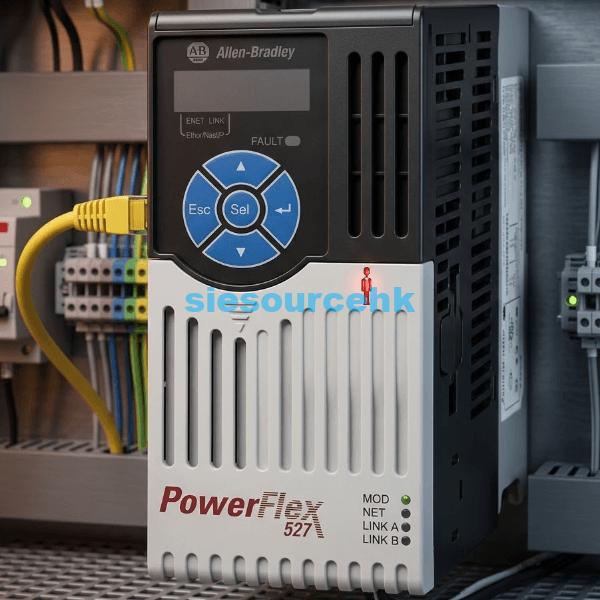
Diagnosing Mechanical Causes for Allen Bradley Drives Vibration
Mechanical issues often disguise themselves as electrical problems within allen bradley drives. Loose couplings, misaligned shafts, or worn-out belts create physical instability that the drive tries to compensate for. This compensation loop creates a cycle of vibration that worsens as the motor speed increases. Operators should always inspect all physical connections before changing any software parameters in the drive.
Inertia mismatch is another common cause of instability in industrial motion control. If the load is too heavy compared to the motor’s rotor inertia, the system becomes difficult to control. Industry standards suggest keeping the inertia ratio below 10:1 for most high-performance applications. Higher ratios require extremely conservative tuning to prevent the motor from vibrating during deceleration.
Inspecting Bearings and Couplings
Worn bearings create uneven friction that the allen bradley frequency drive cannot easily overcome. This friction produces “torque ripple,” which feels like a constant vibration across all speed ranges. Replacing old bearings can reduce the baseline vibration level by over 40% in many aging machines. Flexible couplings should also be checked to ensure they are not brittle or cracked.
Shielding and Grounding to Reduce Signal Noise
Electrical noise can distort the signals traveling from the motor encoder to the allen bradley drive. If the drive receives a “dirty” feedback signal, it will provide erratic power to the motor. This erratic power creates torque ripples that feel identical to mechanical vibration. Proper grounding and using high-quality shielded cabling are essential to prevent this type of electromagnetic interference.
How to Identify the Right Allen Bradley Drive Solution
Choosing the correct hardware is the most effective way to prevent vibration issues from the start. When selecting allen bradley variable frequency drives, you must match the drive’s current rating to the motor’s peak load. An undersized drive will struggle to maintain control, leading to instability and potential faults. You should also consider the environmental conditions, as heat can affect the internal electronics and tuning stability.
High-performance applications often require a dedicated allen bradley servo drive to handle complex motion profiles. These drives offer superior vibration suppression algorithms that standard VFDs lack. If your application involves frequent starting, stopping, or precise positioning, a servo system is the better investment. It provides the necessary feedback resolution to detect and stop vibrations before they become damaging.
For B2B users looking for reliable replacements or new components, sourcing from experienced suppliers is vital. Siesource provides a comprehensive range of professional motion control hardware to meet demanding industrial needs. You can explore a wide selection of high-performance components by visiting the Allen Bradley servo drivers and motors category. Choosing the right partner ensures you receive hardware that is easier to tune and maintain.
Summary
Stopping vibration in an allen bradley drive involves a mix of mechanical inspection and software tuning. Prioritize autotuning and notch filter implementation to resolve electronic oscillations quickly. By ensuring proper inertia matching and mechanical alignment, you can maintain a stable and efficient production line. Regular maintenance prevents small vibrations from turning into costly equipment failures.
| 25C-D4P0N104 | 25C-D2P3N104 | 20F11ND065JA0NNNNN | 20F11NC085AA0NNNNN | 20F11ND077JA0NNNNN |
| 25C-D2P3N104 | 25C-A8P0N114 | 20F11NC030JA0NNNNN | 20F11ND011AA0NNNNN | 20F1AND125JNONNNNN |
| 25C-A8P0N114 | 25C-D1P4N114 | 20F11NC043JA0NNNNN | 20F11ND040AA0NNNNN | 20F1AND248JNONNNNN |
| 25C-D1P4N114 | 25C-D013N114 | 20F11NC085JA0NNNNN | 20F11FD034JA0NNNNN | 20F1ANC205JN0NNNNN |
| 25C-D013N114 | 20F11NC085AA0NNNNN | 20F11NC104JA0NNNNN | 20F1AND248AN0NNNNN | 20F1AND125JN0NNNNN |
FAQ
1. How do I start the autotune process on an Allen Bradley drive?
You can start the autotune process through the drive’s HMI or by using Studio 5000 software. Ensure the motor is disconnected from the load for a “Rotate Tune” to get the most accurate results. This process automatically measures the electrical characteristics of the motor to optimize control.
2. What is a skip frequency in an allen bradley frequency drive?
A skip frequency is a programmed range of speeds that the drive will not allow the motor to run at. It is used to prevent the motor from operating at a speed that causes mechanical resonance. The drive will quickly accelerate through this range rather than staying within it.
3. Can electrical noise cause a motor to vibrate?
Yes, electromagnetic interference can distort the encoder feedback signal sent to the allen bradley drive. This causes the drive to react to “false” signals, resulting in erratic torque and vibration. Using shielded cables and proper grounding techniques is the best way to prevent this.
4. What should I do if my allen bradley servo drive is humming?
If the servo is humming while stationary, the “Proportional Gain” is likely set too high. This causes the motor to vibrate at a very high frequency as it tries to hold its position. Try reducing the gain settings or enabling the “Load Observer” feature to stabilize the motor.
5. Why is my allen bradley variable frequency drive vibrating at low speeds?
Low-speed vibration is often caused by incorrect “V/Hz” settings or a lack of torque boost. The drive may not be providing enough voltage to overcome the initial friction of the load. Adjusting the “Boost” parameter can provide the extra energy needed for a smooth start.
Reference Sources
Rockwell Automation – PowerFlex Drive Tuning and Technical Specifications.
IEEE Xplore – Research on Vibration Suppression in Industrial Servo Drives.
NEMA – National Electrical Manufacturers Association Standards for Motor Vibration.