


Blog
Why Use Genuine Keyence Power Cables for DPM?

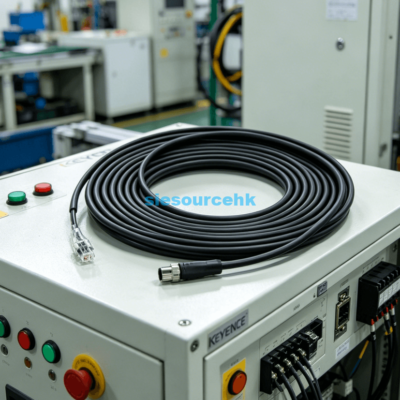
In the specialized world of industrial automation, specifically within CNC lathe machining and automated assembly, Direct Part Marking (DPM) stands as the cornerstone of traceability. A DPM reader, like the Keyence SR-2000 or SR-1000 series, is an incredibly high-performance piece of equipment. However, the performance of these sophisticated sensors is fundamentally tethered to the quality of their power and I/O interface. Selecting a genuine Keyence Power Cable is not just a secondary consideration—it is a critical engineering requirement for maintaining system uptime and data accuracy.
The DPM process involves reading codes etched or blasted directly into materials like hardened steel, aluminum, or polished plastics. These surfaces often present extreme optical challenges, requiring the reader’s internal lighting to pulse at high intensities and high speeds. This creates a specific electrical demand profile that generic cables often fail to meet.
The Technical Role of Power Cables in DPM Systems
A DPM reader is essentially a high-speed camera and an image processor contained within a compact industrial housing. When the reader triggers, it pulls a precise amount of current to power its internal LED arrays and CMOS sensor. If the power cable—such as the Keyence Cable OP-99042—does not have the correct gauge of copper or exhibits high internal resistance, the resulting voltage drop can cause the internal lighting to flicker or dim.
In DPM applications, even a 5% drop in lighting intensity can lead to a “No Read” result. This is because DPM codes rely on subtle contrast and shadows created by the marking. Genuine Keyence cables are engineered to maintain a stable voltage supply even during peak current draws, ensuring that every image captured is illuminated exactly as the firmware expects.
Superior EMI and RFI Shielding in Industrial Environments
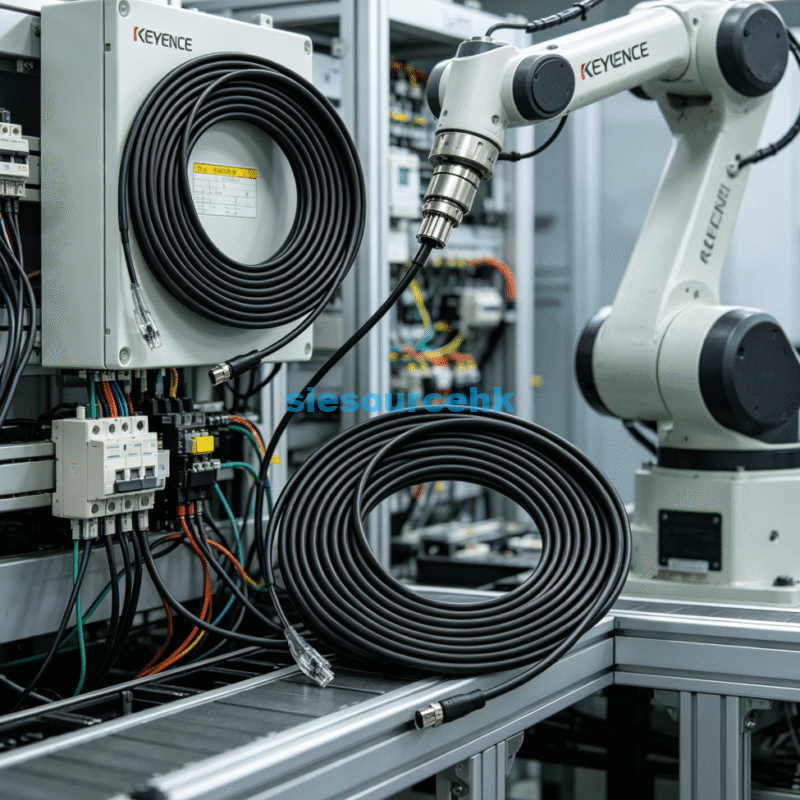
The floor of a manufacturing plant is an electromagnetically hostile environment. CNC lathes, robotic arms, and high-voltage power lines generate massive amounts of Electromagnetic Interference (EMI) and Radio Frequency Interference (RFI). Without specialized shielding, a power cable acts like an antenna, picking up this noise and injecting it into the reader’s sensitive electronics.
| Feature | Genuine Keyence Cable | Generic/Third-Party Cable |
|---|---|---|
| Shielding Type | Dual-braided + Al-Mylar Foil | Single layer or foil only |
| Connector Housing | Over-molded, high-density resin | Standard PVC or snap-on |
| Signal Integrity | Optimized for high-speed TTL/RS-232 | Prone to data packet loss |
| Oil Resistance | Rated for industrial coolants | Brittle failure in 3-6 months |
The shielding in a genuine Keyence cable is specifically designed to ground out these interferences before they reach the data conductors. This prevents “bit-flipping” or data corruption during the transmission of the decoded string from the DPM reader to the PLC (Programmable Logic Controller).
Mechanical Durability in CNC Lathe Environments
CNC lathe machine columns are characterized by three things: vibration, heat, and chemical exposure. A power cable in this environment must be more than just an electrical conductor; it must be a ruggedized mechanical component.
- Vibration Resistance: Constant machine oscillation can cause “fretting corrosion” in low-quality connectors. Keyence cables utilize precision-machined pins with specific gold-plating thickness to ensure a gas-tight connection that resists vibration.
- Chemical Compatibility: CNC coolants and cutting oils are chemically aggressive. A genuine Keyence Power Cable uses a specialized jacket material (often PUR or high-grade PVC) that maintains flexibility without swelling or cracking when exposed to hydrocarbons.
- Flex Life: If the DPM reader is mounted on a robotic arm or a moving gantry, the cable must endure millions of flex cycles. The internal stranding of a genuine cable is designed to distribute mechanical stress, preventing internal wire breakage.
Why the OP-99042 Pinout Matters?
The pinout of a Keyence cable is designed to match the internal surge protection of the device. Many third-party manufacturers attempt to replicate the M12 or Hirose connectors used by Keyence but fail to account for the grounding logic.
In the case of the OP-99042, the cable manages both power and I/O signals. If the isolation between the 24V DC power line and the 5V logic line is compromised due to poor manufacturing tolerances in a generic cable, it can lead to a catastrophic failure of the DPM reader’s mainboard. Using the genuine OP series ensures that the electrical “path of least resistance” is always the ground, protecting your $3,000+ sensor from a $50 cable failure.
The Economic Impact of Cable Selection
While the initial cost of a genuine Keyence cable is higher than a generic equivalent, the Total Cost of Ownership (TCO) is significantly lower. In a high-volume CNC production environment, even one hour of downtime can cost thousands of dollars in lost throughput.
When a generic cable fails, it rarely fails “completely” at first. Instead, it causes intermittent errors—random “No Reads” or occasional PLC communication timeouts. Maintenance teams can spend days chasing these “ghost” problems, checking the software, the lighting, and the PLC code, only to eventually find that a $30 generic cable was the culprit. By using genuine Keyence parts from the start, you eliminate this variable from the troubleshooting equation.
Summary
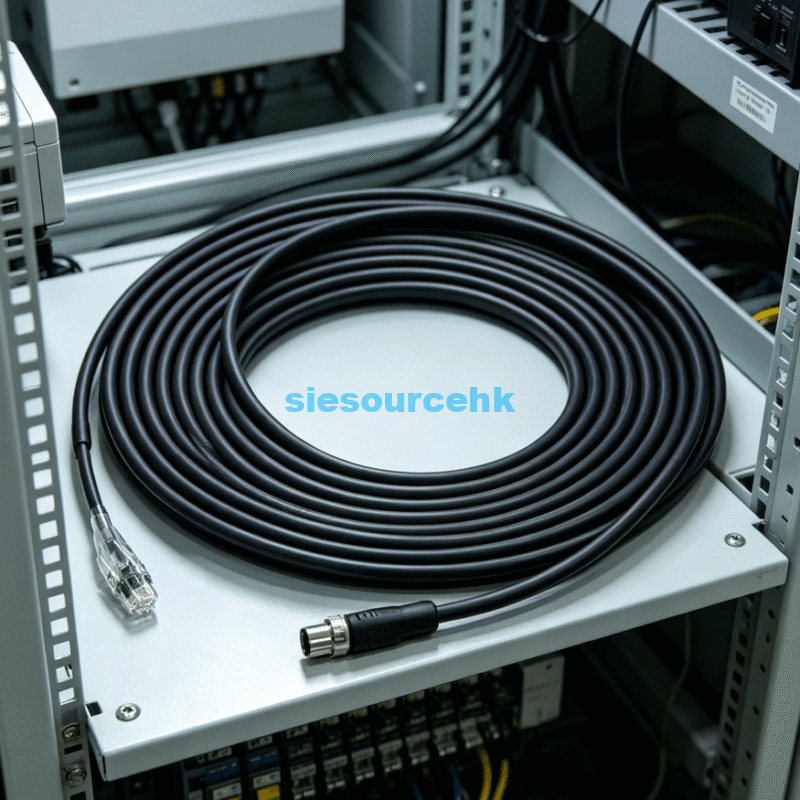
Choosing a genuine Keyence Power Cable for your DPM traceability system is a decision that impacts the reliability, accuracy, and longevity of your entire production line. From the superior EMI shielding to the chemical-resistant outer jackets, every aspect of the Cable OP series is engineered for the rigors of the CNC environment. To ensure 100% traceability and zero unplanned downtime, the interface between your reader and your power source must be beyond reproach.
| OP-87641 | OP-88963 | OP-88837(IV) | OP-87910 |
| OP-88837(10m) | OP-88837 | OP-88836 | OP-88812 (10M) |
| OP-88812 | OP-88811 | OP-87226 | OP-88680 |
| OP-88650 | OP-88649 | OP-88642 | OP-87905 |
| OP-87458 | OP-87445 | OP-87444 | OP-87404 |
| OP-87232 | OP-87231 | OP-84396 | OP-76874 |
| OP-51612 | OP-42339 | OP-26751 | OP-87900 |
| OP-88807 | OP-87587 | OP-88684 | OP-88301 |
| OP-87527 | OP-87359 | OP-87458 | OP-87451 |
| OP-87440 | OP-88697 | OP-88679 | OP-87504 |
| OP-87055 | OP-87259 | OP-87899 | OP-87909 |
| OP-87056 | OP-87277 | OP-73865 | OP-87636 |
| OP-87231 | OP-87360 | OP-88696 | OP-88678 |
| OP-88471 | OP-88542 | OP-87450 | OP-87461 |
| OP-87441 | OP-87404 | OP-87632 | OP-73864 |
| OP-88644 | OP-88640 | OP-88837 | OP-88656 |
| OP-87890 | OP-87890 | OP-87904 | OP-66843 |
| OP-51580 | OP-87910 |
FAQ
1. Can I use a standard M12 cable instead of a Keyence OP cable?
While many Keyence readers use M12 connectors, the internal pin assignment (pinout) is often proprietary or specific to their I/O logic. Using a standard M12 cable without verifying the wiring diagram can lead to short-circuiting the reader’s I/O ports or the PLC. Genuine cables ensure the pinout is 100% compatible with the reader’s internal protection circuits.
2. How do I identify a genuine Keyence Cable?
Genuine cables typically feature the Keyence logo on the over-molding, specific part number tags (such as OP-99042), and high-quality shielding visible at the termination points. Purchasing through authorized and reputable industrial suppliers is the most reliable way to ensure you are not receiving a counterfeit product.
3. Why does my DPM reader keep resetting during high-speed operation?
This is often a symptom of “voltage sag” caused by an inadequate power cable. When the reader’s processor or lighting pulses during a read cycle, a low-quality cable with high resistance cannot maintain the required amperage, causing the device’s internal voltage regulator to trigger a reboot. Replacing the generic lead with a genuine Keyence Power Cable usually resolves this issue immediately.
4. Are Keyence cables rated for use in “Oil-Mist” environments?
Yes, Keyence OP series cables intended for the SR and IV series are specifically engineered for industrial environments. Their outer jackets are typically made of materials like PUR (Polyurethane) which provide excellent resistance to the oils and coolants commonly found in CNC lathe machining areas, preventing the cable from becoming brittle.
5. Does cable length affect DPM reading accuracy?
Yes, cable length can impact performance due to signal attenuation and voltage drop. For longer runs, the high-purity copper and specialized twisting pairs in a genuine Keyence cable are essential to maintain signal integrity. If you are using a generic cable over 5 meters, you are significantly more likely to experience communication errors between the DPM reader and the controller.
Reference Sources
Keyence Official Website for SR Series Sensor Documentation