


Blog
A Visual Guide to How PLC Works in Industry

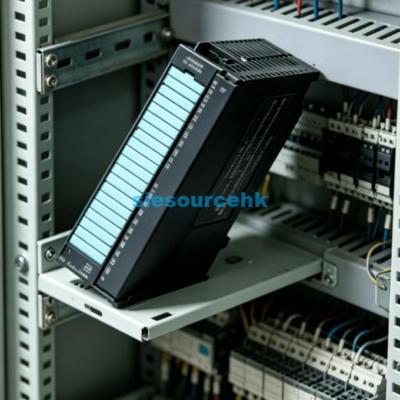
In the modern industrial landscape, automation drives production efficiency and safety. At the heart of this revolution sits the Programmable Logic Controller or PLC. Understanding how PLC works is essential for engineers and technicians managing complex assembly lines. These ruggedized computers replace traditional hard-wired relay logic with flexible software-based control.
A PLC functions as a specialized industrial computer designed for harsh environments. It monitors inputs from sensors and makes decisions based on a custom program. Finally, it sends commands to output devices like motors or valves. This continuous loop ensures that industrial processes remain precise and repeatable.
The transition from manual control to PLC-based systems has decreased downtime significantly. Factories now rely on global leaders to manage high-speed operations. By integrating these controllers, plants achieve higher throughput and better diagnostic capabilities.
The Inner Mechanics: How PLC Works Through the Scanning Cycle
To grasp how PLC works, one must understand its continuous operating sequence called the scan cycle. This cycle repeats thousands of times per second to ensure real-time responsiveness. It consists of four distinct phases: Input Scan, Program Scan, Output Scan, and Housekeeping.
The Input and Program Execution Phases
During the Input Scan, the PLC detects the state of all connected input devices. These include pushbuttons, limit switches, and temperature sensors. The CPU then stores these values in an internal memory map. This snapshot ensures the logic uses consistent data throughout the entire processing phase.
The Program Scan is where the actual logic execution occurs. The CPU reads the user-created program, often written in Ladder Logic or Structured Text. It processes instructions based on the data gathered during the input scan. For instance, if a sensor detects a bottle, the program triggers a filling command.
| Phase | Action Performed | Typical Duration |
| Input Scan | Reads hardware terminal status | < 1 ms |
| Program Scan | Executes user logic instructions | 1 – 10 ms |
| Output Scan | Updates physical output devices | < 1 ms |
| Housekeeping | Diagnostics and communication | Variable |
Core Components of an Industrial PLC System
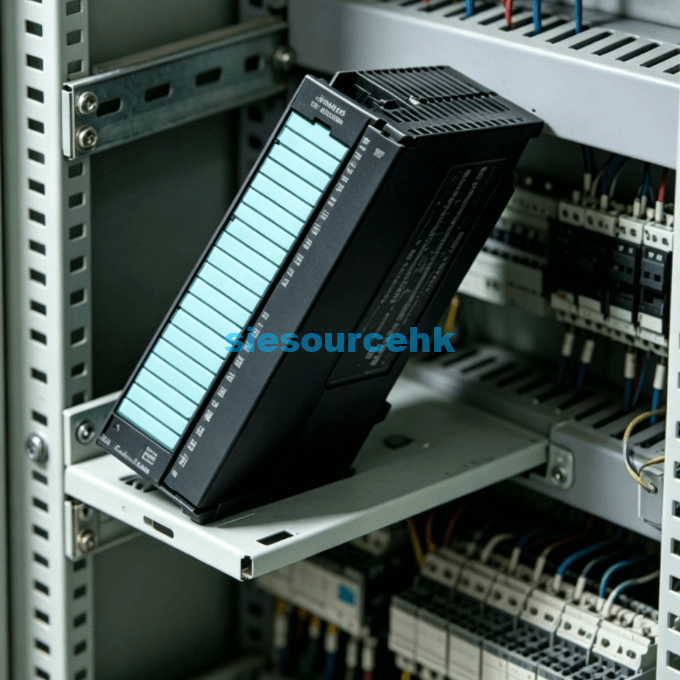
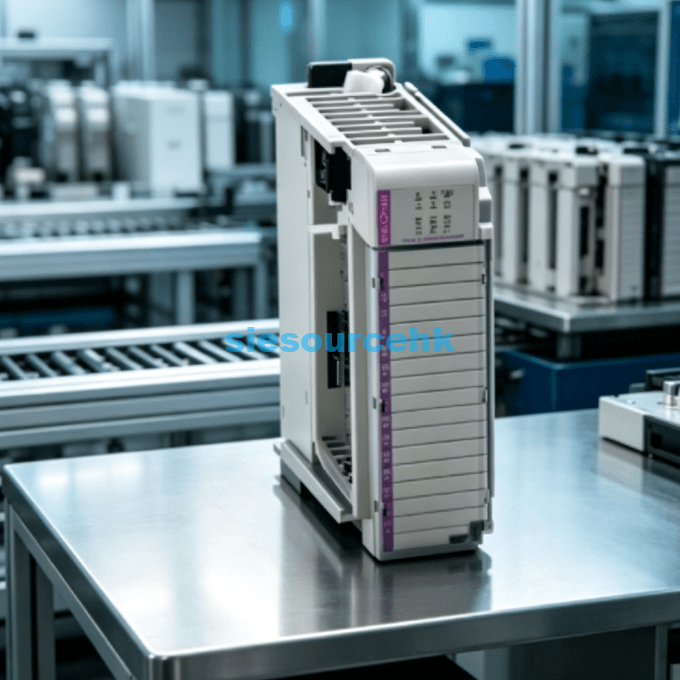
A functional PLC system relies on several integrated hardware modules. The Central Processing Unit (CPU) acts as the brain, performing calculations and managing data. It is supported by a power supply that converts high-voltage AC to low-voltage DC. This stable power is vital for protecting sensitive internal electronics.
Hardware Interface and Memory Architecture
Input and Output (I/O) modules provide the physical connection to the factory floor. Digital inputs handle binary signals like “on” or “off” from simple switches. Conversely, analog inputs process variable signals such as pressure or flow rates. This versatility allows a single PLC to manage diverse industrial tasks.
Memory is another critical component within the architecture. ROM (Read Only Memory) stores the operating system and firmware provided by the manufacturer. RAM (Random Access Memory) holds the user program and temporary data during execution. High-performance models often include expandable memory slots for complex data logging.
Leading Brands in the Industrial Automation Market
The choice of hardware often depends on regional standards and existing infrastructure. In North America, many engineers prefer the Allen-Bradley Rockwell PLC series for its seamless integration. Their ControlLogix and CompactLogix models offer robust performance in large-scale manufacturing environments.
Regional Preferences and Specializations
In Europe and Asia, the Siemens PLC lineup is highly preferred for its precision. Siemens systems are renowned for high-speed processing and TIA Portal integration. They excel in applications requiring complex motion control and integrated safety features across international sites.
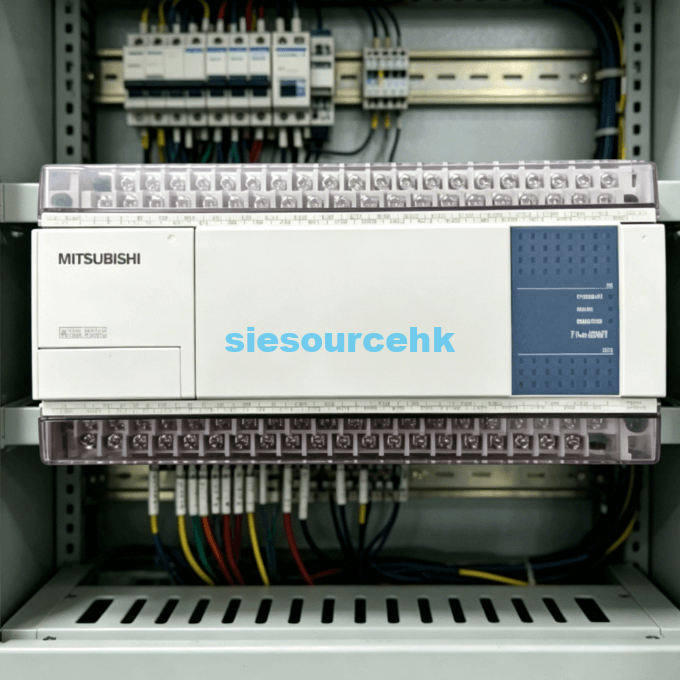
For packaging and automotive industries, the Mitsubishi PLC offers a highly reliable and compact solution. These controllers are valued for their high-density I/O capabilities and excellent cost-to-performance ratios. Each brand provides specialized tools to ensure the factory floor remains productive.
Establishing Criteria for PLC Selection and Implementation
Selecting the right controller requires a deep analysis of your specific operational needs. You must first evaluate the total I/O count required for your machinery. Small machines might only need 20 points, while complex lines require thousands. Choosing a modular system allows for future expansion without replacing the entire CPU.
Connectivity and Environmental Factors
Communication protocols also play a vital role in modern smart factories. Ensure the PLC supports standards like Profinet, Modbus TCP, or EtherNet/IP for data exchange. This connectivity allows the PLC to share real-time data with SCADA systems or cloud platforms. If your facility uses diverse hardware, multi-protocol support becomes a top priority.
Finally, consider the environmental conditions of your production area. Standard PLCs handle temperatures from 0°C to 60°C and high humidity levels. However, extreme environments may require specialized enclosures or hardened components. For high-quality components from leading brands, exploring dedicated automation suppliers ensures you get genuine hardware.
Summary
A PLC works by continuously scanning inputs, executing logic, and updating outputs in a rapid cycle. This process enables precise control over complex industrial machinery and manufacturing lines. By understanding the hardware components and brand strengths, engineers can build more efficient, reliable, and scalable automation systems for any industry.
FAQ
1. How does a PLC differ from a standard desktop computer?
PLCs are purpose-built for industrial environments with high resistance to heat, dust, and electrical noise. Unlike desktops, they use a deterministic operating system to guarantee that logic executes within a specific timeframe.
2. What is the most common language used to program a PLC?
Ladder Logic remains the most popular language because it mimics traditional electrical schematic diagrams. This makes it intuitive for electricians and maintenance personnel to troubleshoot without advanced computer science knowledge.
3. Can one PLC control an entire factory?
Typically, one PLC controls a specific machine or a small section of a production line. In large factories, multiple PLCs are networked together to share data and coordinate the entire manufacturing process.
4. Why is the scan time important in PLC operation?
Scan time determines how quickly a PLC can respond to changes in the physical environment. For high-speed applications like bottling or printing, a slow scan time could result in errors or mechanical collisions.
Reference Sources
Mitsubishi Electric – Factory Automation Systems Overview
International Electrotechnical Commission – IEC 61131-3 Standard for PLCs
PLCopen – Global Association for Industrial Control Programming