


Blog
Comparing PLC vs DCS vs SCADA for Industry


In the modern manufacturing landscape, automation systems serve as the central nervous system of any production facility. Engineers frequently evaluate the merits of plc vs dcs vs scada to determine which architecture best fits their operational goals. While these technologies often overlap, they fulfill distinct roles ranging from high-speed machine control to enterprise-wide data visualization. Choosing the wrong system can lead to inefficiencies, increased downtime, and higher maintenance costs over the life of a project.
A Programmable Logic Controller (PLC) is typically a hardware-based solution designed for discrete control tasks. It excels at managing individual machines or specific manufacturing cells with extreme speed and reliability. Conversely, a Distributed Control System (DCS) focuses on continuous process control across an entire plant. SCADA (Supervisory Control and Data Acquisition) acts as a high-level software layer that integrates various hardware components to provide a comprehensive view of operations.
Understanding the technical nuances of plc vs dcs vs scada requires looking at response times, scalability, and system integration. In contemporary “Industry 4.0” environments, these systems often work together to create a unified data ecosystem. However, their fundamental differences in logic execution and database management remain critical for system integrators.
Understanding the Core Functions of PLC vs DCS vs SCADA
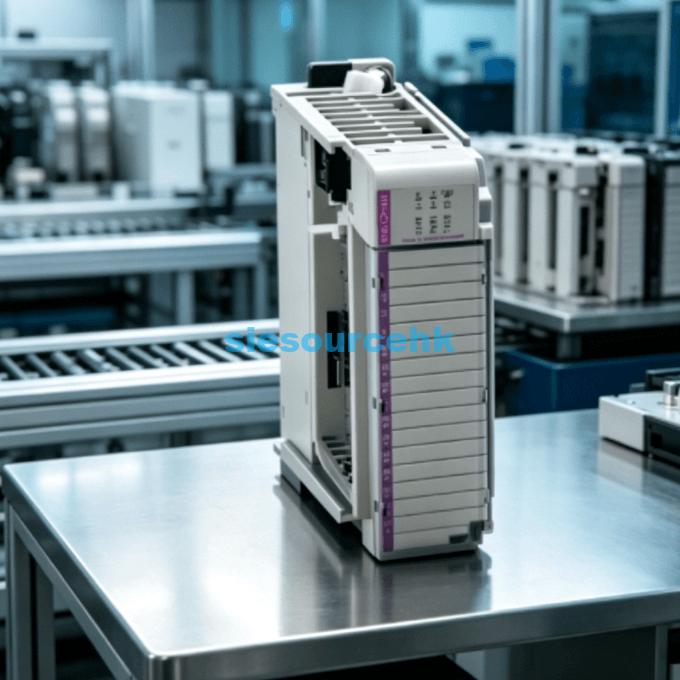
The primary distinction in the plc vs dcs vs scada debate begins with how each system handles logic. A PLC is built for speed, often executing instructions in less than 10 milliseconds. This makes it ideal for safety-critical applications and high-speed packaging lines where millisecond precision is mandatory. Leading brands like Allen-Bradley, Siemens, and Mitsubishi offer specialized modules that handle complex motion control and discrete I/O tasks.
The Evolution of Distributed Control
A DCS is designed for stability and complex regulatory control in industries like oil and gas or chemicals. Unlike the standalone nature of many PLCs, a DCS features a centralized database that manages all controllers, tags, and HMI screens. This architecture ensures that a change in one part of the system propagates automatically throughout the entire plant. While a DCS might have a slower scan rate (often 100ms to 500ms), its strength lies in managing thousands of continuous loops.
Supervisory Data and Integration
SCADA functions primarily as a supervisory tool rather than a direct controller. It gathers data from various PLCs or RTUs (Remote Terminal Units) across large geographical distances. Modern SCADA systems use protocols like MQTT or OPC UA to bridge the gap between the factory floor and the IT department. While a PLC controls a specific motor, a SCADA system records how many hours that motor has run and alerts maintenance teams.
| Feature | PLC | DCS | SCADA |
| Primary Focus | Discrete Control | Process Control | Data Acquisition/Monitoring |
| Response Time | Very Fast (<10ms) | Fast (100ms – 500ms) | Slower (1s – 2s) |
| System Scale | Local Machine | Entire Plant | Large Geographic Areas |
| Database | Distributed/Local | Centralized | Centralized |
| Redundancy | Optional/Limited | Integral/High | Software-based |
Why System Response Time and Reliability Matter in Automation
When comparing plc vs dcs vs scada, performance data reveals why specific industries prefer one over the other. In discrete manufacturing, a PLC might handle 2,000 to 5,000 I/O points with a scan time of 5ms. This rapid processing ensures that sensors and actuators sync perfectly during high-speed operations. If the system lags even slightly, it could result in mechanical collisions or product defects.
High Availability in Process Industries
In contrast, a DCS is optimized for high availability and complex PID (Proportional-Integral-Derivative) loops. Many DCS installations boast an uptime exceeding 99.999%, often referred to as “five nines” reliability. This is achieved through hardware redundancy where every controller and power supply has a hot-standby backup. While modern high-end PLCs also offer redundancy, the DCS integrates this at the kernel level of the operating system.
Geographic Scalability and SCADA
SCADA systems prioritize data integrity and historical logging over raw execution speed. A typical SCADA server can manage over 100,000 tags, collecting data from hundreds of remote sites via radio or cellular links. Data latency in SCADA is often influenced by communication bandwidth rather than processor speed. This makes SCADA the preferred choice for water treatment plants and electrical grids.
Strategic Criteria for Selecting Industrial Control Hardware
Selecting the right hardware depends on several technical factors that impact long-term operational success. First, evaluate the I/O density and the physical environment where the controllers will reside. For those requiring heavy-duty performance, the extensive Allen-Bradley Rockwell PLC catalog provides industry-standard reliability for complex manufacturing environments. If your project involves a single production line with fewer than 500 I/O points, a PLC is usually the most logical choice.
Reliability and Manufacturer Standards
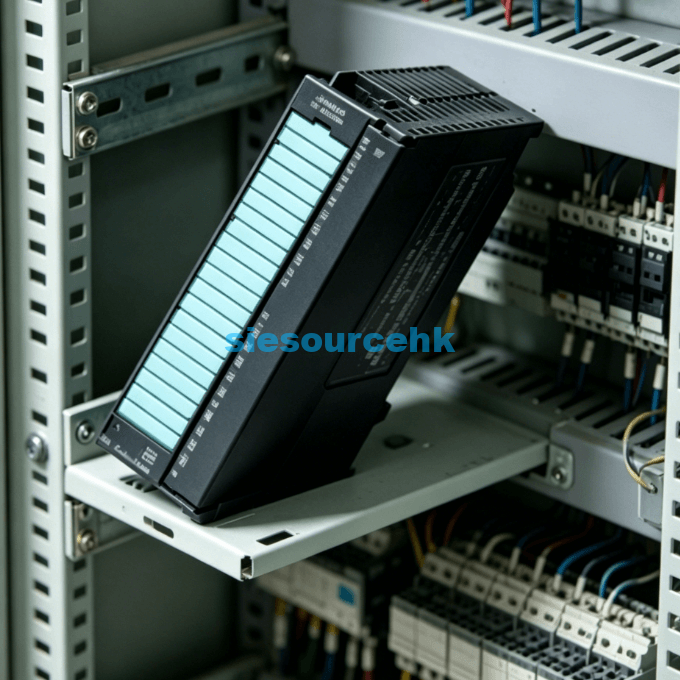
Second, consider the complexity of the control loops and the necessity of a unified global database. For European standard environments, many facilities opt for Siemens PLC systems due to their seamless integration with TIA Portal software. This ecosystem allows for a single point of engineering, meaning you configure a tag once and it is available to the entire system. This reduces human error during the commissioning phase of large-scale projects.
Compact Solutions for Localized Control
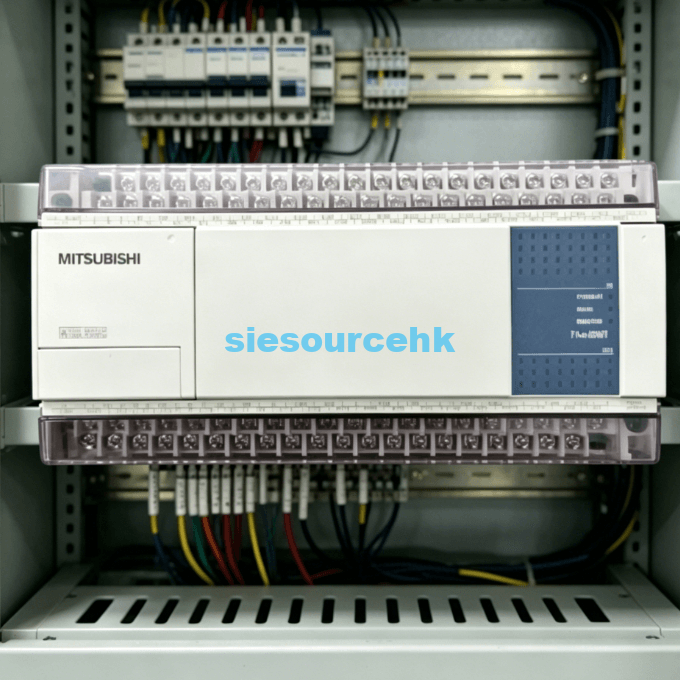
Finally, assess the geographical distribution of your assets to determine if SCADA is required. If your equipment is confined to tight spaces or requires high-speed pulse outputs for servo control, the Mitsubishi PLC line often provides the best footprint-to-performance ratio. These units are highly effective in localized machinery where cost-efficiency is as important as technical precision. Matching the hardware capabilities to the specific process requirements prevents over-engineering and keeps project budgets under control.
Guidance for Choosing Your Automation Platform
Determining whether your facility needs a PLC, DCS, or SCADA setup involves analyzing your specific production workflow. If your operations are primarily “start-stop” and involve mechanical assembly, a high-speed PLC system is essential. You should look for hardware that offers modular expansion to accommodate future growth. Choosing reputable brands ensures long-term availability of spare parts and technical support.
For those managing fluid processes or thermal reactions, the integrated nature of a DCS offers better safety and consistency. However, if your goal is to gather data from disparate machines for “Big Data” analytics, a SCADA layer is the priority. Many modern engineers find that a “best-of-breed” approach—using the best PLCs for control and the best SCADA for monitoring—provides the highest ROI. Always verify the compatibility of communication protocols before finalizing your hardware selection to ensure seamless data flow.
Summary
The choice between plc vs dcs vs scada depends on your process type, required response time, and system scale. PLCs offer high-speed discrete control, DCS provides integrated process management, and SCADA enables wide-area monitoring. Understanding these technical differences allows you to build a reliable, scalable, and efficient industrial automation architecture.
FAQ
1. Can a PLC replace a DCS in modern factories?
Modern high-end PLCs can perform many DCS functions, but they often lack the natively integrated global database and seamless redundancy of a true DCS. While a PLC can handle the logic, a DCS provides a more unified environment for very large, complex process plants.
2. Is SCADA just a type of software?
SCADA is primarily a software-based supervisory system, but it relies on hardware like PLCs and RTUs to function. It acts as the interface between the human operator and the machine-level hardware, focusing on data visualization and long-term storage.
3. Which system is best for a small manufacturing plant?
A PLC combined with a local HMI or a small-scale SCADA system is usually the most cost-effective and efficient choice for small to medium manufacturing environments. It offers the necessary speed without the high overhead costs of a DCS.
4. Why do DCS systems cost more than PLC systems?
DCS systems include integrated software, pre-configured faceplates, and built-in redundancy that require significant development by the manufacturer. The higher cost reflects the reduced engineering time needed to set up a massive, plant-wide control system.
Reference Sources
ISA (International Society of Automation) – Comparison of DCS and PLC Architectures.
Rockwell Automation – Allen-Bradley Programmable Logic Controllers Technical Documentation.
Siemens Industrial Automation – SIMATIC S7 PLC and PCS 7 DCS Product Specifications.
Mitsubishi Electric – MELSEC PLC Series Performance and Data Sheets.