


Blog
How to Select Siemens PLC Models: S7-1200 or S7-1500?

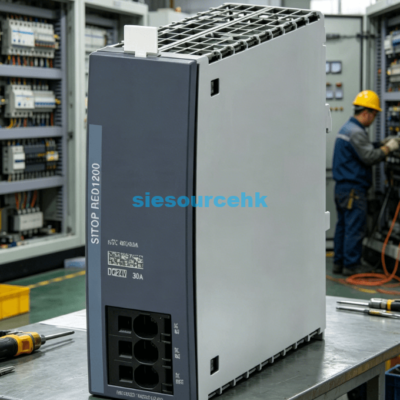
Selecting the correct controller is a fundamental step in modern industrial automation. Siemens PLC models dominate the market due to their reliability and integrated engineering environment. Engineers in 2026 often face a choice between the SIMATIC S7-1200 and the S7-1500.
Both controllers offer robust performance within the TIA Portal framework. The S7-1200 serves as a compact, versatile solution for basic applications. Conversely, the S7-1500 represents the high-end tier for complex automation tasks.
Understanding their specific strengths helps optimize costs and system performance. This article explores the technical nuances between these two powerful families. It aims to provide a clear path for hardware selection.
How to Choose the Right Siemens PLC Models for Your Project?
Performance begins with the processor speed and memory capacity of the unit. The S7-1200 typically handles bit operations in approximately 80 to 100 nanoseconds. This speed suits small-scale CNC machining tasks perfectly in 2026.
It manages simple logic and basic motion control without excessive overhead. In contrast, the S7-1500 delivers significantly higher processing power for demanding environments. High-end CPUs in this range execute bit instructions in as little as 1 nanosecond.
Such speed is essential for high-speed synchronization in multi-axis CNC operations. Choosing the S7-1500 is necessary for applications requiring rapid cycle times. Low latency ensures that complex algorithms run without jitter.
Evaluating Processing Power and Memory Capacity
Memory allocation also distinguishes these Siemens PLC models significantly. The S7-1200 offers work memory ranging from 50 KB up to 150 KB. This capacity supports small programs with limited data logging needs.
The S7-1500 provides a much larger range, often reaching several megabytes. Large memory blocks allow the S7-1500 to store complex recipes. It also supports extensive diagnostic data directly on the CPU.
Higher memory capacity ensures smooth operation for data-intensive industrial processes. Consider your software complexity before finalizing your hardware selection in 2026. Complex HMI screens and extensive data arrays require the S7-1500.
| Feature Comparison | SIMATIC S7-1200 | SIMATIC S7-1500 |
|---|---|---|
| Bit Performance (typical) | 80 – 100 ns | 1 – 60 ns |
| Max Work Memory | ~150 KB | ~20 MB |
| Motion Control Axes | Limited (Basic) | High (Advanced) |
| Integrated Display | No | Yes |
Technical Comparison of Siemens PLC Models in 2026
Networking capabilities play a vital role in modern smart factories. All modern Siemens PLC models feature integrated PROFINET interfaces for seamless connectivity. The S7-1200 supports standard PROFINET communications for field devices.
It is ideal for decentralized setups using basic I/O modules. However, the S7-1500 excels in high-performance networking scenarios. It supports PROFINET with Isochronous Real-Time (IRT) capabilities for precise timing.
This feature is critical for high-end CNC machining requiring microsecond synchronization. The S7-1500 is the superior choice for high-speed motion control networks. It ensures all axes move in perfect harmony.
Advanced Networking and PROFINET Features
Expandability further separates these two controller families in complex layouts. The S7-1200 utilizes a compact design with limited expansion modules. It allows for a maximum of eight signal modules on larger CPUs.
S7-1200 systems are best for space-constrained control cabinets. The S7-1500 supports a much higher density of I/O points. A single rack can house up to 32 modules in some configurations.
This scalability allows for centralized control of entire production lines. Select the S7-1500 if your system requires massive I/O expansion capability. It provides the backbone for integrated factory automation.
Motion Control Capabilities for CNC Machining Applications
Motion control is a core requirement for any CNC-related application. The S7-1200 includes integrated Technology Objects (TOs) for basic positioning tasks. It can control several axes via Pulse Train Output (PTO).
For simple pick-and-place or feeder systems, the S7-1200 is highly cost-effective. The S7-1500 offers a much deeper suite of motion control features. It supports advanced functions like electronic cams and gearing.
Furthermore, the S7-1500 T-CPUs handle complex kinematics for robotic arms. Complex multi-axis synchronization requires the advanced processing of S7-1500 models. This leads to higher precision in finished parts.
Integrated Diagnostics and User Interface
Diagnostic capabilities also vary between these Siemens PLC models. The S7-1500 features an integrated display on the front of the CPU. This display allows technicians to view status and error messages.
Integrated displays reduce downtime by providing immediate on-site diagnostics. The S7-1200 relies on LED status indicators and software-based diagnostics. While effective, this requires an external interface for detailed troubleshooting.
Engineers must weigh the value of local visualization against lower costs. Diagnostic speed is often a deciding factor for high-uptime manufacturing lines. Immediate feedback can save hours of maintenance work.
Scalability and Future-Proofing Your Automation Strategy
Future-proofing involves choosing hardware that grows with your production needs. The S7-1200 is designed for modularity within its performance tier. It uses signal boards that plug directly into the CPU.
This saves rail space while adding specific I/O functionality. The S7-1500 offers a more comprehensive path for long-term scalability. Its backplane bus technology ensures high-speed data exchange between modules.
This architecture supports the integration of high-level security functions. The S7-1500 provides a robust foundation for Industry 4.0 integration. It handles the increased data traffic of 2026.
Modular Hardware and Engineering Efficiency
Software compatibility is another vital consideration for engineering teams. Both Siemens PLC models use the TIA Portal (Totally Integrated Automation). This means code developed for the S7-1200 can often be migrated.
Starting with S7-1200 allows for an affordable entry with an upgrade path. Environmental durability is consistent across the Siemens range in 2026. Both families offer versions for standard and harsh industrial environments.
SIPLUS variants provide extra protection against corrosive gases and extreme temperatures. Always verify the environmental ratings to ensure long-term hardware reliability. This prevents unexpected failures in heavy machining environments.
How to Judge the Best Hardware Components for Integration?
Determining the right model involves looking at individual component flexibility. Small adjustments in I/O count can change the entire hardware profile. For example, the S7-1200 is perfect for standalone machines.
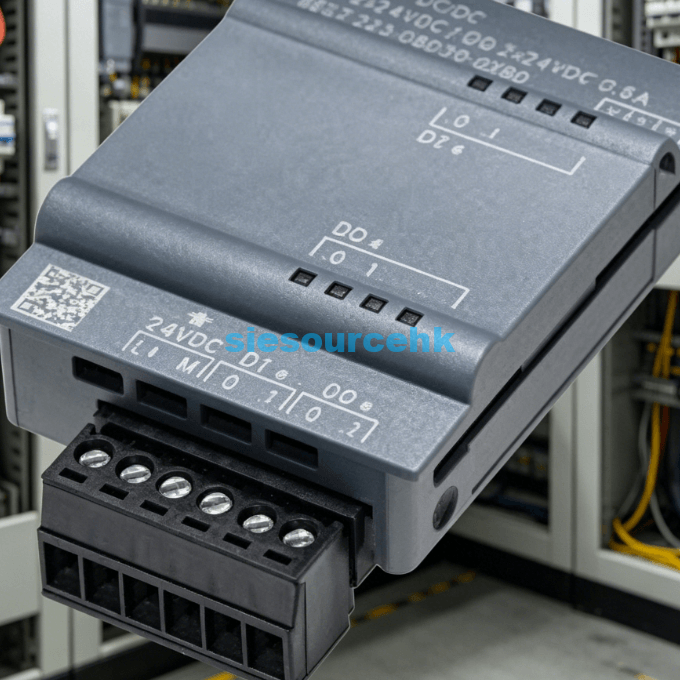
When your project requires adding a few digital inputs, consider the 6ES7223-0BD30-0XB0. This signal board adds 2 DI and 2 DO directly to the CPU. It is an excellent way to expand capabilities without occupying extra space.
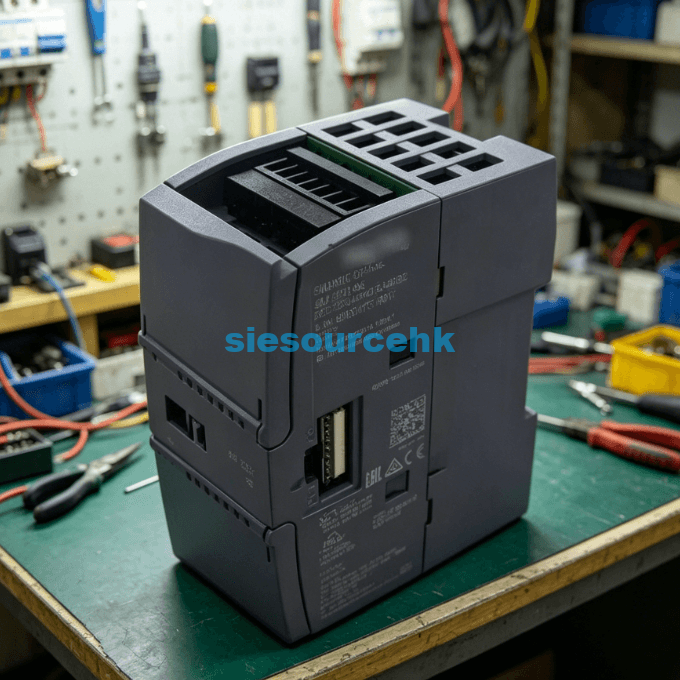
Efficient wiring management is also a priority for high-density systems. For large S7-1500 installations, managing wiring becomes a significant challenge. Proper connector selection is essential for maintaining system integrity.
Using a 6ES7921-5CB20-0AA0 can streamline the connection process significantly. This front connector module uses IDC connectors to simplify wiring for 32-channel modules. It ensures a clean cabinet layout and reduces manual errors.
Summary
Selecting between Siemens PLC models S7-1200 and S7-1500 depends on performance and scale. Use S7-1200 for compact, cost-sensitive, and basic tasks. Choose S7-1500 for high-speed synchronization, large I/O, and advanced diagnostics. Both ensure a reliable, future-proof automation foundation in 2026.
FAQ (H2)
1. Which Siemens PLC models are best for simple CNC tasks?
The S7-1200 is generally best for simple CNC tasks. It offers integrated motion control and a compact design at a lower price. This makes it ideal for small machinery and auxiliary automation units.
2. Can I use S7-1200 and S7-1500 in the same network?
Yes, you can use both in the same network via PROFINET. They communicate seamlessly within the TIA Portal environment in 2026. This allows for a hierarchical control structure in large manufacturing plants.
3. Does the S7-1500 require more space than the S7-1200?
The S7-1500 usually requires more space due to its larger physical dimensions. However, it handles more I/O per module, which may save space later. Always check the dimensions of the specific CPU and I/O modules.
4. What are the main benefits of the S7-1500 display?
The S7-1500 display provides real-time diagnostics and status updates without a computer. It allows users to change IP addresses and check module health directly. This feature significantly reduces troubleshooting time on the factory floor.
5. Is the S7-1200 sufficient for Industry 4.0?
The S7-1200 is sufficient for many Industry 4.0 applications in 2026. It supports OPC UA communication and secure data handling for most tasks. For more data-intensive integrations, the S7-1500 is the preferred choice.
Reference Sources
Siemens Global SIMATIC S7-1200 Controller Overview
Siemens Global SIMATIC S7-1500 Controller Technical Specifications
IEEE Xplore Research on Programmable Logic Controllers in Manufacturing