



Blog
Why Choose ebm-papst Centrifugal Fan for Inverters?

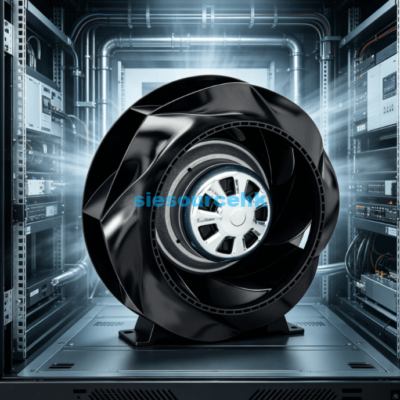
Thermal management remains the most critical engineering challenge in the development of modern power electronics. As industrial inverters, or Variable Frequency Drives (VFDs), evolve to handle higher power densities within shrinking enclosure footprints, the demand for efficient, reliable, and intelligent cooling has never been higher. The ebm-papst centrifugal fan has become the definitive industry standard for addressing these thermal loads.
Selecting a cooling solution for an inverter is not merely about moving air; it is about managing the thermal resistance of a complex system. Inverters generate substantial heat through their Insulated Gate Bipolar Transistors (IGBTs), DC link capacitors, and inductors. Without an optimized airflow strategy, these components can quickly exceed their safe operating temperatures, leading to system de-rating or catastrophic failure.
Understanding the Physics of Inverter Cooling
The primary reason engineers specify an ebm-papst centrifugal fan over a traditional axial fan lies in the physics of air resistance. Inverters are typically housed in sealed or semi-sealed cabinets with dense internal layouts. The air must pass through intricate heatsink fins, dust filters, and narrow internal channels.
This environment creates high backpressure, also known as static pressure. Axial fans are designed to move high volumes of air in low-pressure environments. When faced with the resistance of an inverter heatsink, the performance of an axial fan often “stalls,” leading to a dramatic drop in airflow.
Centrifugal fans, by contrast, utilize a radial airflow pattern. Air enters the fan axially but is expelled at a 90-degree angle. This centrifugal force allows the fan to build the high static pressure necessary to overcome the internal resistance of the inverter. By forcing air through the cooling fins rather than just over them, the ebm-papst centrifugal fan ensures maximum heat transfer at the boundary layer of the power modules.
GreenTech EC Technology: The Engine of Reliability
At the heart of the ebm-papst centrifugal fan range is the GreenTech EC (Electronically Commutated) motor technology. This isn’t just an incremental improvement over traditional AC motors; it is a fundamental shift in how cooling systems operate.
Efficiency and Thermal Output of the Motor
Traditional AC motors are inherently inefficient, often converting a significant portion of their electrical input into heat rather than mechanical energy. In an inverter application, this is counterproductive, as the fan motor itself adds to the thermal load that must be dissipated.
GreenTech EC motors achieve efficiency levels often exceeding 90%. Because they run significantly cooler than AC counterparts, they do not contribute meaningful heat to the enclosure. From a project manager’s perspective, this efficiency translates into lower energy consumption for the end-user and a reduced thermal budget for the overall system design.
Precise Speed Modulation and Integration
Modern industrial automation requires systems that can adapt to changing conditions. Inverters do not run at full capacity at all times. A fan running at 100% speed when the inverter is at 20% load is a waste of energy and mechanical life.
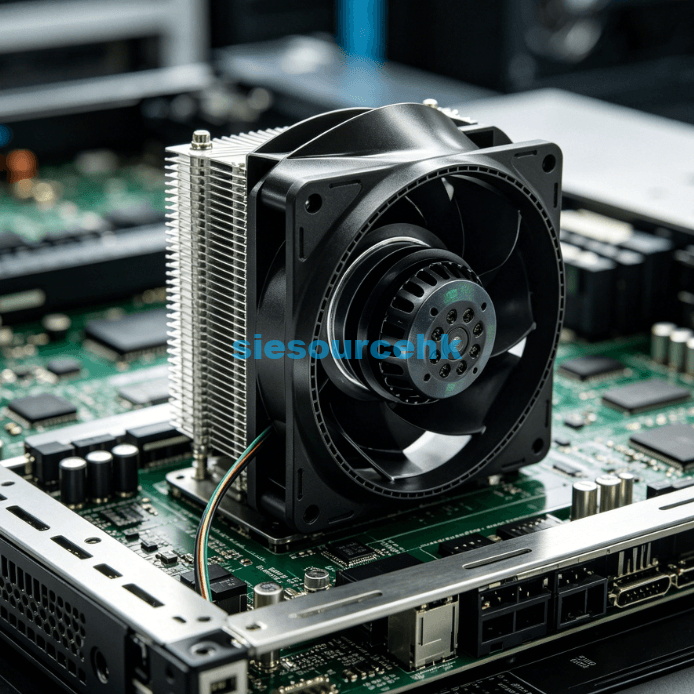
The ebm-papst centrifugal fan features integrated electronics that allow for seamless speed control via 0-10V, PWM, or Modbus RTU signals. This allows the inverter’s control logic to precisely match the fan speed to the actual thermal demand.
- Reduction in noise during low-load periods.
- Extended bearing life due to lower average RPM.
- Energy savings that contribute to the system’s overall efficiency rating.
Comparing EC and AC Solutions for Power Electronics
To understand the commercial and technical value, we must look at the performance metrics between standard technologies and the ebm-papst EC offerings.
| Performance Metric | Standard AC Centrifugal Fan | ebm-papst GreenTech EC Fan |
|---|---|---|
| Efficiency Rating | 30% – 45% | 85% – 92% |
| Control Interface | Frequency Inverter Required | Integrated PWM/0-10V/Modbus |
| Motor Heating | High internal heat dissipation | Minimal thermal footprint |
| Input Voltage | Fixed (e.g., 230V or 400V) | Universal (Wide voltage range) |
| Service Life (L10) | ~30,000 – 40,000 Hours | ~70,000 – 100,000 Hours |
Aerodynamic Excellence in the RadiCal and RadiPac Series
The noise generated by an inverter is often dominated by the cooling fan. Standard fans often produce turbulence at the blade tips, leading to a high-pitched “whining” noise that can be disruptive in industrial environments.
ebm-papst utilizes advanced fluid dynamics (CFD) to design their impellers. The RadiCal and RadiPac series of centrifugal fans feature complex blade geometries that minimize turbulence. By ensuring a smooth transition of air through the impeller, these fans achieve higher throughput with lower acoustic impact. For manufacturers looking to meet strict workplace noise regulations, this aerodynamic refinement is a key selling point.
Durability and Environmental Protection
Industrial inverters are deployed in some of the world’s harshest environments—from dusty textile mills to humid coastal wind turbines. The ebm-papst centrifugal fan is built to withstand these conditions through specific engineering choices.
IP Ratings and Chemical Resistance
Fans used in inverters often require IP54 or IP55 protection ratings to prevent the ingress of dust and moisture. ebm-papst offers specialized coatings for the motor and impeller that resist corrosion and chemical attack. The electronics are typically encapsulated in resin, ensuring that vibration and thermal cycling do not lead to solder joint failures or short circuits.
Bearing Systems and Long-Term Stability
The bearing is the only primary wear part in a fan. ebm-papst uses high-performance ball bearing systems designed for maintenance-free operation over the fan’s entire service life. In the context of an inverter, which may be expected to operate for 10 to 15 years, the fan’s reliability is the lynchpin of the entire system’s uptime.
Integrating ebm-papst Fans into the OEM Workflow
For OEM project managers, the selection process for an ebm-papst centrifugal fan involves matching the fan’s performance curve to the system’s impedance curve.
- Airflow Analysis: Determine the cubic meters per hour (m³/h) required to maintain the IGBT junction temperature within safe limits.
- Pressure Drop Calculation: Factor in the resistance of the cabinet, filters, and heatsink.
- Digital Integration: Select the communication protocol (Modbus or analog) for fan monitoring and speed control.
- Global Certification: Ensure the fan carries UL, CSA, and VDE marks for international market access.
By utilizing the integrated “Tacho” signal available in ebm-papst fans, engineers can implement predictive maintenance. Instead of waiting for a fan to fail, the system can detect a drop in RPM or an increase in current, signaling that a filter is clogged or the fan requires inspection. This intelligence reduces unplanned downtime and enhances the perceived quality of the inverter brand.
Summary
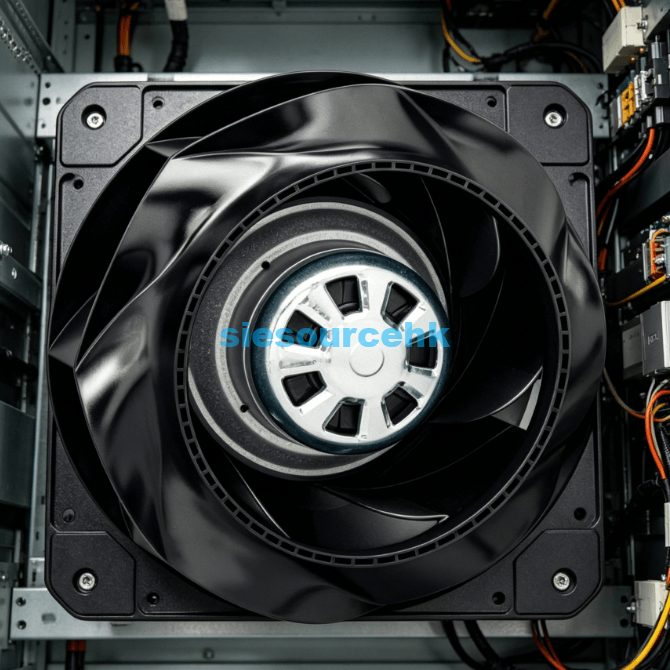
The decision to choose an ebm-papst centrifugal fan for inverters is driven by the need for high static pressure, energy efficiency, and intelligent control. While the initial procurement cost might be higher than a generic AC fan, the total cost of ownership is significantly lower. Through the implementation of GreenTech EC technology, superior aerodynamics, and robust environmental protection, these fans provide the reliability that mission-critical power electronics demand. For any engineer or project manager focused on longevity and performance, ebm-papst remains the gold standard in thermal management.
| K2D250-AB32-06 | D2D-2100 | LR2D1316 | W2S130-AA03 |
| W2S130-AB03-21 | W2S130-AA03-95 | W2S130-AA03-01 | W2S130-AA03-21 |
| W2S130-AA03-71(230V 50HZ 0.25A 45/39W) | W2S130-AA03-71 | W2S130-AA03-87 | R2E225-BD40-48 |
| W2S130-BM03-01 | FAN R2E220-AA40-23 | R2E225-BD92-09 | R2E133-BH66-26 |
| R2E220-AB08-62 | FAN R2E220-AA40-23 EBM | R2E175-AC91-02 | R2E175-AC77-20 |
| R2E220-AA40-71 | Ebmpapst R2E133-BH66-25 | R2E220-AA40-05 | R2E225-BD92-12 |
| R2E133-BH66-24 | R2E225-RA92-17 | W2S130-AA03-77 | W2S130-AA03-49 |
| R2D190-AC22-12 | R2D190-RA08-15 | D2D146-AA02-22 | R4E355-AK05-05 |
| S2D300-BP02-35 | R3G280-AH33-31 48V 135W | R2D220-AC14-20 | R3G280-AH33-31 48V 135W |
| r3g220-rd19-07 | SR2E201BD | R4E450-AB09-06 | R3G310-AN13-11 |
| R2D225-AP02-09 | FAN D2D160-BE02-11 | R4E225-AI01-10 | FAN D2D160-BE02-11 EBM |
| DRF-24V960W3GBA | R4E355-RB10-01 | D2D160-BE02-11 | D2D160-CE02-11 |
| K2D250-AH06-06 | R3G310-AX52-90 | Ebmpapst W3G250-CD54 | R3G355-RB03-10 |
| R3G250-RR01-H1 | R4E355-RM03-05 | R3G310-RS05-J1 | K2D250-AB32-05 |
| R3G355-RJ75-01 | K2D200-AB24-05 | W2S135-EA79-01 | Ebmpapst R3G400-AQ23-01 |
| Ebmpapst W3G710-GU21-01 | W3G910-LV12-37 | W3G710-GU21-01 | R3G500-AQ33-01 |
| K2D200-AB18-06 | W3G710-NU31-03 |
FAQ
1. Why do inverters specifically need centrifugal fans instead of axial ones?
Inverters have high internal resistance due to heatsinks and compact components. Centrifugal fans are designed to produce high static pressure, which allows them to move air effectively through these restricted spaces, whereas axial fans often fail to provide enough pressure.
2. What makes EC motors better than AC motors for cooling applications?
EC motors are much more efficient, converting more electricity into airflow and less into waste heat. They also feature integrated electronics for precise speed control and can operate across a wide range of global voltages and frequencies without modification.
3. Can I monitor the health of an ebm-papst centrifugal fan remotely?
Yes, most ebm-papst EC fans come with a Tacho output or Modbus communication. This allows the inverter’s control system to monitor the fan’s speed and operational status in real-time, enabling predictive maintenance and preventing overheating.
4. How does the fan’s noise level affect industrial inverter design?
High noise levels can be a sign of turbulence and inefficiency. ebm-papst fans use optimized blade designs like the RadiCal series to reduce noise, which is crucial for meeting occupational safety standards and improving the user experience in the field.
5. Are ebm-papst fans suitable for outdoor inverter installations?
Yes, many models are available with high IP ratings (IP54/IP55) and specialized coatings. These features protect the fan from dust, moisture, and salt spray, making them ideal for outdoor renewable energy inverters and harsh industrial sites.
Reference Sourcesl
IEC 61800-5-1 Adjustable speed electrical power drive systems