


Blog
Allen Bradley Servo Motor 2098 Series Overview for Industrial Automation

Introduction to Precision Motion Systems
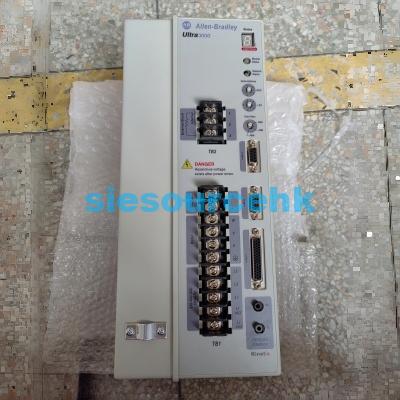
Modern manufacturing environments demand highly accurate positioning and robust velocity control. To meet these rigorous criteria, factory automation engineers utilize closed-loop digital servo systems. The Allen Bradley Servo Motor 2098 system represents a foundational standard in high-performance industrial motion control.
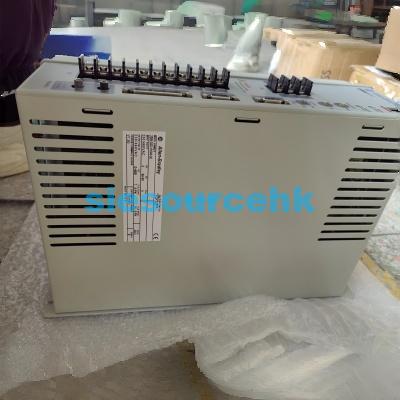
This product line forms an integrated motion ecosystem when paired with compatible brushless motors. Strictly speaking, the 2098 prefix designates Rockwell Automation’s Ultra3000 digital servo drive family. However, field technicians and controls engineers frequently refer to the complete system package as the Allen Bradley Servo Motor 2098 platform.
This comprehensive technical guide details the mechanical architectures, electrical specifications, and control topologies of the series. By examining the feedback mechanisms and system compatibility, plant managers can optimize their machinery layouts.
What is the Allen Bradley Servo Motor 2098 System and How Does It Function?
The core architecture of the Allen Bradley Servo Motor 2098 platform relies on closed-loop feedback technology. Inside a standard industrial automation system, the controller sends high-speed positioning commands to the drive. The digital servo drive then converts these instructions into precise, variable-frequency current outputs.
These current outputs energize the stator windings of the permanent magnet brushless motor. The resulting electromagnetic field interacts with high-energy neodymium rotors to produce torque. To maintain high rotational accuracy, the system continuously monitors the physical rotor angle.
Continuous rotor monitoring is achieved through integrated optical encoders or heavy-duty resolvers. The feedback device transmits real-time positional data directly back to the 2098 series drive module. This signal loop operates at high frequency to execute automatic error corrections instantly.
+------------------+ Commands +------------------------+
| Host Controller |----------------->| Allen Bradley 2098 |
| (e.g., Logix) | | Ultra3000 Servo Drive |
+------------------+ +------------------------+
^ |
| | Phase Current
| Feedback Loop v
+------------------+ +------------------------+
| Feedback Device |<-----------------| Allen Bradley Servo |
| (Encoder/Res) | Rotor Position | Motor 2098 System |
+------------------+ +------------------------+
The drive compares the commanded position with the actual mechanical position. It automatically adjusts the output current to eliminate any positional lag or velocity tracking deviation. This closed-loop topology makes the Allen Bradley Servo Motor 2098 system highly immune to load fluctuations.
Furthermore, the system delivers high torsional stiffness and rapid acceleration curves. These mechanical traits prevent positioning overshoot during abrupt direction changes on high-speed assembly lines.
Key Technical Specifications and Models of the Allen Bradley Servo Motor 2098 Drive Series
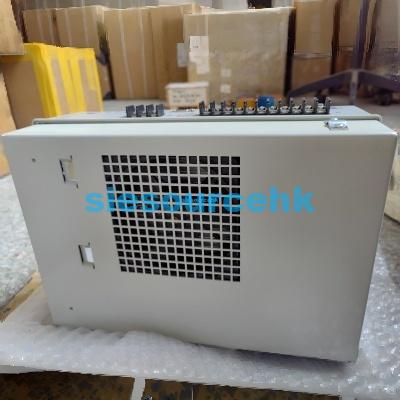
Designing a reliable motion control cabinet requires precise electrical alignment. Engineers must match the power output of the drive with the torque requirements of the motor. The Ultra3000 series, denoted by the 2098 catalog prefix, offers several input voltage classes.
These classes include 100 to 240 Volt single-phase units for light-duty assemblies. Medium and heavy-duty industrial systems utilize 230 to 460 Volt three-phase power configurations. Continuous output currents range from 1.5 Amperes to over 150 Amperes peak capacity.
The table below outlines the electrical characteristics of the common 2098 series digital drive models. These modules coordinate power delivery to the physical motor structures on the factory floor.
| Drive Catalog Number | Input Voltage Class | Phase Count | Continuous Current (A) | Peak Current (A) |
|---|---|---|---|---|
| 2098-DSD-005 | 100 – 240 V AC | Single Phase | 2.5 A RMS | 7.5 A RMS |
| 2098-DSD-010 | 100 – 240 V AC | Single/Three | 5.0 A RMS | 15.0 A RMS |
| 2098-DSD-020 | 100 – 240 V AC | Single/Three | 10.0 A RMS | 30.0 A RMS |
| 2098-DSD-030 | 230 V AC | Three Phase | 15.0 A RMS | 35.0 A RMS |
| 2098-DSD-HV050 | 460 V AC | Three Phase | 7.0 A RMS | 14.0 A RMS |
| 2098-DSD-HV150 | 460 V AC | Three Phase | 22.0 A RMS | 44.0 A RMS |
To source these components or compare compatible series models, you can explore the technical references on SIESourceHK AB 2098 Drive Search Results. These lists provide details on legacy components and current active replacements.
The digital processing engine inside the 2098 drive utilizes field-programmable gate arrays. This hardware configuration enables execution of advanced space-vector modulation algorithms. Space-vector modulation reduces thermal dissipation in both the drive and the associated servo motor.
Additionally, the drive modules support several communications interfaces. Common networks include standard DeviceNet, high-performance ControlNet, and real-time SERCOS fiber-optic loops. The SERCOS variants permit multi-axis synchronization with sub-microsecond jitter tolerances.
These synchronized interfaces allow the Allen Bradley Servo Motor 2098 architecture to integrate with control platforms. These control systems include the ControlLogix and CompactLogix programmable automation controllers.

Product model
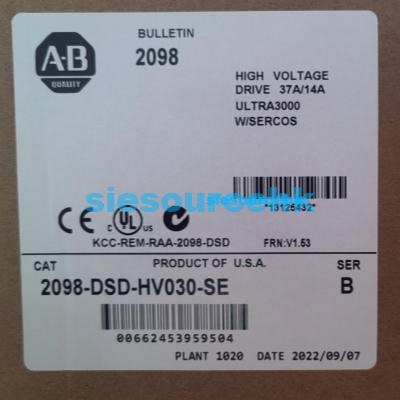
| 2098-CPBM6DF-16AA05 | 2098-DSD-005X 9101-2341 | 2098-DSD-005 | 2098-DSD-010X-DN |
| 2098-DSD-005X-DN | 2098-DSD-020 | 2098-IPD-020-DN | 2098-DSD-020-SE |
| 2098-DSD-010-SE | 2098-DSD-020X | 2098-DSD-010 | 2098-dsd-hv030se |
| 2098-DSD-030-SE | 2098-IPD-020 | 2098-DSD-HV030-SE | 2098-DSD-HV050-SE |
| 2098-dsd-hv030 | 2098-DSD-HV050 | 2098-DSD-HV30X-DN | 2098-DSD-HV030X-DN |
| 2098-DSD-HV050-DN | 2098-DSD-HV100-SE | 2098-DSD-HV100 | 2098-DSD-HV150 |
| 2098-DSD-075X-DN | 2098-DSD-HV150-SE | 2098-DSD-HV150X | 2098-DSD-HV150SE |
| 2098-IPD-030-DN | 2098-DSD-HV220 |
Feedback Topologies in the Allen Bradley Servo Motor 2098 System
High-accuracy applications require robust feedback mechanisms to report mechanical movement. The Allen Bradley Servo Motor 2098 drive series is engineered to interface with multiple encoder technologies. Selecting the proper feedback type determines the absolute accuracy of the automated machine.
These feedback options include standard incremental encoders. Incremental encoders generate high-density A and B quadrature pulses to monitor relative shaft movement. A separate index pulse determines the homing position during initial system startup.
For applications requiring absolute coordinate retention, high-resolution absolute encoders are utilized. These encoders utilize optical discs or magnetic patterns to read unique spatial positions. The data is transmitted digitally via serial protocols like Stegmann Hiperface.
+---------------------------+
| Allen Bradley 2098 Drive |
+---------------------------+
/ | \\
/ | \\
v v v
+-------------+ +-------------+ +-------------+
| Incremental | | Absolute | | Resolver |
| Quadrature | | (Hiperface) | | (Heavy Duty)|
+-------------+ +-------------+ +-------------+
Absolute encoders eliminate the need for mechanical homing cycles upon system boot. This feature reduces machine downtime and prevents tooling collisions in multi-axis setups. The 2098 series drive decodes these absolute coordinates to maintain continuous position verification.
Alternatively, heavy-duty applications can utilize brushless resolvers. Resolvers are analog rotary transformers that resist extreme temperatures and high shock levels. They do not contain delicate glass optical discs, making them ideal for steel mills or hot stamping areas.
The 2098 drive converts the analog resolver signals into high-resolution digital coordinates internally. This versatility ensures the Allen Bradley Servo Motor 2098 system remains reliable in severe environments.
Where Does the Allen Bradley Servo Motor 2098 Excel in Industrial Automation?
Industrial automation environments feature diverse mechanical payloads and harsh thermal profiles. The mechanical integrity and rapid thermal dissipation of the Allen Bradley Servo Motor 2098 system make it ideal for demanding roles.
One primary application area is high-speed packaging machinery. In cartooning, bagging, and bottling lines, rotary axes must synchronize to feed materials without jamming. The SERCOS interface on the 2098 drives permits seamless electronic gearing.
Electronic gearing enables auxiliary axes to track the main line encoder with perfect coordination. This synchronization prevents material tearing and ensures precise seal placements on packaging pouches.
[ Main Product Conveyor ]
| (Line Speed Signal)
v
+---------------------------+
| Master Controller (Logix) |
+---------------------------+
/ \\
SERCOS Loop / \\ SERCOS Loop
v v
+--------------------------+ +--------------------------+
| 2098 Drive - Axis 1 | | 2098 Drive - Axis 2 |
+--------------------------+ +--------------------------+
| High-Speed Rotary Cutter | | Film Feeder Rollers |
+--------------------------+ +--------------------------+
Another critical application is material handling and robotic pick-and-place gantry systems. Gantry axes require sudden acceleration bursts and immediate deceleration profiles to minimize cycle times. The high peak current capacity of the 2098 drive supports these transient demands.
Furthermore, automotive sub-assembly cells rely heavily on this servo platform for welding and clamping fixtures. The high torsional stiffness prevents mechanical flexing under high loads. This stability maintains tight weld-tip tolerances across millions of operational cycles.
The platform also excels in industrial printing and paper converting machinery. These systems require consistent web tension to avoid registration errors and ink smudging. The advanced velocity loop control of the 2098 series ensures uniform cylinder speeds.
Mechanical Installation and Thermal Management Considerations
Achieving maximum service life from your motion control hardware requires careful physical installation. Servo systems generate considerable heat during heavy deceleration phases and continuous high-torque operations.
Engineers must mount the 2098 drive modules inside IP54-rated metal enclosures to prevent dust ingress. However, these enclosures must have sufficient ventilation or air-conditioning systems to maintain proper ambient temperatures. The operating temperature inside the cabinet should not exceed 50 degrees Celsius.
To prevent electromagnetic interference, installers must use double-shielded power and feedback cabling. The cable shields must be grounded directly to the metallic backplane of the cabinet using low-impedance clamps.
Proper grounding prevents high-frequency noise from corrupting encoder signals, which can cause intermittent tracking faults. In addition, external shunt resistors must be integrated for high-inertia loads. Shunt resistors dissipate regenerative electrical energy during rapid motor deceleration.
Regenerative energy would otherwise elevate the internal bus voltage of the drive, triggering overvoltage faults. By implementing robust thermal management and proper shielding, plant personnel can ensure continuous operation.
Conclusion and Systems Engineering Evaluation
The Allen Bradley Servo Motor 2098 system remains a robust and reliable choice for modern industrial motion control. Its digital architecture, flexible feedback interfaces, and robust design ensure exceptional positioning performance.
By matching drive output classes with high-performance permanent magnet brushless motors, controls specialists can build efficient automated machines. Whether managing packaging lines, robotic gantries, or automotive assembly systems, the Ultra3000 series provides necessary precision.
When upgrading older machinery, evaluating the compatibility of existing motors with active replacement modules is crucial. Utilizing comprehensive technical resources simplifies this assessment, ensuring minimal disruption during system modernization.