


Blog
Schneider Lexium Servo: A Guide to High-Performance Motion Control

Understanding the Schneider Lexium Servo Ecosystem: A Technical Overview
In the landscape of modern industrial automation, the demand for precision, rapid response times, and seamless software integration has made motion control a critical pillar of manufacturing efficiency. The Schneider Lexium servo range stands as a benchmark in this sector, offering a scalable architecture that transitions from simple, standalone machine tasks to complex, multi-axis synchronized systems.
For engineers and OEM project managers, the Lexium series is more than just a motor and a drive; it is a core component of the EcoStruxure Machine architecture. This overview examines the technical nuances, series classifications, and integration logic that define the Lexium motion control experience.
What is the Schneider Lexium Servo System?
The Schneider Lexium servo range consists of high-performance AC synchronous servo motors and matching digital servo drives. Designed to provide high power density and a compact footprint, these systems are engineered to handle dynamic movements in packaging, material handling, and electronics assembly.
At its core, a Lexium system operates on a closed-loop feedback mechanism. The drive receives high-speed signals from an encoder—often integrated into the motor—to ensure the rotor position, speed, and torque precisely match the command from the PLC (Programmable Logic Controller).
Key Components of the Lexium Range
- Servo Drives: These act as the “brain,” managing power conversion and communication via fieldbus protocols (such as EtherNet/IP, CANopen, or EtherCAT).
- Servo Motors: High-inertia and low-inertia options (like the BMH and BSH series) provide the physical force required for motion.
- Integrated Safety: Most modern Lexium drives include built-in safety functions like Safe Torque Off (STO), which simplifies compliance with international machinery directives.
Technical Classification: Comparing Lexium Series
The Lexium portfolio is segmented to address specific engineering challenges, ranging from cost-effective “fit-for-purpose” machines to high-end, high-speed production lines. Understanding the distinction between these series is vital for effective system design.
| Series | Focus Area | Communication Protocols | Key Advantage |
| Lexium 28 | Optimized/Cost-effective | CANopen, Pulse/Direction | Compact size for simple machines |
| Lexium 32 | High Performance/Modular | EtherNet/IP, EtherCAT, Profibus | Modular slots for safety/encoders |
| Lexium 52 | Standalone Multi-axis | Sercos III | Integrated power supply, simplified wiring |
| Lexium 62 | Multi-axis Modular | Sercos III | Common DC bus, reduced cabinet space |
Lexium 28 vs. Lexium 32
The Lexium 28 is frequently selected for applications where space and budget are the primary constraints, such as basic labeling or simple material positioning. In contrast, the Lexium 32 offers a modular concept. It allows engineers to “plug in” additional communication modules or safety functions, making it the preferred choice for future-proof designs that may require scalability.
Motor Technology: The BMH and BSH Difference
A servo drive is only as effective as the motor it controls. Schneider Electric provides two primary motor families for the Lexium drives:
- BSH Series (Low Inertia): These motors are designed for maximum dynamics. They are ideal for high-speed applications like pick-and-place robotics where the load needs to accelerate and decelerate almost instantaneously.
- BMH Series (Medium Inertia): These are the “workhorses.” With higher torque capabilities and higher inertia, they are better suited for moving heavier loads where stability and precision at lower speeds are required, such as in CNC machining or large-scale conveyor synchronization.
Industrial Applications of Lexium Motion Control
The versatility of the Lexium range allows it to be deployed across a wide spectrum of manufacturing environments. Because these systems are designed to integrate with Schneider’s EcoStruxure platform, they are often found in:
1. Packaging and Labeling
In high-speed packaging, the Lexium 32 and 52 series provide the synchronization needed for “flying shear” or “rotary knife” applications. These require the servo to match the speed of a moving conveyor perfectly to perform a cut or apply a label without stopping the line.
2. Material Handling
For automated storage and retrieval systems (ASRS), the Lexium 62 modular system is highly effective. Its common DC bus architecture allows energy sharing between axes—when one motor decelerates, the energy it regenerates can be used by another motor that is accelerating, significantly increasing overall energy efficiency.
3. Electronics Assembly
The precision of the BCH2 and BSH motors makes them staples in the electronics industry. The high-resolution feedback (up to 20-bit or higher) ensures that components measured in millimeters are placed with sub-micron repeatability.
Engineering Considerations for System Integration
When planning a motion control upgrade or a new OEM build, several technical factors influence the choice of a Lexium servo:
- Fieldbus Integration: Does the existing control architecture use EtherNet/IP or EtherCAT? Choosing a drive with the native communication port reduces the need for expensive gateways.
- Environmental Protection: For food and beverage or pharmaceutical environments, certain Lexium motors are available with IP65 or IP67 ratings and food-grade lubricants to withstand washdown procedures.
- Inertia Matching: A common mistake in servo selection is ignoring the inertia ratio between the load and the motor. A mismatch can lead to resonance, vibration, and premature mechanical failure.
- Cabinet Space: The Lexium 62 series is specifically designed to reduce the “footprint” of the control cabinet by using a centralized power supply and daisy-chained power cables.
Finding the Right Lexium Solution
Given the breadth of the Lexium portfolio—from the legacy Lexium 23 to the advanced Lexium 62—selecting the correct components requires a deep understanding of both mechanical requirements and software compatibility.
Distributors with specialized knowledge in Schneider Electric’s automation ecosystem play a vital role in this process. For instance, SieSourceHK’s Lexium Servo & Motion Control category offers a comprehensive view of available hardware, providing engineers with the specific drives and motors needed to maintain or build high-efficiency systems.
In conclusion, the Schneider Lexium servo range represents a sophisticated blend of power, precision, and intelligence. By selecting the appropriate drive-motor combination and leveraging modern fieldbus technologies, manufacturers can achieve higher throughput, lower energy consumption, and greater machine flexibility.
Product Model
| LXM28AU01M3X | LXM23DU20M3X | LXM32SD30N4 |
| LXM28AU04M3X | LXM32AD18M2 | LXM32MD30N4 |
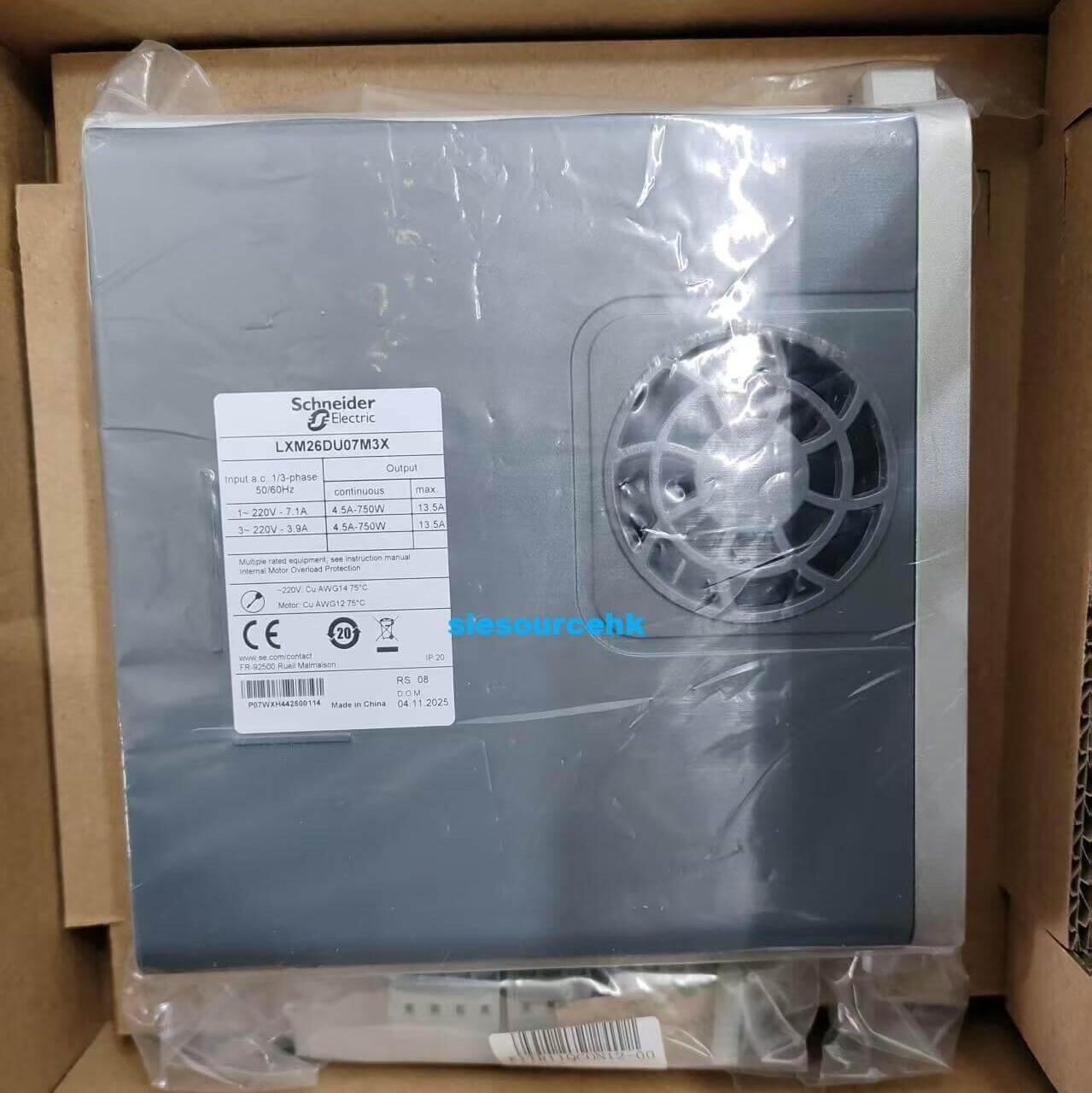
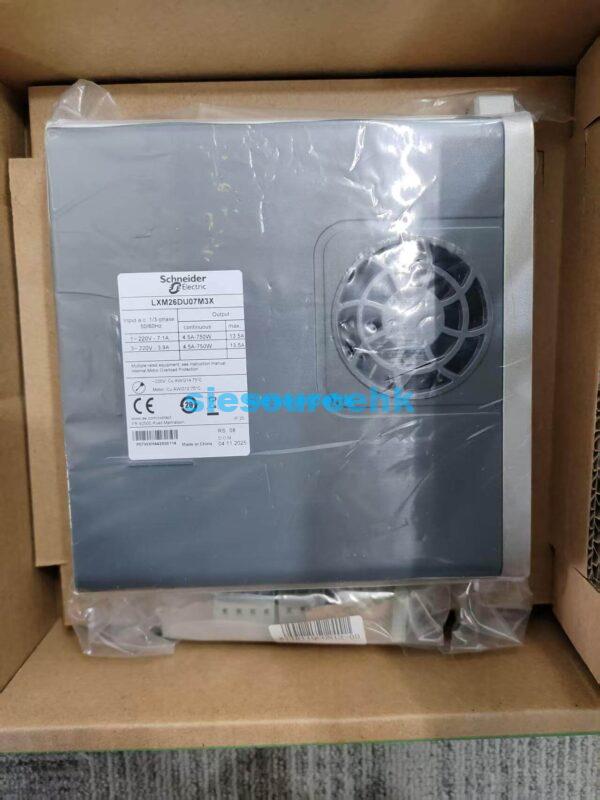
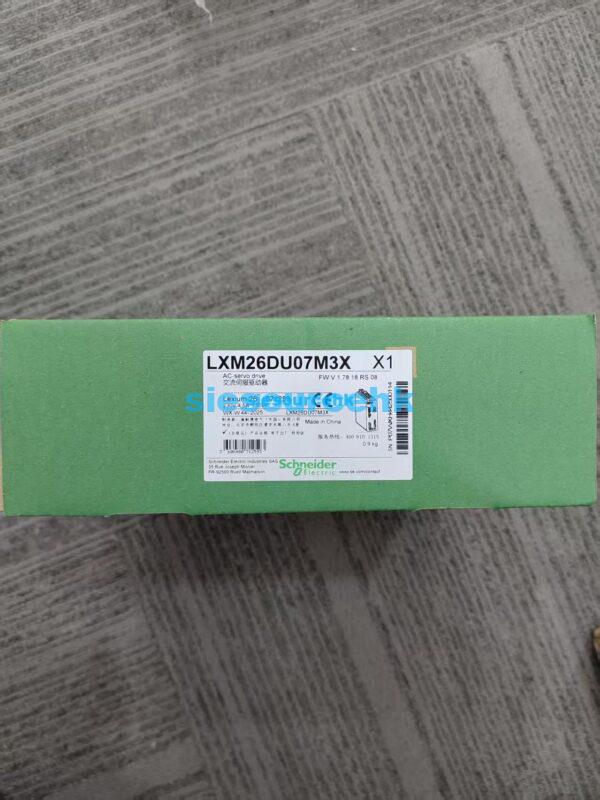
| LXM26DU07M3X | LXM32SD18M2 | LXM32AD72N4 |
| LXM32ICAN | LXM32AD12N4 | LXM32MD18N4 |
| LXM28AU07M3X | LXM52DD12C41000 | LXM62DD15C21000 |
| LXM28AU10M3X | LXM52DD12C41XXX | LXM32MD72N4 |
| LXM23DU07M3X | LXM32CD30N4 | LXM62PD84A11000 |
| LXM28SU04M3X | LXM32MU90M2 | LXM62DD15D21000 |
| LXM28EU07M3X | LXM05AD14N4 | 1LXM52DD72C41000 |
| LXM32AU45M2 | LXM32MD12N4 | LXM62DD27D21000 |
| LXM23AU15M3X | LXM32MU60N4 | LXM62DD45C21000 |
| LXM26DU15M3X | LXM23AU30M3X | LXM62DD45CXXXXX |
| LXM32IECT | LXM32AD30N4 | LMX62DU60D21000 |
| LXM28AU15M3X | LXM32CD72N4 | LMX62DD15D21000 |
| LXM32CD18N4 | LXM32MU45M2 | LXM62PD20A11000 |
| LXM32AU90M2 | LXM32MD18M2 | LXM62DC13C21000 |
| LXM23DUO7M3X | LXM52DD30C41000 | LXM62DD27F21000 |
| LXM28AU20M3X |
FAQ
1. Can Lexium drives be used with third-party PLCs?
Yes. While Lexium drives are optimized for Schneider Electric Modicon PLCs, they support open industrial protocols like EtherNet/IP, EtherCAT, and CANopen, allowing them to be integrated into Rockwell, Siemens, or Beckhoff control environments.
2. What is the benefit of the Common DC Bus in the Lexium 62 series?
The Common DC Bus allows multiple drives to share a single power supply. This reduces the amount of wiring required and permits “energy balancing,” where braking energy from one motor is consumed by another, reducing heat and improving energy efficiency.
3. How do I choose between the BSH and BMH motor series?
The choice depends on your load. If you need high acceleration and have a light load, choose the BSH (Low Inertia). If you are moving a heavy load or require more stability at various speeds, the BMH (Medium Inertia) is the standard choice.
4. What software is used to commission Schneider Lexium servos?
Most modern Lexium servos are commissioned using SoMove software for standalone drives or EcoStruxure Machine Expert (formerly SoMachine) for integrated motion control systems.
Reference Sources
- Schneider Electric Official Documentation: Technical data sheets for Lexium 32 and Lexium 52/62 series.
- IEC 61800-5-2: International standard for functional safety requirements for adjustable speed electrical power drive systems.
- Ethernet-User-Organization (EPSG): Documentation on CANopen and EtherCAT integration in motion control.
- IEEE Xplore: Research on high-power-density AC synchronous motor design for industrial automation.