


Blog
SMC MHF2 Air Gripper Guide: Low Profile Precision for Modern Automation

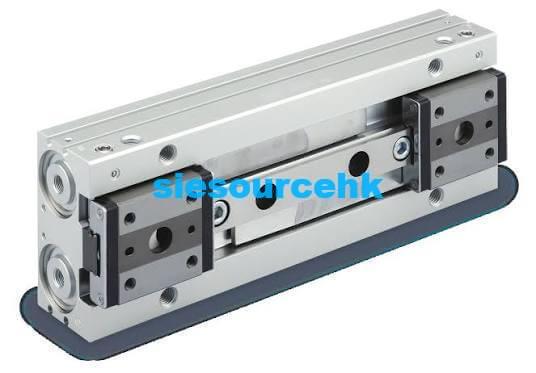
The evolution of industrial automation is trending toward miniaturization. As assembly cells become more compact, the demand for high-performance end-of-arm tooling (EOAT) that fits within tight vertical envelopes has skyrocketed. The SMC MHF2 Air Gripper represents a specialized solution to this spatial challenge.
Commonly referred to as a “flat-type” or “low-profile” gripper, the MHF2 series is engineered to provide significant gripping force without the height overhead of traditional parallel grippers. For engineers and OEM project managers, selecting the right MHF2 variant requires a balance of stroke length, closing force, and integration compatibility.
Technical Architecture: The Double Piston Advantage
The defining characteristic of the SMC MHF2 is its height—roughly 1/3 the size of a standard MHZ2 series gripper. Despite this reduced footprint, the MHF2 does not compromise on power.
Technically, the MHF2 utilizes a double-piston mechanism. By employing two pistons operating in parallel within the body, the surface area exposed to air pressure increases. This design allows the gripper to maintain a high holding force while remaining thin.
From a manufacturing perspective, this provides two distinct benefits:
- Reduced Moment Loads: The low profile moves the center of gravity closer to the robot arm or actuator, reducing vibration and wear during high-speed movements.
- Long-Stroke Capability: Unlike many compact grippers that offer limited jaw movement, the MHF2 comes in short, medium, and long-stroke variations (e.g., MHF2-8D to MHF2-20D), allowing it to handle diverse part sizes within the same workcell.
Comparative Analysis: MHF2 vs. Standard Parallel Grippers
When evaluating grippers for a new project, the trade-offs between the MHF2 and standard MHZ series are often a primary point of discussion in procurement research.
| Feature | SMC MHF2 (Low Profile) | Standard Parallel Gripper (MHZ2) |
| Vertical Height | Ultra-compact (Flat design) | Tall / Block-style |
| Piston Type | Double Piston (High Force/Volume ratio) | Single Piston |
| Mounting | 3-way mounting (Top, Side, Bottom) | Primarily Side/Bottom |
| Stroke Range | Up to 80mm (depending on bore) | Generally shorter in compact models |
| Ideal Use Case | Space-constrained EOAT / SMT | General material handling |
Application Logic in High-Precision Environments
The MHF2 is not a “general purpose” gripper for heavy-duty casting or large-scale automotive assembly. Instead, it thrives in sectors where precision and space are at a premium.
Electronics & SMT Assembly
In semiconductor manufacturing, vertical clearance is often limited by the overhead of testing probes or pick-and-place gantry systems. The MHF2 allows for secure handling of PCBs or delicate components without interfering with the surrounding machinery.
Laboratory Automation
For medical and diagnostic equipment, the low-profile design is critical for moving vials or trays within refrigerated units or centrifuges where every millimeter of internal volume is accounted for.
Specialized Packaging
When integrated into multi-head weighing or filling machines, the MHF2’s ability to be mounted in three different directions allows engineers to route pneumatic tubing and sensor cables more efficiently, preventing “cable spaghetti” that often leads to downtime.
Procurement Research: Selecting the Right MHF2 Configuration
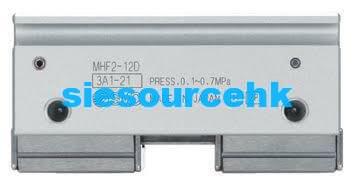
Navigating the MHF2 catalog requires attention to specific suffixes and bore sizes. As seen in the Siesource MHF2 inventory, models range from the MHF2-8D (smallest bore) to the MHF2-20D (largest).
Key Selection Criteria for Buyers:
- Bore Size (8, 12, 16, 20mm): This dictates the base gripping force. For example, the MHF2-12D provides roughly double the force of the MHF2-8D at the same pressure.
- Stroke Length: Within each bore size, multiple stroke lengths are available. Longer strokes (e.g., MHF2-16D2) increase the flexibility of the gripper but slightly increase the overall width.
- Auto-Switch Integration: For automated feedback, engineers should specify “R” models (e.g., MHF2-12DR) which come pre-configured for D-M9 series solid-state switches. These switches allow the PLC to confirm if the gripper is open, closed, or has missed a part.
- Dust Protection: If operating in environments with debris or high particulate counts, check for specific seal options to prevent internal piston wear.
Integration and Maintenance Best Practices
To ensure the longevity of an MHF2 system, maintenance teams should focus on two areas: air quality and lubrication.
- Filtration: Ensure the pneumatic line is filtered to at least 5 microns. Particles in the air line can score the dual-piston bores, leading to internal bypass and loss of gripping force.
- Lubrication: While the MHF2 is technically “non-lube,” if you choose to lubricate the system, you must continue to do so consistently. Once a lubricant is introduced, it washes away the factory-applied specialized grease.
- Centering Accuracy: The MHF2 is known for high repeatability (typically ±0.05mm). However, if the fingers are custom-machined and over-weighted, this accuracy can degrade. Always calculate the moment of inertia for custom tooling before installation.
Sourcing Genuine SMC Components
In the B2B landscape, lead times and authenticity are paramount. When sourcing the MHF2 series, it is vital to work with distributors who provide full technical documentation and verified part numbers. The Siesource platform offers a streamlined way to compare different MHF2 variants, ensuring that the components integrated into your OEM machinery meet the exact stroke and force requirements specified by your engineering team.
Available SMC MHF2 Series Models and Specifications
| MHF2-20D | MHF2-12D2 | MHF2-12D1R |
| MHF2-16D | MHF2-8D1 | MHF2-12D2-M9P |
| MHF2-8D1R | MHF2-12D1 | MHF2-20D1 |
FAQ: SMC MHF2 Series
Q: Can the MHF2 be used for internal gripping (spreading)?
A: Yes. The double-acting design allows the MHF2 to exert force in both the closing (external grip) and opening (internal grip) directions. However, always check the force charts, as the opening force is often slightly higher due to the lack of a piston rod displacement.
Q: What is the maximum operating frequency of the MHF2?
A: Depending on the stroke and bore size, the MHF2 can typically operate up to 120 cycles per minute. High-frequency applications should utilize flow controllers (speed controllers) to prevent the pistons from slamming, which can cause premature mechanical failure.
Q: Are there stainless steel options for the MHF2?
A: While the standard body is high-strength aluminum alloy with hard anodization, specific components like the fingers are available in stainless steel versions for corrosion resistance in humid or mildly acidic environments.
Q: How do I choose between the MHF2 and the MHZ2?
A: If your primary constraint is vertical height or you need a very long stroke in a small body, choose the MHF2. If you have plenty of vertical space and require a more budget-friendly, standard parallel gripper, the MHZ2 is usually the default choice.
Q: What auto-switches are compatible with the MHF2?
A: The MHF2 is designed to use SMC’s small-profile D-M9 series (D-M9N, D-M9P, D-M9B). These fit into the integrated grooves on the side of the gripper body, maintaining the low-profile benefit.
Reference Sources:
- SMC Official Catalog: MHF2 Series Low Profile Air Gripper Technical Data.
- ISO 9283: Industrial Robots — Performance criteria and related test methods.
- JIS B 8381-1: Pneumatic fluid power — Connectors for thermoplastic tubes.