


Blog
Allen-Bradley Ethernet Switches 1783: Complete Buying Guide, Specifications, Model Comparison & Selection Tips (2026)

In today’s highly automated industrial ecosystems, network reliability is directly correlated with plant productivity. Among the most trusted industrial networking hardware in the global market, Allen-Bradley Ethernet Switches 1783 (popularly known as the Stratix series by Rockwell Automation) stand out as the premier choice for control engineers, systems integrators, and B2B procurement officers.
These switches are not merely commercial-grade hardware placed in a metal enclosure. They are engineered from the ground up to endure extreme environmental stress, including high-vibration machinery beds, corrosive electrical atmospheres, and ambient temperature fluctuations ranging from -40°C to 75°C. Crucially, they offer seamless integration with the Rockwell Automation Logix control architecture, utilizing Logix Add-On Profiles (AOPs) and predefined Studio 5000 faceplates to simplify network configuration and diagnostic visibility directly on HMIs.
Whether you are designing a greenfield packaging facility, upgrading an automotive paint shop, or evaluating factory-wide IoT infrastructure, choosing the correct 1783 Ethernet switch is a critical multi-thousand-dollar decision. This guide outlines the detailed technical specifications, provides a side-by-side comparison of current models, and shares expert commercial buying recommendations to optimize your next procurement cycle.

1. What Are Allen-Bradley Ethernet Switches 1783?
To select the right industrial switch, one must understand how the Rockwell Automation 1783 catalog is structured. The 1783 designation encompasses several distinct families of switches, categorized by their management capability, network layer routing, and specialized features:
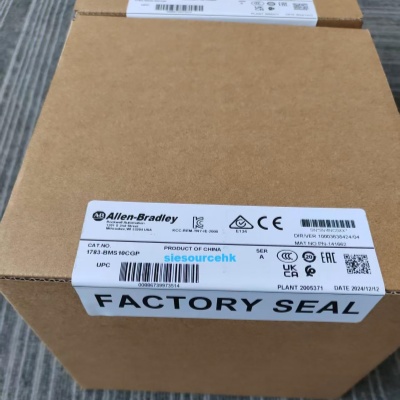
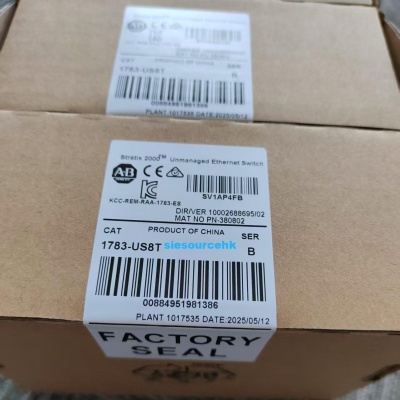
- Unmanaged Switches (Stratix 2000): Designed for simple, point-to-point machine-level connectivity. These require zero software configuration. They operate as plug-and-play devices that forward Ethernet packets based on MAC addresses.
- Lightly Managed Switches (Stratix 2500): Bridging the gap between unmanaged simplicity and managed security. They offer basic management features, such as VLAN segmentation, Quality of Service (QoS) prioritization, and loop detection, without the complexity of full enterprise command-line operations.
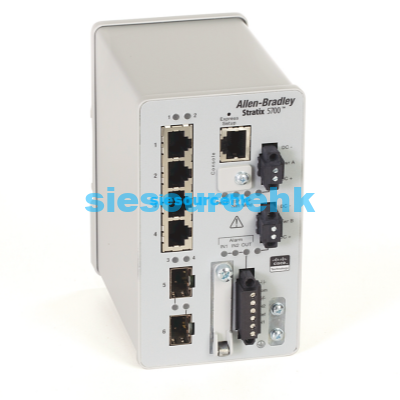
- Managed Switches (Stratix 5700, 5400, 5800): Designed for complex plant layouts requiring network segmentation, redundant topologies, robust cyber security, and Layer 3 routing. Built with Cisco technology (such as Cisco IOS operating systems), these switches integrate IT and OT networks seamlessly.
- Specialty Networking Modules (1783-NATR): Network Address Translation (NAT) devices that enable IP-mapping between isolated machine subnetworks and the wider plant network without changing the machines’ internal IP configurations.
For modern control systems, the choice of switch directly impacts network diagnostics. Fully managed 1783 switches broadcast Diagnostic Tags into your ControlLogix or CompactLogix controller, enabling real-time HMI alarms when a port experiences high packet loss or a redundant ring breaks.
2. Technical Comparison Matrix of 1783 Switch Families
When engineering a plant floor network layout, choosing a switch based on “unmanaged vs. managed” is insufficient. Engineers must evaluate port counts, speeds, Power over Ethernet (PoE) capacity, and specialized protocol compatibility.
The table below provides a comprehensive comparison of the primary 1783 Ethernet Switch series:
| Series Family | Management Class | Available Ports | Maximum Speeds | Layer 3 Routing | Specialized Protocols | Key Applications |
|---|---|---|---|---|---|---|
| Stratix 2000 (1783-US) | Unmanaged | 5 to 16 Ports | Fast/Gigabit Ethernet | No | None | Small standalone machines, localized remote I/O drops |
| Stratix 2500 (1783-LMS) | Lightly Managed | 5 to 8 Ports | Fast Ethernet | No | VLAN, QoS | Localized subnet isolation, OEM machinery integration |
| Stratix 5700 (1783-BMS) | Managed (L2/L3) | 6 to 20 Ports | Fast/Gigabit Ethernet | Optional (L3) | EtherNet/IP, DLR, STP | General plant floor control, localized Device Level Rings |
| Stratix 5400 (1783-HMS) | Managed (L2/L3) | 8 to 20 Ports | All-Gigabit Ethernet | Yes (L3 Optional) | DLR, IEEE 1588 PTP, PoE | High-performance motion control, heavy power grids |
| Stratix 5800 (1783-CMS) | Managed (L2/L3) | 8 to 26 Ports | Gigabit/10G SFP Up | Yes (Modular L3) | DLR, Cisco TrustSec, PTP | Modular plant backbones, high-density secure distribution |
Architectural Consideration: Fast Ethernet vs. Gigabit
For standard discrete I/O communication (such as driving pneumatic valves or reading proximity sensors), Fast Ethernet (100 Mbps) provided by the Stratix 2000 or 5700 is technically sufficient. However, for visual inspections using high-resolution vision sensors, distributed motion control (CIP Motion), or video surveillance streams, the high throughput and low-latency processing of Gigabit Ethernet on the Stratix 5400 or Stratix 5800 is a strict engineering requirement.
3. Selecting the Right Model for Your Industrial Application
Different manufacturing environments present unique mechanical and chemical challenges. To align with Google’s real-world expertise rules, we categorize selection tips by actual plant environments:
Local Machine-Level Integration (OEM & Machinery Builders)
For standalone machines featuring a single Programmable Logic Controller (PLC), a variable frequency drive, and an HMI panel, the Stratix 2000 (1783-US) is the most cost-effective path. It avoids configuration overhead and keeps the bill of materials low.
- Professional Selection Tip: If the end-user requires remote monitoring of that machine, upgrade to the Stratix 2500 (1783-LMS) to allow basic security parameters and VLAN trunking.
Mid-Sized Production Lines & Localized Redundancy (Discrete Manufacturing)
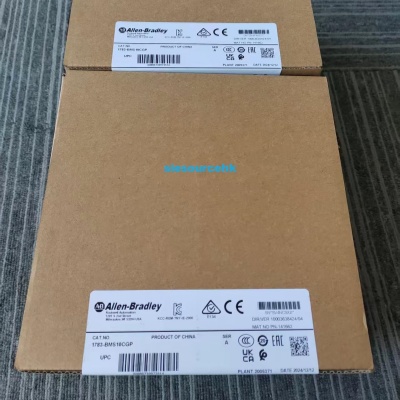
In lines where a breakdown in one machine halts the entire process, network redundancy is paramount. The Stratix 5700 managed switch supports Device Level Ring (DLR) technology. DLR creates a resilient single-ring topology that recovers from physical wire cuts in less than 3 milliseconds, ensuring uninterrupted operations.
- Professional Selection Tip: Ensure you buy the specific 1783-BMS catalog number that contains “DLR enabled” firmware, as base models may lack this feature.
High-Vibration & Extreme High-Density Deployments (Process & Heavy Industries)
For heavy manufacturing, such as steel production or petrochemical processing, physical environmental durability is vital. The Stratix 5800 (1783-CMS) offers a modular design where a main base unit can be coupled with expansion modules. This allows you to scale from 8 up to 26 ports in a single compact DIN-rail footprint, withstanding operating temperatures up to 75°C without requiring active fan cooling.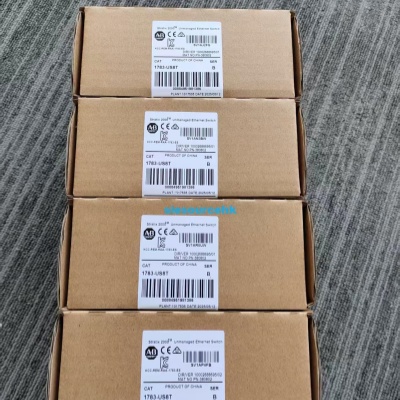
Product model
| 440N-ZPREC | 440N-Z21S16H | 440N-Z21S16A | 440N-S32056 |
| 440N-Z2NRS1A | 440N-Z21W1PB | 440N-Z21SS3PH | 440N-G02044 |
| 440N-Z18PT | 440N-Z21S16J | 440N-Z21S17H | 440N-Z21S26H |
| 440N-Z2NRS1C | 440N-Z21SS2H | 440N-Z21SS2AN | 440N-G02123 |
| 440N-ZPRECM | 440N-Z21SS2A | 440N-Z21SS2HN9 | 440N-G02099 |
| 440N-Z21W1PA | 440N-Z21SS2HN SER B | 440N-Z21S17B | |
| 440N-Z21W1PH | 440N-Z21SS2HN | 440N-Z21SS2BN9 | |
| 440N-S32013 | 440N-Z21S16B | 440N-Z21U17H |
4. Key Procurement Factors: MOQ, Lead Times, and Compliance
Buying electrical components in bulk requires deep commercial awareness. Standard commercial office switches are cheap but fail rapidly on factory floors, causing thousands of dollars in downtime. When sourcing Allen-Bradley Ethernet Switches 1783 for large OEM or capital projects, purchasing agents should verify several commercial pillars:
- Minimum Order Quantity (MOQ): For standard catalog items, authorized stocking distributors generally have no MOQ constraints, allowing you to purchase single replacement switches for maintenance, repair, and operations (MRO). However, bulk custom-packaged configurations for machine builders may carry an MOQ of 5 to 10 units.
- Lead Times and Sourcing: Due to specialized industrial chipsets, manufacturing lead times can vary significantly. Standard configurations (such as an 8-port Stratix 2000 or 10-port Stratix 5700) are typically stocked globally. Custom modular setups or Gigabit PoE Stratix 5800 models can incur lead times of 4 to 8 weeks depending on global silicon availability.
- Compliance Support and Certifications: Industrial projects demand strict regulatory adherence. Ensure the switch you procure holds:
- UL 508 / UL 61010-1 & -2-201 for industrial control equipment safety.
- Class I Division 2 (Groups A, B, C, D) certification for hazardous gas locations (crucial for oil, gas, and chemical industries).
- CE & RoHS Compliant for international distribution.
- ODVA Conformance verifying interoperability with EtherNet/IP standards.
Sourcing Authentic Rockwell Automation Equipment: SieSource HK
When high-stakes production lines depend on authentic network components, procuring through reliable, accredited distributors is non-negotiable. Counterfeit industrial hardware or grey-market parts lack official firmware support, resulting in catastrophic security vulnerabilities or operational failure.
To guarantee product authenticity and minimize capital project lead times, systems integrators and buyers rely on specialized, large-scale distributors like SieSource HK.
SieSource HK stocks a massive inventory of authentic Rockwell Automation parts, specializing directly in the Allen-Bradley Ethernet Switches 1783 series. By offering real-time stock verification, transparent global shipping, and active support for bulk RFQ (Request for Quote) submissions, they serve as a critical bridge in the industrial automation supply chain. For current pricing, lead times, and available stock configurations, explore the SieSource HK 1783 Product Portal.
DYNAMIC FREQUENTLY ASKED QUESTIONS
Q1: What is the difference between an unmanaged (Stratix 2000) and managed (Stratix 5700) switch?
A1: Unmanaged switches (Stratix 2000) require no software and function strictly as plug-and-play devices to connect nodes together. Managed switches (Stratix 5700) provide granular security control, network redundancy protocols (DLR, STP), VLAN configuration, and integrate directly with Rockwell’s Studio 5000 software to broadcast network diagnostic tags to PLC controllers.
Q2: What is Device Level Ring (DLR) and which 1783 models support it?
A2: Device Level Ring is a Rockwell-championed network redundancy protocol. It allows the Ethernet nodes to be wired in a physical loop. If a single Ethernet cable is cut, the ring supervisor automatically reroutes traffic in under 3ms, preventing a system shutdown. DLR is supported on managed models such as the Stratix 5700, 5400, and 5800, as well as specialized modules like the 1783-NATR.
Q3: Do Allen-Bradley 1783 switches support Power over Ethernet (PoE)?
A3: Yes, specific catalog numbers within the managed families (Stratix 5700, 5400, and 5800) offer PoE and PoE+ ports. These ports deliver power alongside data, allowing you to directly power IP cameras, wireless access points, or RFID readers without installing separate high-voltage lines on the machines.
Q4: Can I use standard commercial Ethernet switches in place of Allen-Bradley 1783 switches?
A4: Technically yes, but it is highly discouraged in industrial applications. Commercial switches lack the mechanical resilience to withstand industrial temperatures, heavy vibrations, and electromagnetic noise. Furthermore, they do not support industrial redundancy protocols (like DLR) or Logix controller diagnostics integration, drastically increasing system downtime risks.
Q5: What are the common lead times for bulk purchases of Stratix 5800 switches?
A5: Standard in-stock switches are available for immediate global shipping via stocking distributors like SieSource HK. For bulk custom configurations or specialized modular Stratix 5800 models, factory lead times can range from 4 to 8 weeks, depending on current semiconductor and assembly capacity.