


Blog
Allen-Bradley PLC Families: CompactLogix vs. ControlLogix Guide

Selecting the right controller for an industrial automation project involves more than just counting I/O points. For engineers and OEM project managers, the choice between Allen-Bradley’s flagship families—ControlLogix® and CompactLogix™—represents a strategic decision impacting scalability, cabinet footprint, and long-term maintenance costs.
Both families share the Logix Control Engine, meaning they use the same programming environment (Studio 5000 Logix Designer®) and tag-based architecture. However, their hardware philosophies and performance ceilings differ significantly. This guide breaks down the Allen-Bradley PLC families to help you match the right processor to your specific manufacturing requirements.
The Logix Platform: A Unified Architecture
Rockwell Automation shifted the industry standard by introducing the “Logix” platform. Unlike legacy systems like the SLC 500 or PLC-5, which were strictly PLCs (Programmable Logic Controllers), the ControlLogix and CompactLogix series are PACs (Programmable Automation Controllers).
They handle discrete, motion, drive, and process control in a single integrated environment. This multi-discipline capability allows for a “Producer/Consumer” communication model, which optimizes EtherNet/IP traffic by allowing multiple controllers to share data simultaneously without repetitive polling.
ControlLogix (1756 Series): The High-Performance Powerhouse
ControlLogix is the premier family designed for large-scale, high-performance applications. It is a chassis-based system, meaning the processor, power supply, and I/O modules are housed in a dedicated rack (1756-A4, A7, A10, etc.).
Key Technical Advantages:
- Chassis-Based Scalability: The backplane (the physical rack) provides high-speed data transfer between modules. You can place the controller in any slot and even use multiple controllers in a single chassis for parallel processing.
- High I/O Density: ControlLogix supports thousands of I/O points. For complex plant-wide architectures, it acts as the “brain,” coordinating distributed I/O across multiple floors.
- Redundancy Support: For critical processes where downtime is not an option (e.g., oil and gas or chemical processing), ControlLogix supports full hardware redundancy. If the primary controller fails, the secondary takes over in milliseconds.
- Hot-Swapping (RIUP): You can “Remove and Insert Under Power” any module in a ControlLogix chassis without stopping the system—a vital feature for continuous manufacturing.
CompactLogix (1769 & 5069 Series): The Versatile Mid-Range
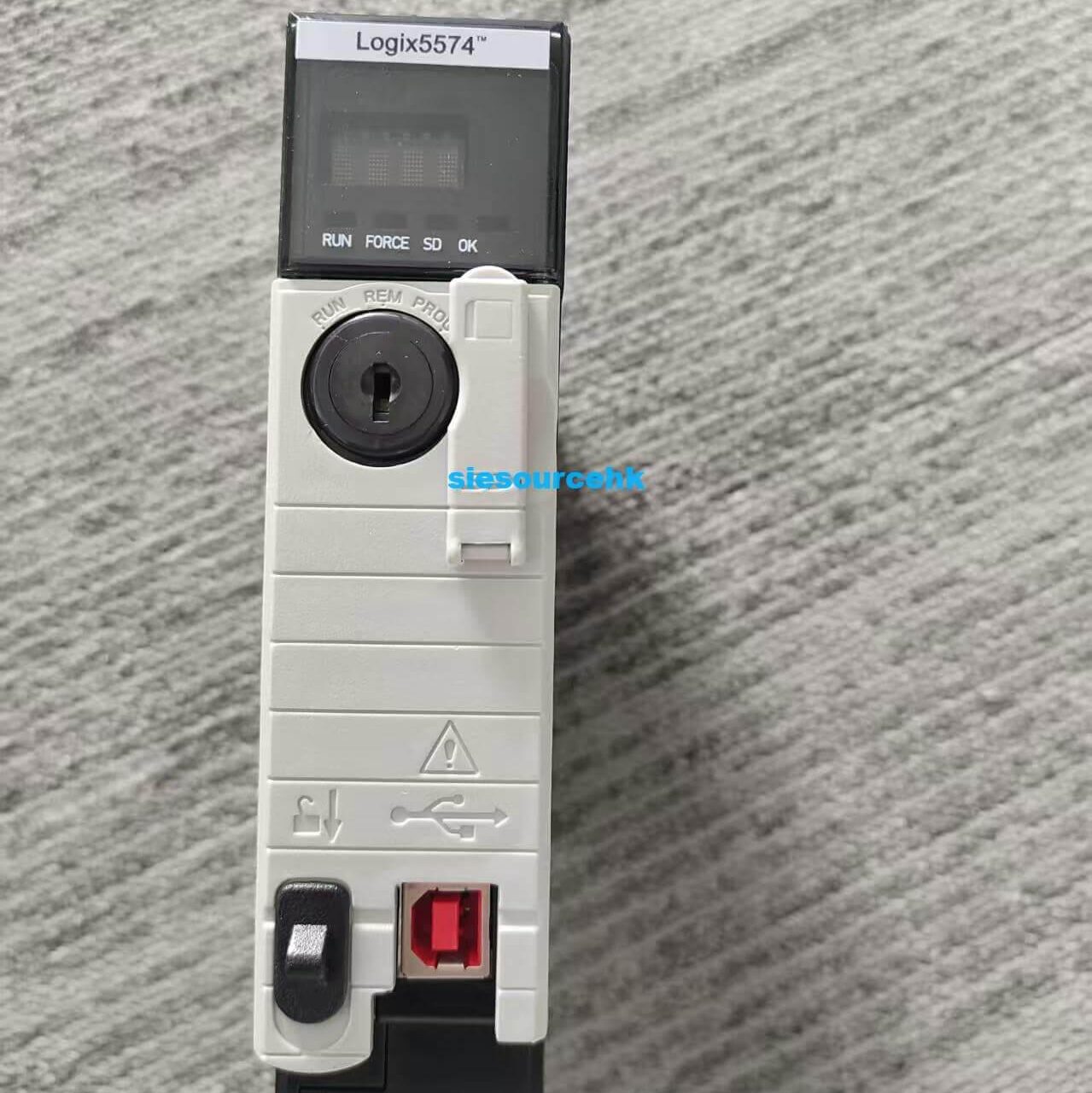
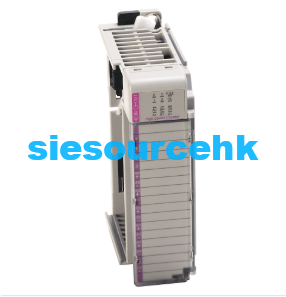
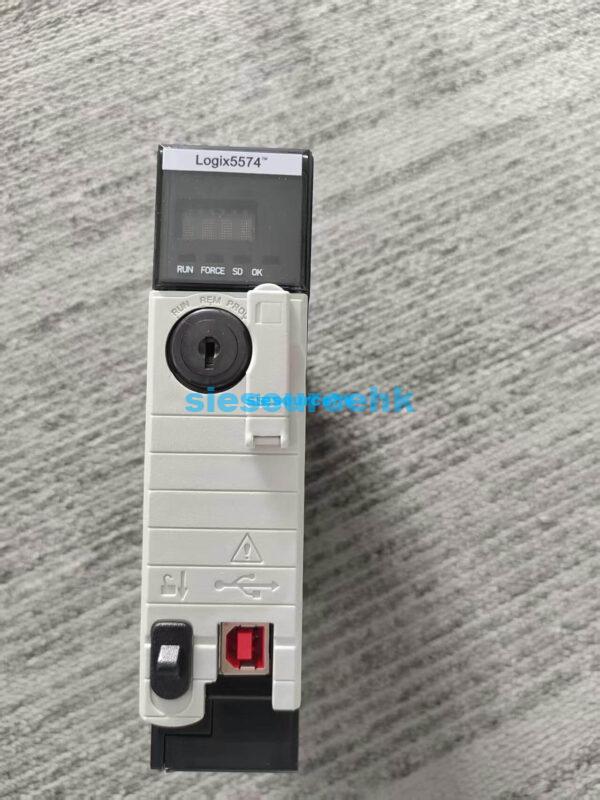
The CompactLogix family is designed to provide the same programming benefits as ControlLogix but in a smaller, more cost-effective package. It is generally “rackless,” using a DIN-rail mounting system where modules connect side-by-side.
Key Technical Advantages:
- Integrated Motion on EtherNet/IP: Modern CompactLogix processors (like the 5069 series) are highly capable of handling high-axis count motion control, making them favorites for OEM machine builders.
- Smaller Footprint: Without the need for a bulky chassis, these controllers fit easily into smaller electrical cabinets, reducing the overall cost of the machine build.
- All-in-One Solutions: Many CompactLogix models come with built-in I/O and power supplies, simplifying the bill of materials for standard skid-based equipment.
CompactLogix vs. ControlLogix: Technical Comparison
| Feature | ControlLogix (1756) | CompactLogix (5069/1769) |
| Architecture | Chassis/Rack-based | Modular/DIN-rail |
| Max I/O Points | Up to 128,000 | Up to 9,600 |
| Redundancy | High-availability (Native) | Not natively supported |
| Hot-Swapping | Supported (RIUP) | Limited/Series dependent |
| Memory | Up to 40MB | Up to 10MB |
| Best For | Plant-wide control, DCS, Heavy Process | OEM Machines, Skids, Stand-alone lines |
Decision Logic: Which Family Fits Your Application?
When evaluating these Allen-Bradley Rockwell components, consider the following engineering constraints:
1. Environmental and Maintenance Requirements
If your facility requires zero-downtime maintenance, the ControlLogix 1756 series is the standard. Its ability to replace a faulty I/O module while the rest of the line remains energized is a decisive factor for 24/7 operations.
2. Motion Control Complexity
For a machine with 2 to 16 axes of motion, a CompactLogix 5380 (5069 series) is often the most cost-efficient choice. It offers the high-speed backplane performance needed for CIP Motion without the price tag of a full ControlLogix rack. However, if you are coordinating over 100 axes of motion, the processing power of a ControlLogix L8 series is required.
3. Communication and Network Load
ControlLogix processors generally have higher communications throughput. If your controller needs to talk to hundreds of Variable Frequency Drives (VFDs) and HMI panels while simultaneously logging data to an ERP system, the 1756-L8 series provides the necessary “headroom” to prevent network latency.
Legacy Support and Modernization
While the industry is moving toward the 5069 CompactLogix and 1756-L8 ControlLogix, many plants still rely on legacy families like the MicroLogix, SLC 500, and PLC-5.
Modernizing these systems often involves using the CompactLogix as a cost-effective gateway. Because the Logix platform is backward compatible with many older communication protocols (like DH+ via specialized modules), it allows for a phased migration rather than a risky “rip-and-replace” approach.
Sourcing Reliable Automation Hardware
In the B2B procurement cycle, lead times and component authenticity are critical. Whether you are scaling up with a full 1756-chassis ControlLogix system or integrating a 1769-L30ER CompactLogix into an OEM skid, sourcing through specialized distributors like SIESourceHK ensures access to a wide range of both current and hard-to-find legacy Rockwell Automation parts. This availability is essential for maintaining aging infrastructure while simultaneously building next-generation production line.
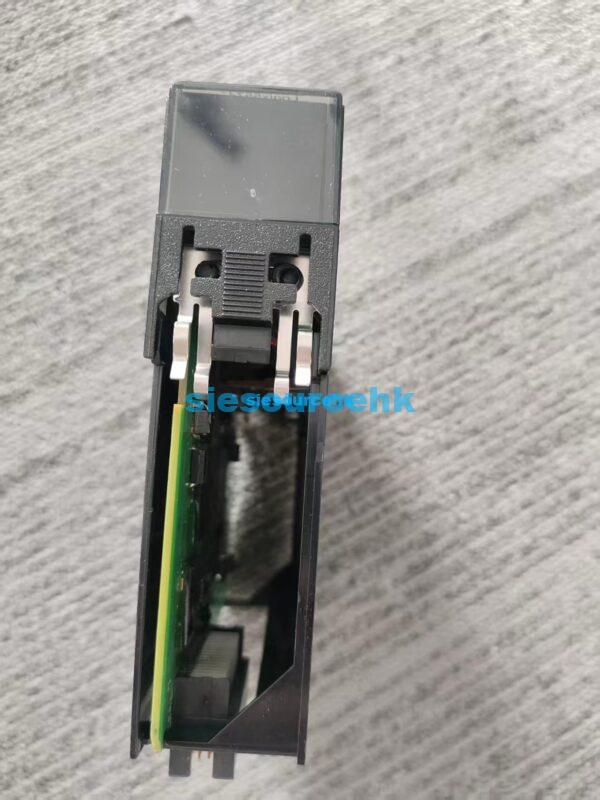
Product Model
| 1769-BA | 1769-L16ER-BB1B | 1769-IF4X |
| 1769-ECL | 1769-L30ERM | 1769-SDN |
| 1769-IR6 | 1769-L33ERM | 1769-L32E |
| 1769-IF8 | 1769-L33ER | 1769-0F4VI |
| 1769-OF4 | 1769-ECR | 1769-ADN |
| 1769-IQ16 | 1769-L30ER | 1769-OB16P |
| 1769-HSC | 1769-AENTR | 1769-L36ERM |
| 1769-OB16 | 1769-HSC | 1769-PA2 |
| 1769-L30ER | 1769-L18ER-BB1B | 1769-PB4K |
| 1769-L30ER | 1769-BP4 | 1769-OF8C |
| 1769-ECR | 1769-L32E | 1769-OB32/A |
| 1769-PA4 | 1769-OW16 | 1769-PB4 |
| 1769-PA4 | 1769-SM2 | 1769-OB32T |
FAQ
Q: Can I use ControlLogix I/O modules with a CompactLogix controller?
A: No. ControlLogix modules (1756) require a chassis backplane, while CompactLogix modules (1769 or 5069) use a different physical connection bus. However, you can use “Distributed I/O” (like Point I/O 1734) with either controller over an EtherNet/IP network.
Q: What is the difference between the 1769 and 5069 CompactLogix?
A: The 1769 is the older generation, while the 5069 is the high-performance modern standard. The 5069 offers significantly faster internal backplane speeds, dual Gigabit Ethernet ports, and supports higher-speed motion control.
Q: Is there a “small” version of Allen-Bradley PLCs for simple machines?
A: Yes. For simple, stand-alone machines that don’t require the full Logix engine, the Micro800 series is the preferred low-cost alternative. It uses Connected Components Workbench (CCW) software rather than Studio 5000.
Q: Does CompactLogix support Safety ratings?
A: Yes. Both families have “GuardLogix” versions (identifiable by their red housing). These controllers handle both standard control and functional safety (SIL 2/SIL 3) in a single unit.
Reference Sources
- Rockwell Automation: ControlLogix 1756 System Selection Guide
- IEEE Xplore: Performance Analysis of Industrial Communication Protocols
- ODVA: EtherNet/IP Specification for Industrial Automation