


Blog
Allen-Bradley Servo Drive 2097: Specifications, Features and Selection Guide

Allen-Bradley Servo Drive 2097: Specifications, Features and Selection Guide
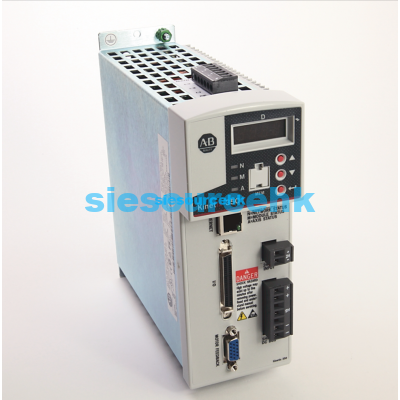
The Allen-Bradley Servo Drive 2097 is a compact servo drive family designed for precision motion control in industrial automation. Commonly used with Kinetix® motion systems, the 2097 series delivers accurate positioning, speed regulation, and torque control for machines requiring synchronized movement.
Understanding its specifications, compatible motors, communication options, and replacement considerations helps engineers reduce integration risks and improve long-term system reliability.
Rather than selecting a replacement based solely on part number, engineers should evaluate electrical ratings, feedback compatibility, network architecture, and application requirements.
What Is the Allen-Bradley Servo Drive 2097?
The Allen-Bradley Servo Drive 2097 belongs to the Kinetix 350 servo drive family developed for small to medium-sized machine automation.
It combines motor control, motion processing, and industrial networking within a compact enclosure suitable for single-axis applications.
Typical applications include:
- Packaging equipment
- Material handling systems
- Labeling machines
- Food processing equipment
- Assembly automation
- Semiconductor machinery
- Printing systems
Unlike variable frequency drives (VFDs), servo drives continuously monitor encoder feedback and automatically correct position or speed deviations. This closed-loop control enables significantly higher motion accuracy.
Typical Motion Control Architecture
| Component | Function |
|---|---|
| PLC | Executes machine logic |
| EtherNet/IP Network | Transfers motion commands |
| Allen-Bradley Servo Drive 2097 | Controls servo motor |
| Servo Motor | Produces rotary motion |
| Encoder/Feedback Device | Reports actual position |
| Mechanical Transmission | Converts motor motion into machine movement |
Key Specifications of Allen-Bradley Servo Drive 2097
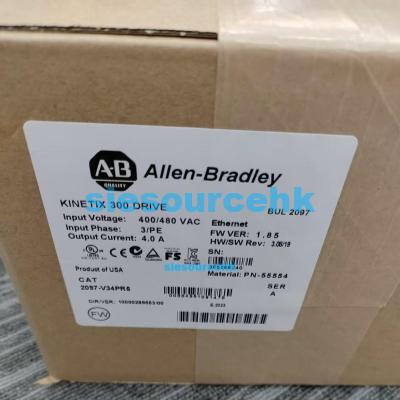
Although specifications vary between models, the 2097 family shares several common design characteristics.
| Specification | Typical Characteristics |
|---|---|
| Drive Type | Digital AC Servo Drive |
| Motion Control | Position, Velocity, Torque |
| Network | EtherNet/IP |
| Feedback | High-resolution encoder support |
| Installation | Panel Mount |
| Cooling | Natural or Forced Air (model dependent) |
| Protection Features | Overcurrent, Overvoltage, Thermal Protection |
| Configuration | Studio 5000 / Logix Environment |
Different model numbers provide varying output current ratings, voltage classes, and power capacities.
Examples include:
- 2097-V31PR0-LM
- 2097-V32PR0-LM
- 2097-V33PR1-LM
- 2097-V34PR3-LM
Selecting the appropriate model depends on motor size, acceleration profile, inertia ratio, and duty cycle.
How Does the Allen-Bradley Servo Drive 2097 Work?
A servo drive converts incoming AC power into precisely controlled electrical output for the connected servo motor.
Its operation generally follows these steps:
- The PLC sends motion commands through EtherNet/IP.
- The servo drive calculates the required motor current.
- Encoder feedback reports actual motor position.
- The control algorithm compares commanded and actual positions.
- Output current is adjusted continuously to minimize error.
This feedback loop operates thousands of times each second, allowing precise synchronization between multiple machine axes.
Compared with open-loop motor systems, closed-loop servo control offers:
- Higher positioning accuracy
- Faster response times
- Improved repeatability
- Reduced overshoot
- Better dynamic performance
These characteristics are particularly valuable in packaging, robotics, and indexing applications where consistent cycle times are essential.
Where Is the Allen-Bradley Servo Drive 2097 Commonly Used?
Servo drives in the 2097 series are designed for applications requiring accurate, repeatable motion.
Packaging Equipment
Packaging machinery often requires coordinated movement between conveyors, sealing units, and cutting stations.
Servo control maintains registration accuracy during high-speed production.
Assembly Automation
Automated assembly systems depend on repeatable positioning for component insertion, fastening, and inspection.
Servo drives reduce positioning errors that could affect product quality.
Material Handling
Pick-and-place systems, gantries, and indexing tables benefit from rapid acceleration and precise stopping performance.
Printing and Converting
Maintaining web tension and synchronized roller speeds is critical for print quality.
Servo technology supports stable production at varying operating speeds.
Semiconductor Manufacturing
Electronic component production frequently demands micron-level positioning precision.
Closed-loop servo systems help maintain manufacturing consistency under demanding process conditions.
Allen-Bradley Servo Drive 2097 Replacement Considerations
Replacing an existing servo drive involves more than matching the catalog number.
Engineers should verify several technical factors before installation.
| Evaluation Item | Why It Matters |
|---|---|
| Input Voltage | Must match facility power |
| Output Current | Must satisfy motor demand |
| Servo Motor Compatibility | Prevents tuning issues |
| Encoder Type | Ensures proper feedback |
| Firmware Version | Supports controller communication |
| EtherNet/IP Configuration | Maintains network compatibility |
| Mechanical Installation | Fits existing cabinet layout |
| Environmental Rating | Matches operating conditions |
For older production lines, discontinued firmware or obsolete motors may require additional commissioning work.
Whenever possible, retaining compatible motor and controller combinations simplifies commissioning and minimizes downtime.
How to Select the Right Allen-Bradley Servo Drive 2097
Choosing the appropriate servo drive starts with understanding the application’s motion profile rather than focusing only on horsepower.
Consider the following engineering factors.
Required Motor Torque
Peak torque during acceleration may significantly exceed continuous operating torque.
Sizing only for average load can reduce system reliability.
Motion Profile
Frequent starts, rapid indexing, or continuous positioning place different demands on the drive.
Cycle analysis helps determine suitable current capacity.
Communication Requirements
Most modern Rockwell Automation systems integrate through EtherNet/IP.
Existing controller architecture should remain compatible with the selected drive.
Cabinet Space
Compact control panels may require careful consideration of airflow, spacing, and thermal management.
Adequate cooling improves long-term reliability.
Future Expansion
Machines expected to receive additional motion axes may benefit from selecting hardware compatible with future controller upgrades.
Practical Engineering Considerations for Long-Term Reliability
Servo drives operate under demanding industrial conditions.
Several installation practices can improve operational stability.
- Maintain adequate cabinet ventilation.
- Separate power and signal wiring.
- Use properly grounded shielded motor cables.
- Follow recommended encoder cable routing.
- Perform regular inspection of cooling fans and connectors.
- Keep firmware documentation with machine records.
- Verify motor tuning after replacement.
In high-duty production environments, preventive inspection often identifies cooling or connection issues before unexpected failures occur.
For applications requiring replacement or system upgrades, reviewing the available Allen-Bradley Servo Drive 2097 models and their electrical specifications can help determine compatibility with existing motors and controllers. Comparing voltage class, output current, communication interface, and mounting dimensions before installation reduces commissioning time and lowers the likelihood of integration issues. Technical product information should always be verified against the machine documentation and official specifications before deployment.
Product Model
| 2097-V34PR3 | 2097-V33PR3 | 2097-V34PR3-LM | 2097-V34PR6 |
| 2097-TB1 | 2097-V32PR4-LM | 2097-V34PR5-LM | 2097-V34PR6-LM |
| 2097-R6 | 2097-V33PR1-LM | 2097-V34PRS | |
| 2097-V32PR4 | 2097-V34PR5 | 2097-V33PR5 |
FAQ
What is the Allen-Bradley Servo Drive 2097 used for?
It controls AC servo motors in industrial automation systems that require precise position, speed, and torque control. Typical applications include packaging, assembly, robotics, and material handling equipment.
Is the Allen-Bradley Servo Drive 2097 a variable frequency drive?
No. A servo drive uses closed-loop feedback from an encoder to continuously adjust motor performance, while most standard VFDs operate primarily in open-loop speed control applications.
Can different 2097 models replace each other?
Not always. Replacement requires matching electrical ratings, motor compatibility, communication settings, firmware support, and application requirements.
Which communication protocol does the 2097 series support?
Many models within the Kinetix 350 family communicate through EtherNet/IP, enabling integration with Rockwell Automation Logix controllers.
What should be checked before replacing a servo drive?
Engineers should verify input voltage, output current, motor compatibility, encoder type, firmware version, network configuration, and mechanical installation dimensions.
Why is encoder feedback important?
Encoder feedback allows the drive to compare commanded motion with actual motor movement and automatically correct positioning errors, improving accuracy and repeatability.
Reference Sources
- Rockwell Automation. Kinetix 350 Single-axis EtherNet/IP Servo Drives User Manual
https://literature.rockwellautomation.com/ - Rockwell Automation. Kinetix Motion Control Systems Documentation
https://www.rockwellautomation.com/ - IEC 61800 Series – Adjustable Speed Electrical Power Drive Systems
https://webstore.iec.ch/ - IEEE Xplore Digital Library – Motion Control and Servo System Papers
https://ieeexplore.ieee.org/ - ODVA. EtherNet/IP Specifications and Industrial Ethernet Resources
https://www.odva.org/