



Blog
Festo MS6-LF Filter: 5-40µm Selection for High-Flow Systems

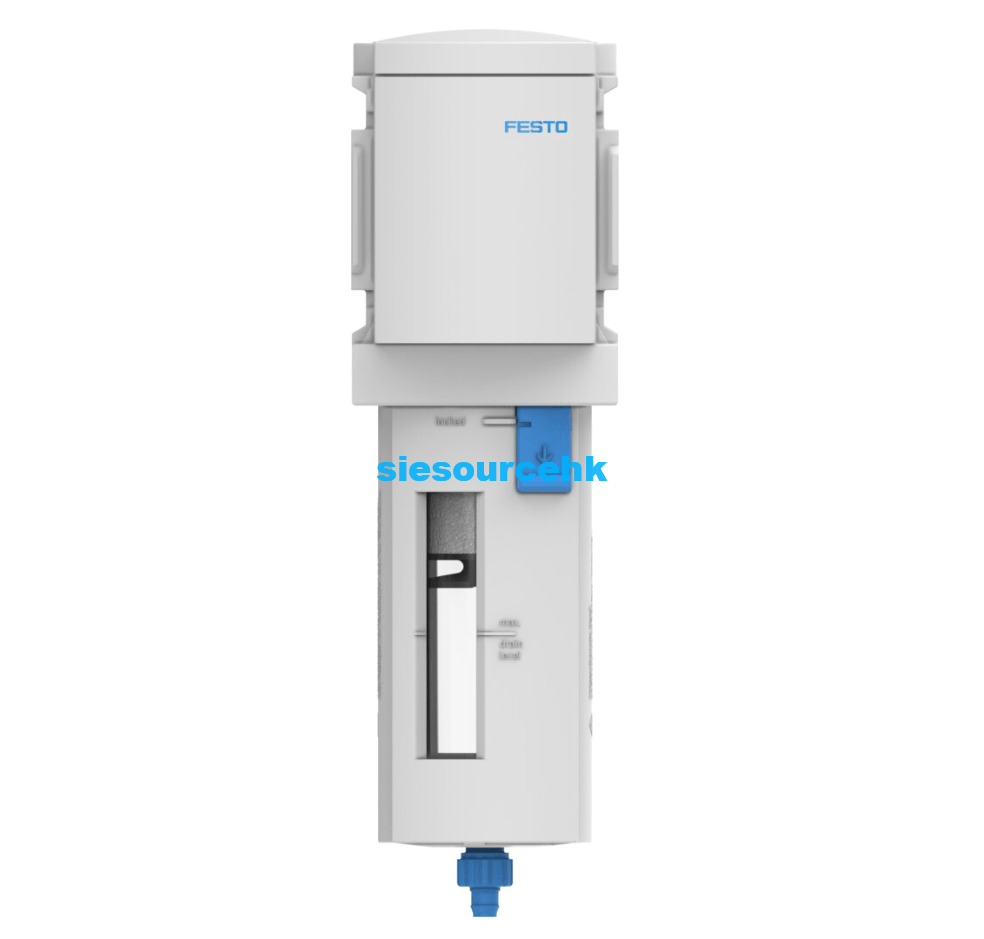
Compressed air is the lifeblood of modern automated manufacturing, but it is also a carrier for contaminants that can cripple precision pneumatic components. When designing high-flow systems, engineers often turn to the Festo MS6-LF Air Filter. As a cornerstone of the MS series modular service units, the MS6-LF provides a balance of high flow capacity and customizable filtration grades.
Choosing the right filtration level—typically between 5 μm and 40 μm—is not merely a checklist item. It is a strategic decision that affects system longevity, energy consumption, and maintenance intervals. In high-output environments like automotive assembly or electronics packaging, selecting the wrong filter grade can lead to premature valve failure or excessive pressure drops that drive up energy costs.
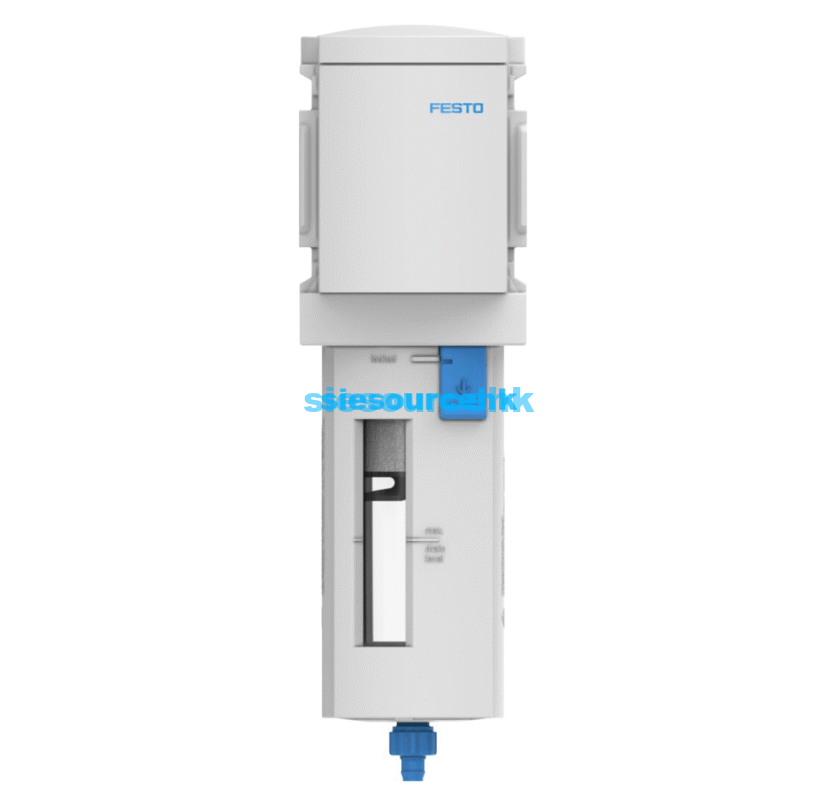
Understanding the MS6-LF Technical Architecture
The MS6-LF is part of Festo’s MS series, which is characterized by its 60mm grid dimension. This size is specifically engineered for high-flow applications where G1/4 to G3/4 port connections are standard. Unlike smaller series, the MS6-LF handles flow rates that can exceed 4,000 liters per minute, depending on the specific configuration and pressure differential.
The “LF” designation refers to the individual filter unit. Its design utilizes a centrifugal force principle to remove liquid condensate and large particles, followed by a filter element that captures finer contaminants. The housing is typically constructed from die-cast aluminum, ensuring the structural integrity required for industrial environments where vibration and pressure fluctuations are constant.
5 μm vs. 40 μm: Technical Trade-offs and Performance
The most critical decision in specifying a Festo MS6-LF is the filter grade. This choice dictates the “cleanliness class” of the air according to ISO 8573-1:2010.
| Feature | 5 μm Filtration (Fine) | 40 μm Filtration (Standard) |
| Air Quality Class | ISO 8573-1:2010 [6:8:4] | ISO 8573-1:2010 [7:8:4] |
| Typical Application | Precision valves, sensors, food tech | Impact tools, large cylinders, pre-filtration |
| Flow Resistance | Higher initial pressure drop | Minimal pressure drop |
| Service Life | Shorter (plugs faster in dirty air) | Longer (handles larger dirt loads) |
| Cost of Element | Slightly higher | Standard |
The Case for 40 μm Filtration
In many heavy-industrial applications, a 40 μm filter is the standard. It is designed to stop large particulates that could cause mechanical abrasion in large-bore cylinders or damage the seals of rugged directional control valves. The primary advantage here is the flow rate. Because the filter mesh is wider, air passes through with less resistance, ensuring that downstream actuators receive the necessary volume of air instantly.
The Case for 5 μm Filtration
If your system utilizes proportional valves, high-speed miniature cylinders, or air bearings, a 5 μm filter is mandatory. Finer filtration protects sensitive internal orifices from “stiction” (static friction) caused by fine dust accumulation. However, engineers must account for the higher pressure drop. A 5 μm element will reach its saturation point faster than a 40 μm element, requiring more frequent monitoring of the differential pressure.
Condensate Management: Manual vs. Fully Automatic
A filter is only as effective as its drainage system. The Festo MS6-LF offers three primary drainage options, each suited to different operational realities:
- Manual Drain: Best for low-moisture environments where a technician can perform daily checks. This is the most cost-effective option but carries the highest risk of human error.
- Semi-Automatic: Drains only when the system is depressurized. This is common in single-shift operations where the air supply is turned off at night.
- Fully Automatic (V-Option): The gold standard for 24/7 manufacturing. An internal float triggers the drain whenever the liquid reaches a specific level. This prevents “carryover,” where accumulated water is forced back into the air stream, a common cause of corrosion in downstream components.
For high-flow systems, we almost always recommend the fully automatic drain. The cost of a single pneumatic tool failure due to water carryover far outweighs the price difference of the automatic drain module.
Modular Integration and System Scalability
One of the primary reasons OEM project managers specify the MS6-LF is its modularity. The unit can be seamlessly connected to other MS6 components, such as:
- MS6-LR Pressure Regulators: For precise pressure control after filtration.
- MS6-LFR Filter-Regulators: Combining both functions into a single housing to save space.
- MS6-LOE Lubricators: Necessary if your downstream actuators are not “self-lubricating.”
The use of modular hangers and wall brackets allows for rapid replacement. In a “Total Productive Maintenance” (TPM) environment, being able to swap a filter unit in five minutes rather than thirty is a significant operational advantage.
Application Suitability in Specialized Industries
The MS6-LF is versatile, but its application must be calibrated to industry-specific standards:
- Automotive Paint Lines: Requires high-volume air with zero oil and moisture. The MS6-LF acts as a critical pre-filter before ultra-fine sub-micro filters (MS6-LFM).
- Electronics Assembly: Here, the 5 μm grade is standard to protect the high-speed pick-and-place heads from micro-dust.
- Food and Packaging: While the MS6-LF is suitable for “dry zone” applications, any air coming into direct contact with food must meet stricter ISO classes, often requiring the addition of an active carbon filter (MS6-LFX) to remove odors and oil vapors.
Procurement Guidance: Evaluating the MS6-LF for Your BOM
When sourcing the Festo MS6-LF through distributors or platforms like SIESourceHK, it is vital to verify the specific configuration codes. A standard “MS6-LF-1/2-ER” indicates a G1/2 port with a 40 μm element and a plastic bowl guard.
For high-pressure environments (above 12 bar) or areas with chemical exposure, we recommend specifying the metal bowl (U-grade). Plastic bowls, even with guards, can become brittle over time when exposed to certain synthetic compressor oils or UV light.
Furthermore, consider the “flow direction.” While most MS6 units flow left-to-right, Festo offers right-to-left configurations. Mistakenly ordering the wrong flow direction can lead to plumbing nightmares during machine assembly.
Summary of Performance Factors
To ensure the highest ROI on your pneumatic investment, keep these three rules in mind:
- Don’t over-filter: If 40 μm is sufficient for your actuators, don’t use 5 μm just “to be safe.” You will pay for it in energy loss and frequent element replacements.
- Monitor Pressure Drop: Use a differential pressure gauge. A 0.5 bar drop across a filter can represent a significant increase in compressor energy consumption.
- Validate the Drain: Ensure your drainage choice matches your maintenance capacity. If you don’t have staff to check manual drains, the automatic option is not an “extra”—it is a necessity.
FAQ
Q: How often should I replace the filter element in my MS6-LF?
A: In standard industrial environments, elements should be replaced every 6 to 12 months. However, if you notice a pressure drop exceeding 0.5–0.7 bar across the unit, the element is likely clogged and should be replaced immediately to prevent energy waste.
Q: Can I convert a 40 μm MS6-LF to a 5 μm version later?
A: Yes. One of the advantages of the Festo MS series is that the filter elements are interchangeable. You can purchase the 5 μm element separately and install it into the existing MS6 housing.
Q: Is the MS6-LF suitable for use with lubricated air?
A: Yes, the MS6-LF is designed to handle both lubricated and unlubricated air. However, if you are using a lubricator, it must be placed downstream of the filter. Placing it upstream will cause the filter to strip the lubricant out of the air, clogging the element prematurely.
Q: What is the maximum operating pressure for the MS6-LF?
A: For units with a plastic bowl and guard, the limit is typically 12 bar. Units equipped with a metal bowl can often handle up to 20 bar, depending on the specific connection type and drain configuration.
Q: Why choose the MS6 over the MS4 or MS9?
A: This is a matter of flow requirement and port size. The MS4 is for smaller, localized applications (G1/8, G1/4), while the MS9 is for main supply lines (G1/2 to G1 1/2). The MS6 is the “workhorse” size for most individual machine manifolds and high-flow sub-assemblies.
Reference Sources
- ISO 8573-1:2010: Compressed Air Contaminants and Purity Classes. Official ISO Standard
- Festo Product Manuals: Technical specifications for the MS6-LF series. Festo Support Portal
- Pneumatic Tips: Comparison guides for air preparation and filtration grades in industrial automation.
- VDMA (German Mechanical Engineering Industry Association): Best practices for energy-efficient pneumatic system design. VDMA Website