


Blog
MPL-B540K-MJ74AA Specs: Torque, 4000 RPM, Encoder & Kinetix Compatibility

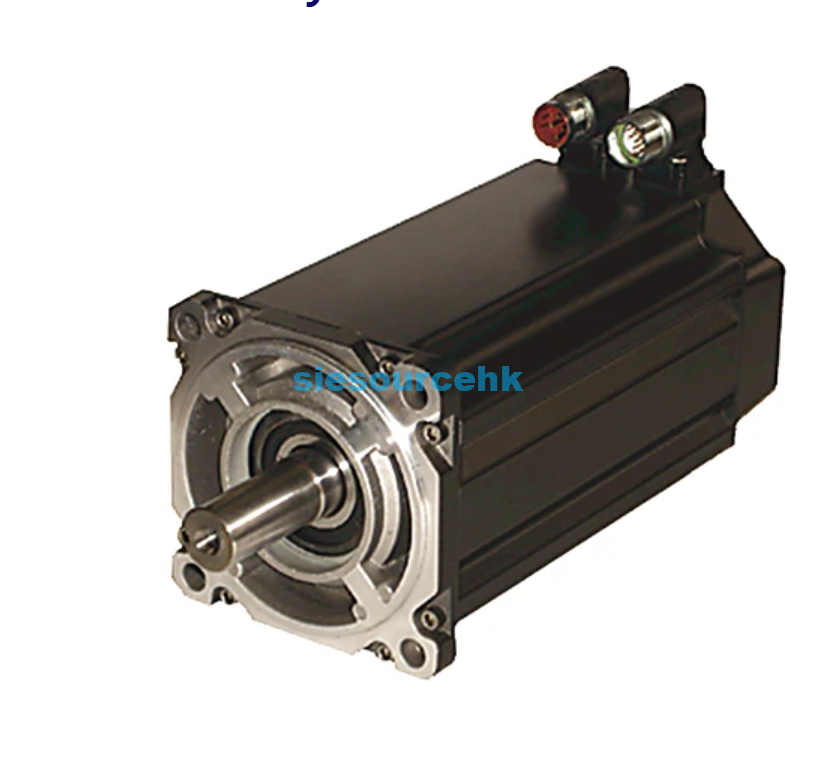
The MPL-B540K-MJ74AA is a 460V-class Allen-Bradley MP-Series low-inertia servo motor rated for 4000 RPM, with 19.4 Nm continuous torque, 48.6 Nm peak torque, and multi-turn high-resolution absolute feedback. It also uses a keyed shaft, SpeedTEC DIN connector, and 24V DC holding brake. For replacement work, however, matching these headline specifications is not enough; the feedback device, drive, cable, brake, shaft, and mechanical mounting must also agree with the existing axis.
What Are the Key MPL-B540K-MJ74AA Specs?
The MPL-B540K-MJ74AA belongs to Rockwell Automation’s MP-Series low-inertia servo family. Its combination of a 165 mm frame and 101.6 mm magnet stack places it in a substantially larger torque class than compact MPL motors used on light positioning axes.
| Specification | MPL-B540K-MJ74AA |
|---|---|
| Motor family | MP-Series MPL low-inertia servo |
| Voltage class | 460V / 400V-class system |
| Frame size | 165 mm |
| Magnet stack | 101.6 mm |
| Rated speed | 4000 RPM |
| Maximum speed | 4000 RPM |
| Continuous torque | 19.4 Nm |
| Peak torque | 48.6 Nm |
| Continuous rated power | 5.4 kW |
| Feedback | Multi-turn high-resolution absolute encoder |
| Feedback type | Hiperface, 1024 Sin/Cos cycles/rev |
| Shaft | Keyed |
| Connector | Right-angle SpeedTEC DIN |
| Brake | 24V DC holding brake |
| Mounting | IEC metric flange |
These figures are useful for initial identification, but the complete catalog number matters more when replacing an installed motor.
For example, the M in the catalog number identifies the multi-turn high-resolution feedback configuration, while J identifies the keyed shaft arrangement. The 7 and 4 codes identify the connector and brake configuration.
This is why two motors carrying the same basic MPL-B540K designation should not automatically be treated as interchangeable.
The full configuration of the Allen-Bradley MPL-B540K-MJ74AA servo motor should be checked against the motor being removed, particularly when sourcing a replacement for an existing production machine.
How Much Torque Does the MPL-B540K-MJ74AA Actually Provide?
The motor is specified for 19.4 Nm continuous torque and 48.6 Nm peak torque.
Those two figures describe very different operating conditions.
Continuous torque is the level the motor can sustain within its thermal limits under the specified operating conditions. Peak torque is available for short-duration demands such as acceleration, deceleration, or transient load changes.
A packaging machine illustrates the difference well. Its indexing axis may need only moderate torque while running, but accelerating a large roller or gearbox several times per second can produce much higher short-term demand.
Servo sizing therefore needs more than a comparison between load torque and the motor’s 48.6 Nm peak figure.
A practical calculation should consider:
- reflected load inertia;
- gearbox ratio and efficiency;
- acceleration and deceleration time;
- friction and external load;
- RMS torque over the complete machine cycle;
- peak torque during the most demanding movement;
- motor speed at each point in the cycle.
RMS torque is especially important on repetitive machinery. A motor can satisfy every individual peak movement yet still overheat if the overall duty cycle keeps average thermal loading too high.
The motor’s 5.4 kW continuous rated output is another useful reference, but power alone should not be used to size a servo axis. Motion applications are normally constrained by a combination of torque, speed, inertia, drive current, and duty cycle.
Why Does the 4000 RPM Rating Need a Torque-Speed Check?
The MPL-B540K-MJ74AA is a 4000 RPM motor, but that does not mean its full peak torque is available continuously across the entire speed range.
Servo motors operate within a torque-speed envelope determined by both the motor and amplifier.
As motor speed rises, voltage limitations, back EMF, drive current, and thermal conditions influence the available torque. Rockwell’s Kinetix design documentation therefore publishes motor/drive torque-speed curves rather than relying on a single RPM figure.
This becomes important on applications such as:
- rotary cutters;
- high-speed packaging equipment;
- indexing tables;
- material-transfer systems;
- automated assembly machinery;
- machine-tool auxiliary axes.
Suppose an axis needs 17 Nm at 3500 RPM. Knowing that the motor is rated at 19.4 Nm continuous torque and 4000 RPM does not, by itself, prove that the operating point is acceptable.
The correct check is whether the specific motor-and-drive combination can provide the required torque at 3500 RPM while remaining inside its continuous operating region.
That distinction is easy to miss when selecting replacement motors from catalog data alone.
What Does the Multi-Turn Absolute Encoder Change?
The M feedback code is one of the most important parts of MPL-B540K-MJ74AA identification.
This version uses multi-turn high-resolution absolute feedback based on the Hiperface interface. Supporting technical documentation specifies 1024 Sin/Cos cycles per revolution.
Unlike a basic incremental feedback device, a multi-turn absolute system can retain information about shaft position across multiple revolutions.
That can matter on machinery where losing the known mechanical position creates additional recovery work after power is restored.
Typical examples include vertical positioning equipment, rotary tooling, indexing systems, transfer mechanisms, and automated fixtures.
It does not mean the machine never requires commissioning or homing logic.
Mechanical alignment, controller position scaling, drive configuration, encoder initialization, and machine safety sequences still need to be considered.
This also explains why replacing an MPL-B540K-MJ74AA with another MPL-B540K variant solely because the frame and speed match can cause problems. A different feedback suffix can change the encoder interface and the required drive or feedback cable.
MPL-B540K-MJ74AA Kinetix Compatibility: What Must Match?
MPL motors were designed for use within Rockwell Automation motion systems, and published documentation associates the MPL-B540K family with several Kinetix platforms.
Depending on the motor/drive configuration and generation, relevant platforms include Kinetix 2000, 300, 350, 5500, 6000, 6200/6500, 7000, and documented Kinetix 5700 combinations.
That should not be interpreted as universal plug-and-play compatibility.
For an existing machine, engineers should identify the exact amplifier catalog number before ordering a motor.
| Compatibility check | Why it matters |
|---|---|
| Drive voltage class | Must suit the motor’s 400/460V class |
| Drive current capacity | Determines available continuous and peak torque |
| Feedback interface | Must support the motor’s Hiperface feedback |
| Motor database/profile | Required for correct drive configuration |
| Power cable | Connector and drive-end termination must match |
| Feedback cable | Must suit the encoder and drive interface |
| Brake circuit | Must support the 24V DC holding brake |
| Torque-speed curve | Confirms performance at the real operating point |
Cable architecture deserves particular attention when an older machine is being upgraded.
A mechanically compatible servo motor can still require new feedback cables, power cables, adapters, or drive-side changes. This is especially relevant when moving between generations of Kinetix hardware.
The 24V DC brake should also be treated correctly. It is a holding brake, intended primarily to maintain a stationary load when servo torque is removed.
It should not automatically be used as the primary means of dynamically stopping a moving axis.
Where Does the MPL-B540K-MJ74AA Fit in Real Machines?
With 19.4 Nm continuous torque, a 5.4 kW rating, 4000 RPM capability, and low-inertia construction, this motor is suited to machinery requiring both meaningful torque and responsive position control.
That can include packaging equipment, automated assembly lines, material-handling systems, processing machinery, and selected machine-tool axes.
The exact application still depends heavily on the mechanical load.
A high-inertia roller, for example, can place very different demands on the servo system than a ballscrew axis producing the same nominal output torque. Reflected inertia and acceleration profile may become the limiting factors before steady-state torque does.
Vertical axes require another layer of evaluation because gravity continuously loads the system. Brake operation, counterbalance arrangements, safety controls, and stopping behavior become part of the motor selection rather than secondary details.
For replacement projects, the safest starting point is therefore the complete nameplate catalog number rather than a visual match.
If the existing machine specifies MPL-B540K-MJ74AA, compare its nameplate and drive information with the listed MPL-B540K-MJ74AA motor configuration before considering another suffix.
A useful replacement check is:
- Record the complete motor catalog number.
- Record the Kinetix drive catalog number.
- Confirm the machine supply and drive voltage class.
- Verify encoder and feedback interface.
- Compare shaft, flange, and brake configuration.
- Check existing power and feedback cables.
- Confirm the motor-drive torque-speed curve against the machine duty cycle.
This approach reduces the risk of finding a mismatch only after the motor reaches the machine.
FAQ
Is the MPL-B540K-MJ74AA rated for 4000 RPM?
Yes. Rockwell Automation documentation identifies the MPL-B540K-MJ74AA as a 4000 RPM MP-Series servo motor. Actual application suitability still depends on the required torque at operating speed and the selected Kinetix drive.
What is the torque rating of the MPL-B540K-MJ74AA?
The documented continuous torque is 19.4 Nm, with 48.6 Nm peak torque. Continuous and peak values should not be used interchangeably when sizing an axis.
What feedback device does MPL-B540K-MJ74AA use?
The motor uses a multi-turn high-resolution absolute encoder with Hiperface feedback. This is a critical specification when checking replacement motors and Kinetix drive compatibility.
Does the MPL-B540K-MJ74AA have a brake?
Yes. The catalog configuration includes a 24V DC holding brake. Its purpose is primarily load holding rather than repeated dynamic stopping.
Can I replace another MPL-B540K motor with MPL-B540K-MJ74AA?
Not based on the MPL-B540K prefix alone. Check the complete suffix because feedback, shaft, connector, brake, mounting, and other configuration details can differ.
Is MPL-B540K-MJ74AA compatible with Kinetix 5700?
Rockwell documentation includes an MPL-B540K motor pairing within Kinetix 5700 design data. For an actual retrofit, verify the exact drive catalog number, motor feedback, cabling, firmware, current requirements, and published motor-drive combination before installation.
Final Considerations for MPL-B540K-MJ74AA Selection
The MPL-B540K-MJ74AA combines 19.4 Nm continuous torque, 4000 RPM capability, multi-turn absolute feedback, and a 24V DC holding brake in a 460V-class MP-Series platform. These specifications make it suitable for demanding positioning and motion-control applications, but they should not be evaluated independently.
For an existing machine, the complete motor catalog number should be checked alongside the Kinetix drive, feedback interface, cables, shaft configuration, brake circuit, and mechanical mounting. For a new axis, torque-speed requirements, reflected inertia, RMS torque, and duty cycle are equally important. A correct servo match is therefore based on the complete motor-drive-mechanical system—not simply torque or RPM on the nameplate.