



Blog
Why high torque needs PM Servo Motors?


Industrial automation in 2026 relies heavily on the ability to move massive loads with precision. Torque is the rotational force required to initiate and maintain this movement. High torque is the backbone of heavy-duty manufacturing.
Engineers often face the challenge of choosing the right motor for high-force tasks. Traditional induction motors were once the standard for many years. However, a Permanent Magnet Servo Motor offers distinct advantages for modern high-torque requirements.
These motors utilize powerful internal magnets to generate a constant magnetic field. This design allows for immediate torque delivery without the lag of induction. As a result, systems become more responsive and significantly more efficient.
The demand for smaller, more powerful machines is growing rapidly in 2026. A Permanent Magnet Servo Motor provides the highest power density available today. This means machines can be more compact while performing heavier work.
Selecting a motor like the Allen Bradley Servo Motor VPL-B1002M ensures peak performance. These units are engineered specifically for high-dynamic, high-torque industrial environments. They represent the cutting edge of motion control technology.
Why does high torque require a Permanent Magnet Servo Motor in 2026?
High-torque applications require consistent force even at very low speeds. A Permanent Magnet Servo Motor maintains its torque capacity across its entire speed range. This is a critical factor for precision positioning in robotics.
In an induction motor, the rotor must be magnetized by an external current. This process creates a delay and generates substantial internal heat. Permanent Magnet Servo Motor technology eliminates the need for rotor magnetization current.
Data from 2026 industrial benchmarks shows that PM motors are 30% more efficient at low speeds. This efficiency is vital when holding a heavy load in a stationary position. It prevents the motor from overheating during high-torque stalls.
Efficiency and thermal management in high-torque systems
Thermal stability is the primary concern when dealing with high rotational forces. Heat is the enemy of motor longevity and operational accuracy. A Permanent Magnet Servo Motor generates less heat because it lacks rotor copper losses.
In high-torque cycles, an induction motor can reach temperatures that degrade internal insulation. PM motors typically run 20 to 30 degrees Celsius cooler under similar loads. This allows for a higher duty cycle without the risk of system failure.
The Allen Bradley Servo Motor VPL-B1002M features advanced thermal dissipation designs. It uses high-grade materials to ensure heat is moved away from the core quickly. This enables the motor to sustain high torque for extended periods safely.
The role of power density in modern machinery
Power density refers to the amount of torque a motor produces relative to its size. In 2026, floor space in factories is more valuable than ever before. Permanent Magnet Servo Motor designs offer up to 50% more torque per frame size.
Using a smaller motor reduces the overall mass of the moving machinery. This lower inertia allows for faster acceleration and deceleration. The Allen Bradley Servo Motor VPL-B1002M exemplifies this compact yet powerful design philosophy.
Reducing the size of the motor also simplifies the mechanical integration process. Smaller mounts and lighter supports can be used throughout the machine. This leads to significant cost savings in raw materials and assembly.
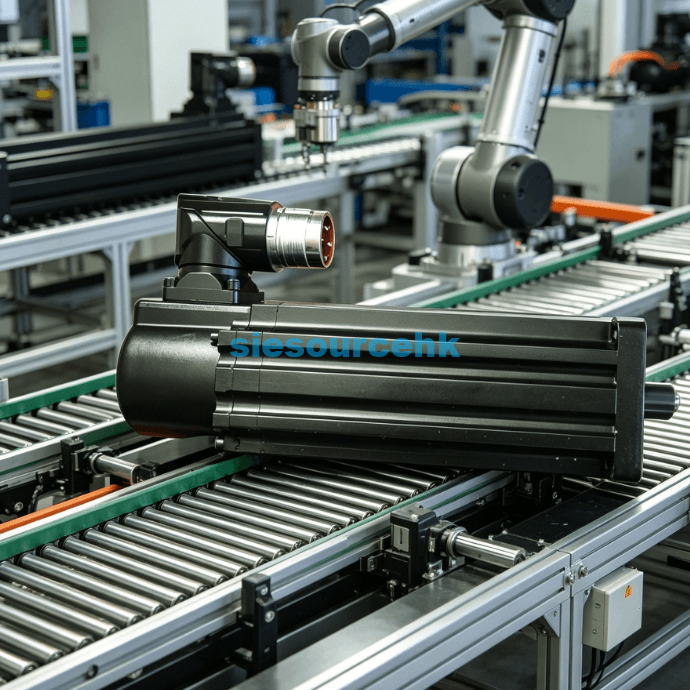
What are the technical advantages of Permanent Magnet Servo Motor technology?
The technical superiority of these motors begins with the magnets themselves. Most high-performance servos in 2026 use Neodymium-Iron-Boron magnets. These materials provide an incredibly strong magnetic flux in a tiny volume.
A Permanent Magnet Servo Motor operates synchronously with the frequency of the drive. This means there is zero slip between the magnetic field and the rotor. Synchronous operation ensures that the output torque is always predictable and precise.
| Performance Metric | Permanent Magnet Servo Motor | Standard Induction Motor |
|---|---|---|
| Peak Torque Capacity | 300% of Rated Torque | 150% – 200% |
| Standard Efficiency | 94% – 97% | 82% – 88% |
| Response Time | < 1 millisecond | 10 – 50 milliseconds |
| Maintenance Need | Very Low | Moderate |
| Torque at Zero Speed | Full Rated Torque | Reduced Torque |
The Allen Bradley Servo Motor VPL-B1002M utilizes high-resolution feedback to monitor these magnets. It ensures that the drive always knows the exact position of the rotor. This feedback loop is essential for maintaining high torque during complex maneuvers.
Precision control for complex motion profiles
High-torque tasks often involve intricate movements that must be perfectly repeatable. The linear relationship between current and torque in a PM motor is highly beneficial. It allows the control system to predict motor behavior with extreme accuracy.
In 2026, digital twin technology uses this predictability to simulate production lines. A Permanent Magnet Servo Motor provides the consistent data needed for these simulations. This leads to faster commissioning and fewer errors on the factory floor.
The Allen Bradley Servo Motor VPL-B1002M is compatible with advanced Kinetix drives. This pairing allows for features like load observers and adaptive tuning. These tools ensure the motor provides maximum torque only when it is needed.
Longevity and reliability in harsh environments
Durability is a non-negotiable requirement for high-torque industrial equipment. The simplified design of a Permanent Magnet Servo Motor reduces the number of failure points. There are no brushes to wear out and no complex rotor windings.
By 2026, most PM motors are built with IP67 or higher protection ratings. This protects the internal magnets and windings from dust and moisture. The Allen Bradley Servo Motor VPL-B1002M is designed to thrive in these demanding conditions.
The reduction in operating temperature also extends the life of the bearings. Bearings are often the first component to fail in a high-torque motor. Cooler operation keeps the lubrication effective for a much longer duration.
How to determine if your application needs a Permanent Magnet Servo Motor?
Not every application requires the highest level of torque density. However, if your system involves rapid indexing, you likely need a PM motor. A Permanent Magnet Servo Motor is the gold standard for high-cycle applications.
Evaluate the total inertia of your load compared to the motor’s rotor inertia. A close match is necessary for stable and precise control at high torque. PM motors offer the best inertia ratios for high-performance automation in 2026.
If energy costs are a major concern, the efficiency of PM technology is undeniable. Over a five-year period, the energy savings often exceed the motor’s purchase price. Permanent Magnet Servo Motor users report a rapid return on investment.
Analyzing peak vs continuous torque requirements
Every high-torque application has two distinct force requirements to consider. Continuous torque is what the motor can provide indefinitely without overheating. Peak torque is the “burst” energy needed to start a heavy load moving.
A Permanent Magnet Servo Motor typically offers a much higher peak-to-continuous ratio. This allows you to size the motor for the average load while still handling peaks. The Allen Bradley Servo Motor VPL-B1002M provides the robust peak capacity needed for acceleration.
In 2026, advanced software tools help engineers map these torque profiles accurately. These tools often recommend PM motors for any task involving frequent stops and starts. This ensures the motor does not enter a thermal overload state during production.
Environmental and spatial constraints
Check the physical dimensions of the space where the motor will be installed. If you are replacing an older motor, you may find that a PM motor fits easily. Its compact size often allows for more creative machine designs.
The Allen Bradley Servo Motor VPL-B1002M is part of a series known for its streamlined profile. It fits into tight enclosures where traditional motors would simply not fit. This spatial efficiency is a hallmark of Permanent Magnet Servo Motor engineering.
You should also consider the feedback requirements for your specific control architecture. Most modern PM motors use high-speed digital feedback protocols. These protocols reduce wiring complexity and improve signal integrity over long distances.
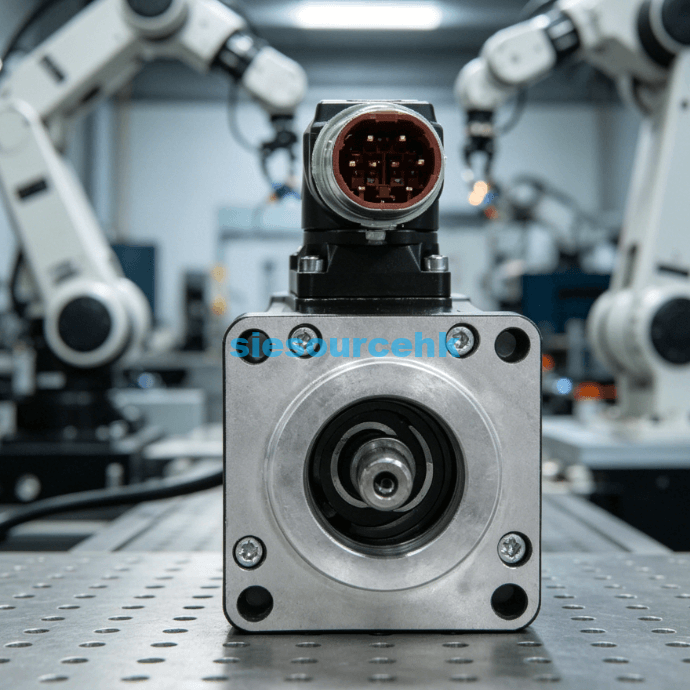
Selecting the right Permanent Magnet Servo Motor for your facility
Choosing the right hardware is about more than just reading a datasheet. You must consider the ecosystem of drives, cables, and software. A Permanent Magnet Servo Motor performs best when integrated into a unified control platform.
The Allen Bradley Servo Motor VPL-B1002M is a standout choice for various reasons. It features the HIPERFACE DSL feedback protocol, which uses a single cable. This simplifies installation and reduces the number of potential failure points in the wiring.
When you are ready to evaluate specific models, technical support is invaluable. You can explore the Allen Bradley Servo Motor VPL-B1002M for detailed technical specifications. Comparing these specs against your load requirements is the first step toward a successful build.
Reliability in 2026 means having access to parts and support when you need them. Choosing a globally recognized brand ensures that your high-torque system stays operational. A Permanent Magnet Servo Motor from a trusted source is a long-term investment in productivity.
Summary
A Permanent Magnet Servo Motor is essential for high-torque applications because of its superior power density and efficiency. These motors provide consistent force and rapid response times that induction motors cannot replicate. By choosing high-quality components like the Allen Bradley VPL-B1002M, you ensure your industrial systems are reliable and future-proof for 2026.
PRO TIP
When implementing a Permanent Magnet Servo Motor in a high-torque environment, always verify that your drive is tuned for the specific inertia of the load to prevent mechanical resonance and ensure the highest precision.
| VPL-B0633M-PJ12AA | VPL-B0633M-PK12AA | VPL-B0633M-PJ14AA | VPL-B0632T-PK12AA |
| VPL-B0632T-PJ12AA | VPL-B0632F-CK12AA | VPL-B0752F-CK12AA | VPL-B0753M-PK12AS |
| VPL-B0753F-CJ12AA | VPL-B0753E-PJ12AA | VPL-B1001M-PJ12AA | VPL-B0633T-PJ12AA |
| VPL-B0753F-PJ12AA | VPL-B0753F-PK12AA | VPL-B1002M-PK12AA | VPL-A0633F-PJ12AA |
| VPL-B0753E-PJ14AA | VPL-B1002M-PJ12AA | VPL-B1003F-CJ12AA | VPL-B0753M-PJ12AA |
| VPL-B0753E-PK12AA | VPL-B1303F-PJ12AS | VPL-B1002M-CK14AA | VPL-B1003F-PJ12AA |
| VPL-B1153F-CJ12AA | VPL-B0753F-WJ12AA | VPL-B1303F-PJ12AA | VPL-B1153F-PJ12AA |
| VPL-B1153F-PK12AA | VPL-B1303F-CJ12AA | VPL-B1152F-PJ12AA | VPL-B1304E-CJ12AA |
| VPL-B1304E-PK12AA | VPL-B1002M-CK14AA SER A | VPL-B1152F-CJ12AA | VPL-B1153F-QK12AS |
| VPL-B1002M-PJ14AA | VPL-B1152F-PJ12AS | VPL-B1304E-CJ12AS | VPL-B1306F-CJ12AA |
| VPL-B1153F-PK14AA | VPL-B1306F-PK12AA | VPL-B1153E-PJ14AA | VPL-B1303F-PK14AA |
| VPL-B1651F-CK14AA | VPL-B1306F-PJ12AA | VPL-B1652F-PJ12AA | VPL-B1306C-PJ14AA |
| VPL-B1652F-CJ12AA | VPL-B1652C-PJ14AA |
FAQ
1. Why is a Permanent Magnet Servo Motor more efficient than an induction motor?
A Permanent Magnet Servo Motor is more efficient because it uses permanent magnets to create the rotor’s magnetic field. This eliminates the electrical energy typically required to magnetize an induction motor’s rotor. Consequently, there are fewer energy losses in the form of heat during high-torque operation.
2. Can the Allen Bradley VPL-B1002M handle continuous high-torque loads?
Yes, the Allen Bradley Servo Motor VPL-B1002M is specifically designed for continuous operation in demanding environments. Its advanced thermal management system ensures that the motor stays within safe temperature limits even when providing constant force. It is built with high-grade components to prevent wear over time.
3. How does high torque density benefit machine design in 2026?
High torque density allows engineers to use smaller motors to accomplish heavy tasks. This reduces the weight of the machine’s moving parts, which in turn reduces energy consumption and improves speed. It also allows for more compact factory layouts where space is at a premium.
4. What happens to a Permanent Magnet Servo Motor if it overheats?
If a Permanent Magnet Servo Motor exceeds its temperature rating, the internal magnets can begin to lose their strength. This is known as demagnetization and can lead to a permanent loss of torque capacity. However, modern motors like the VPL-B1002M include thermal sensors to alert the system before damage occurs.
5. Is a Permanent Magnet Servo Motor suitable for low-speed applications?
Absolutely, as these motors are excellent for low-speed tasks because they provide full rated torque even at zero speed. This makes them ideal for applications like tension control, heavy lifting, and precision positioning. They do not suffer from the “cogging” or torque ripple often found in older motor designs.
Reference Sources
International Electrotechnical Commission Industrial Standards
Association for Advancing Automation Industry Resources
National Electrical Manufacturers Association Motor Guidelines