


Blog
Yaskawa GA500 vs A1000 vs V1000: Selection Guide for Engineers

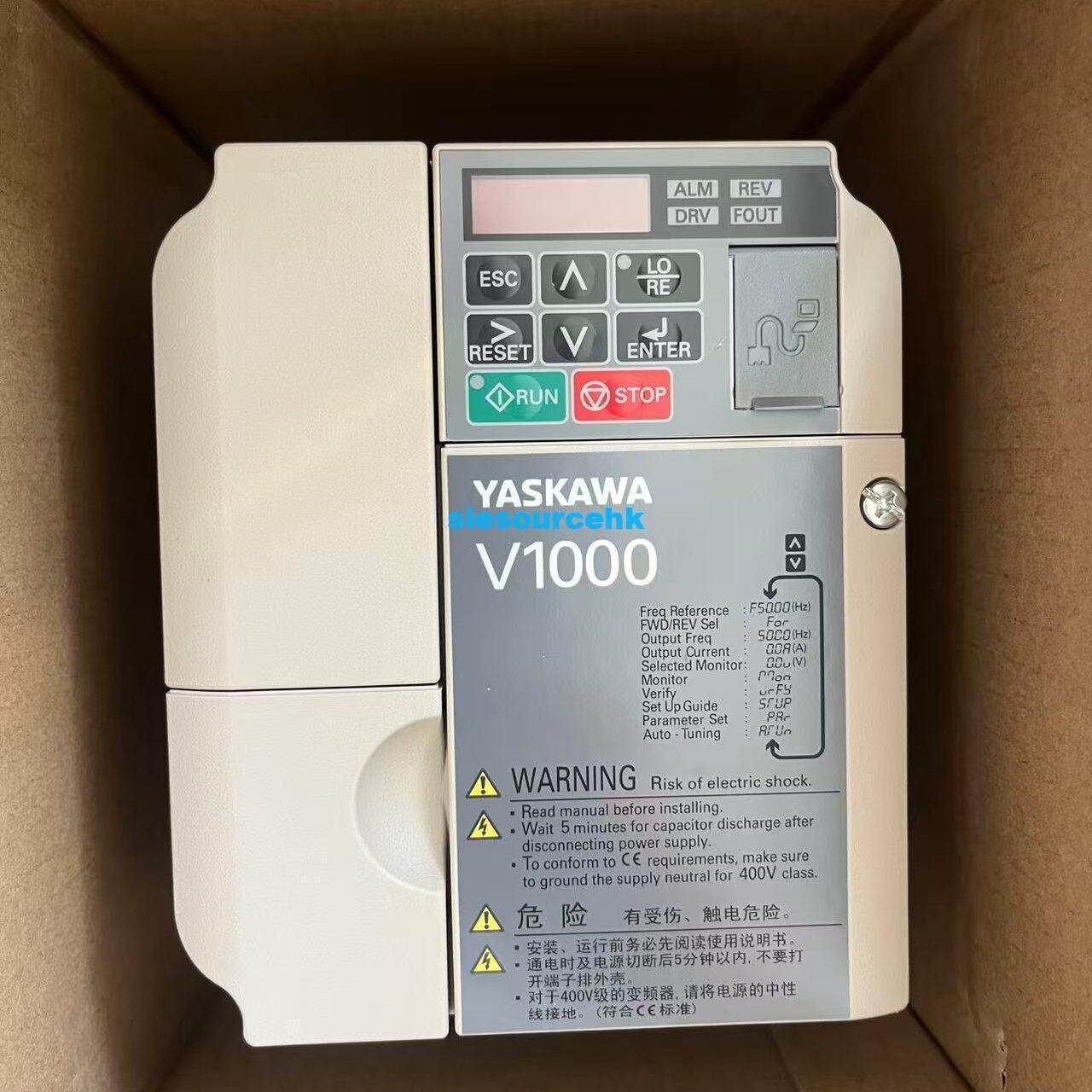
Selecting the right Variable Frequency Drive (VFD) is a critical decision that impacts not only the initial machine cost but also long-term operational reliability and energy efficiency. In the Yaskawa ecosystem, three series often dominate the conversation: the legacy workhorse V1000, the high-performance A1000, and the new-generation GA500.
As industrial systems transition toward smarter, more integrated environments, understanding the technical nuances between these drives is essential for OEM project managers and maintenance engineers. This guide breaks down the performance metrics, hardware capabilities, and application-specific logic required to make an informed procurement decision.
Key Technical Differences: A Generational Comparison
The primary distinction between these drives lies in their architectural generation and intended duty cycle. While the A1000 and V1000 have served as industry standards for over a decade, the GA500 represents Yaskawa’s move toward “Industrial Internet of Things” (IIoT) readiness and universal motor control.
| Feature | V1000 (Legacy Microdrive) | A1000 (Legacy High-Performance) | GA500 (New Generation) |
| Control Method | Open Loop Vector, V/f | Closed/Open Loop Vector, V/f | EZ Vector, Open Loop Vector, V/f |
| Motor Compatibility | Induction (IM), PM (Surface) | IM, PM (Surface & Interior) | IM, PM (SPM/IPM), SynRM |
| Max Capacity | Up to 18.5 kW | Up to 630 kW | Up to 30 kW |
| Safety Level | SIL2 (Optional) | SIL2 / PLd (Standard) | SIL3 / PLe (Standard) |
| Connectivity | Modbus (Option for others) | Wide Fieldbus support | Integrated Modbus; Bluetooth/Mobile App |
| Enclosure | IP20 / NEMA 1 | IP00 / IP20 / IP54 | IP20 / UL Type 1 |
When to Specify the Yaskawa A1000
The A1000 remains the go-to solution for heavy-duty applications requiring high torque at zero speed and precise motion control. Despite the emergence of the GA series, the A1000’s ability to handle massive power requirements (up to 1000 HP) makes it irreplaceable in heavy industry.
Recommended Use Cases:
- Hoists and Cranes: Where high starting torque and sophisticated brake control are non-negotiable.
- Extruders and Mixers: Constant torque applications that demand high overload capacity (150% for 60 seconds).
- Large Scale Pumping: For systems exceeding 30kW where the GA500’s current range ends.
The Evolution: Why the GA500 is Replacing the V1000
For most new mid-range projects, the GA500 is the superior choice over the V1000. It is designed to be smaller, smarter, and more versatile. From a manufacturing perspective, the GA500 reduces the “Bill of Materials” (BOM) by integrating components that previously required external hardware.
1. Advanced Motor Control:
Unlike the V1000, which is primarily focused on Induction Motors, the GA500 features “EZ Vector” control. This allows it to run Synchronous Reluctance (SynRM) motors and Permanent Magnet motors without complex tuning, significantly improving energy efficiency in fan and pump applications.
2. Built-in Functional Safety:
The GA500 comes standard with SIL3 STO (Safe Torque Off). In modern machine design, this eliminates the need for dual-redundant output contactors, saving panel space and reducing wiring complexity—a major advantage for OEM designers looking to minimize cabinet footprints.
3. Programming and Commissioning:
The GA500 features a built-in USB port and optional Bluetooth connectivity. Engineers can program the drive via a smartphone app (DriveWizard Mobile) without powering up the main high-voltage bus, a significant safety and productivity enhancement during commissioning.
Application Logic: Matching the Drive to the Environment
In industrial automation, the environment often dictates the drive choice as much as the motor specs.
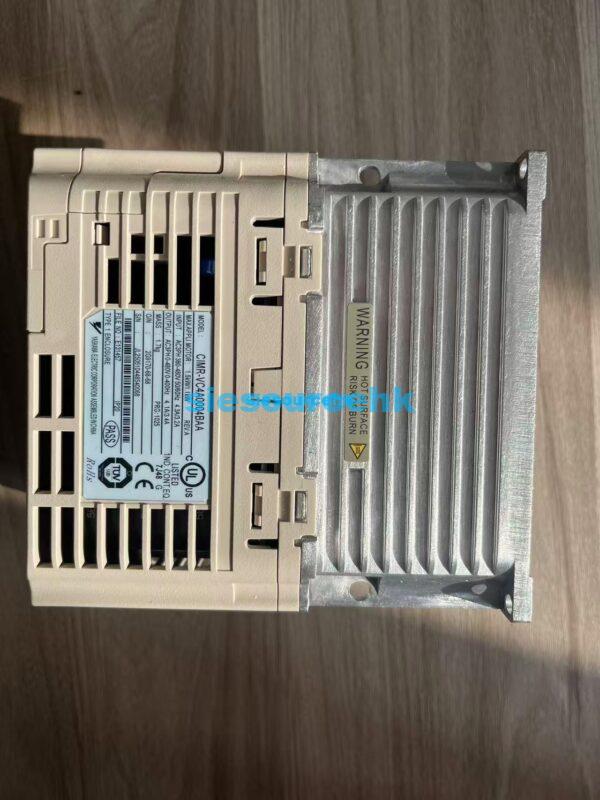
- Compact Space Constraints: If you are retrofitting a small control cabinet, the V1000 was famous for its “Side-by-Side” mounting. However, the GA500 has maintained this compact form factor while increasing the power density.
- Harsh Environments: The A1000 offers higher IP ratings (IP54) in certain configurations, making it better suited for environments with dust or moisture if an additional enclosure isn’t feasible.
- Future-Proofing: If the project requires cloud data logging or remote diagnostics, the GA500 is the only logical choice. Its ability to interface with Yaskawa’s DriveCloud allows for easy backup of parameters and serial number tracking.
Procurement and Lifecycle Considerations
For procurement managers at Siesource, the decision often comes down to lifecycle stage. The V1000 and A1000 are in the “mature” stage of their lifecycle. While they are still widely available and supported, new installations should prioritize the GA series (GA500 for micro/mid, GA700/800 for high power) to avoid future obsolescence issues.
When sourcing these drives, it is vital to verify:
- Regional Voltage Compatibility: Ensure the model suffix matches your local grid (200V vs 400V Class).
- Braking Requirements: For high-inertia loads, check if the GA500’s internal braking transistor is sufficient or if an external resistor is needed.
- Lead Times: Due to its newer production cycles, the GA500 often has more stable lead times compared to older legacy components.
Final Verdict: Which One Should You Choose?
- Choose the GA500 if: You are starting a new project under 30kW, need SIL3 safety, or want to use high-efficiency PM motors. It is the most cost-effective and future-proof option.
- Choose the A1000 if: Your application involves heavy-duty industrial loads, requires power above 30kW, or needs closed-loop encoder feedback for high-precision positioning.
- Choose the V1000 if: You are performing a “like-for-like” replacement in an existing machine where changing the mounting holes or communication mapping is not feasible.
Available Yaskawa CIMR-V Drive Models and Specifications
| CIMR-VCBA0002BAA | 1260 |
| CIMR-VCBA0012BAA | 1980 |
| CIMR-VCBA0003BAA | 1500 |
| CIMR-VBBA0003BBA | 1380 |
FAQ
Q1: Can I replace a V1000 with a GA500 directly?
Yes, in most cases. The GA500 was designed with a similar footprint and utilizes the same parameter naming conventions. However, you should verify the terminal layout and communication protocol (e.g., if you are using an optional fieldbus card).
Q2: Does the GA500 require a computer for setup?
No. While a computer with DriveWizard Industrial is helpful for complex setups, the GA500 can be programmed via the built-in keypad, a smartphone (via Bluetooth), or even without main power using the USB port and a laptop.
Q3: What is the typical lead time for Yaskawa drives at Siesource?
Lead times vary based on stock levels and specific power ratings. Common GA500 and V1000 models are often available for immediate shipping. We recommend contacting our technical sales team for a formal RFQ and current availability.
Q4: Do these drives support EtherCAT or Profinet?
The A1000 and GA500 support a wide range of network cards including EtherCAT, Profinet, EtherNet/IP, and DeviceNet. The V1000 supports these via external options, but the integration is more seamless in the GA series.
Q5: Is the GA500 more expensive than the V1000?
The GA500 is competitively priced and often offers a lower “Total Cost of Ownership” (TCO) because it integrates safety and motor control features that would otherwise require additional hardware.
Reference Sources:
- Yaskawa America, Inc. – Technical Manual: GA500 AC Microdrive. [Official Document]
- IEC 61508 / IEC 62061 – Safety of Machinery – Functional safety of safety-related electrical, electronic and programmable electronic control systems.
- IEEE 519 – Standard for Harmonic Control in Electric Power Systems (Relevant for A1000 high-power installations).
- Siesource Industrial Automation – Product Catalog and Inventory Status. [siesourcehk.com]