



Blog
Why Delta Motors Lead in CNC Precision?

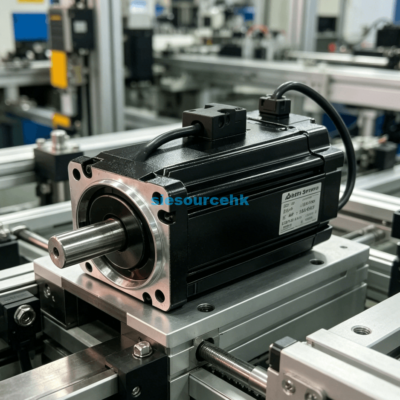
The modern manufacturing landscape in 2026 demands extreme accuracy. Computer Numerical Control (CNC) machines must execute movements with micron-level repeatability. Delta Drive Motor systems have emerged as a primary choice for engineers globally. These systems bridge the gap between digital commands and physical movement.
High-performance machining relies on the perfect synchronization of multiple axes. Delta’s industrial automation solutions provide the necessary torque and speed control. Their hardware is designed specifically to handle the rigors of continuous metal cutting. Superior precision begins with the motor’s ability to interpret signals.
By integrating advanced feedback loops, these motors minimize positioning errors. This reliability is why aerospace and medical industries trust Delta technology. The following sections will detail the specific technical reasons for their market leadership.
Why Delta Drive Motor Technology Defines CNC Accuracy?
Precision in CNC machining starts with the feedback system. A Delta Drive Motor typically utilizes a high-resolution 24-bit encoder. This provides 16,777,216 pulses per revolution for granular control. Such high resolution allows for exceptionally smooth surface finishes.
Standard motors often struggle with micro-vibrations during high-speed operation. Delta solves this through advanced notch filters and vibration suppression algorithms. These software tools automatically detect the resonance frequency of the machine structure. The system then compensates to ensure the tool path remains true.
Furthermore, the responsiveness of the motor determines the settle time. Faster settle times lead to shorter cycle times in production. Delta motors achieve this through high-speed communication protocols like EtherCAT. Rapid data exchange ensures real-time adjustments during complex movements.
Technical Performance Metrics of Delta Servo Systems in 2026
The frequency response of a motor is a critical metric. A higher bandwidth allows the motor to react to load changes quickly. Delta Drive Motor units often feature a bandwidth of up to 3.1 kHz. This ensures the CNC machine maintains precision during heavy cuts.
Torque ripple is another factor that impacts the final product quality. If the torque output is inconsistent, the surface finish shows patterns. Delta designs their motors with a low-cogging architecture. This results in smooth motion at very low speeds.
Efficiency also plays a role in long-term precision. Heat generated by motors can cause thermal expansion in ball screws. Delta’s high-efficiency designs reduce heat waste significantly. Lower operating temperatures preserve the mechanical integrity of the CNC system.
| Feature | Delta ASDA-A3 Series (2026) | Standard Industry Competitor |
|---|---|---|
| Encoder Resolution | 24-bit (16.7M pulses) | 20-bit (1.04M pulses) |
| Frequency Response | 3.1 kHz | 1.5 kHz – 2.0 kHz |
| Max Speed | 6000 RPM | 5000 RPM |
| Cogging Torque | < 1.5% rated torque | < 3% rated torque |
Frequency Response and Bandwidth
A 3.1 kHz bandwidth is a significant advantage in 2026. This allows the drive to update the current loop very rapidly. High bandwidth prevents path deviation during high-speed contouring.
Without this speed, the motor might lag behind the controller’s commands. This lag causes errors in the geometry of the finished part. Delta’s processing power ensures the motor follows the path exactly.
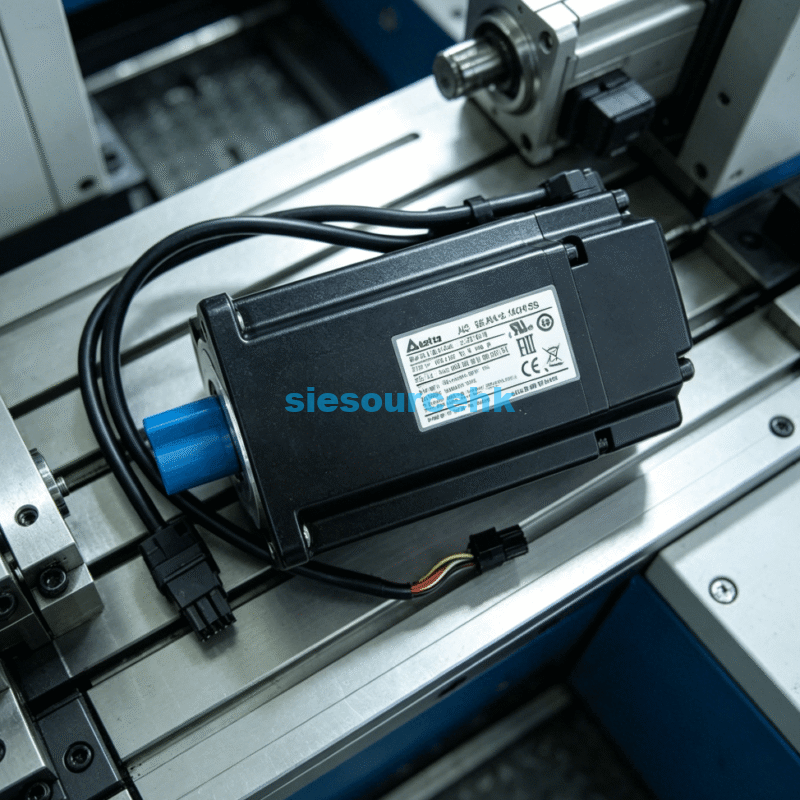
Torque Ripple and Cogging Control
Cogging torque occurs due to the magnetic interaction between rotors and stators. Delta uses a patented magnetic circuit design to minimize this effect. Reduced cogging results in superior low-speed stability.
This is essential for 3D surfacing and mold making applications. In these tasks, the tool must move slowly and steadily. Consistent torque output eliminates visible steps on the workpiece surface.
Advanced Control Features for Industrial CNC Operations
Automation is not just about moving a mechanical shaft. It involves intelligent tuning to specific mechanical loads. The Delta Drive Motor software includes an advanced auto-tuning function. This feature analyzes the inertia of the machine tool.
Once analyzed, the system sets the optimal gain parameters automatically. This reduces the setup time for machine builders significantly. It also ensures the motor performs optimally throughout its lifespan. Consistency across different conditions is a hallmark of Delta technology.
Safety is also integrated into the drive architecture in 2026. Features like Safe Torque Off (STO) prevent accidental restarts. This protects both the operator and the expensive CNC hardware. Reliable safety protocols prevent mechanical crashes.
Auto-Tuning and Vibration Suppression
The auto-tuning feature can complete a profile in seconds. It identifies the stiffness of the machine base and the couplings. Proper tuning prevents the motor from overshooting its target.
Vibration suppression is equally important for long-reach tools. These tools often suffer from low-frequency oscillation during movement. Delta’s filters neutralize these vibrations before they reach the tool tip.
Safety and Durability Standards
Modern factories prioritize the safety of their human workforce. Delta drives include built-in functional safety modules for easier compliance. Meeting international safety standards is simplified with these features.
Durability is another key factor for industrial environments. Delta motors are built to withstand high levels of electrical noise. Shielded internal components ensure signal integrity remains high.
Integration and Scalability in Precision Automation
The ability to scale a system is vital for growing factories. Delta offers a wide range of motor sizes and power ratings. You can find solutions for small mills or large gantry routers. Every Delta Drive Motor maintains high standards of signal integrity.
Compatibility with global standards makes integration seamless for engineers. Most units support Modbus, CANopen, and high-speed EtherCAT protocols. This allows the motors to talk to various CNC controllers. Flexible connectivity reduces the complexity of building a machine.
Furthermore, the physical footprint of the drives is optimized. Space in electrical cabinets is often limited in modern factories. Delta’s slim design allows for denser installations without overheating. Compact hardware does not compromise the power or precision.
Communication Protocols and Networking
EtherCAT has become the industry standard for 2026 precision motion. Delta’s implementation offers sub-microsecond synchronization between multiple axes. This is critical for high-speed 5-axis simultaneous machining.
The drives also support traditional pulse/direction interfaces for legacy systems. This makes upgrading older CNC machines much easier. Backward compatibility ensures a longer lifecycle for existing machinery.
Thermal Management and Power Density
Heat is the enemy of precision in high-speed machining. Delta motors use high-grade magnets that resist thermal demagnetization. Consistent magnetic strength ensures the torque remains stable over hours.
Power density has also improved in the latest 2026 models. You get more torque from a smaller motor frame. This reduces the mass that the CNC machine must move.
How to Select the Right Delta Solution for Your Needs?
Choosing the correct automation components requires technical insight. You must evaluate the required peak torque and continuous speed. The inertia ratio between the load and the motor is also critical. A well-matched motor and drive pair will last longer.
If your application involves high-speed contouring, look for the ASDA-A3 series. For general-purpose automation, the ASDA-B3 series offers excellent value. Users should explore the full range of industrial automation products to find the match. Matching the motor’s capability to the task prevents failure.
Consider the environmental conditions of your workshop or factory. Delta provides motors with high IP ratings to resist coolant and dust. This durability ensures that precision is maintained in harsh industrial environments. Selecting the right protection level is essential for success.
Environmental factors like humidity and temperature should also be checked. High-precision encoders can be sensitive to extreme temperature shifts. Delta’s compensated encoders maintain accuracy across a wide thermal range.
Finally, evaluate the software support provided with the hardware. Delta provides free software tools for commissioning and diagnostic monitoring. Having access to real-time data helps prevent unplanned downtime.
Summary
Delta Motors lead in CNC precision because they combine high-resolution hardware with intelligent control software. Their 24-bit encoders and 3.1kHz bandwidth provide unmatched accuracy and speed in 2026. By choosing a Delta Drive Motor, manufacturers ensure superior surface finishes, reduced cycle times, and long-term mechanical reliability in demanding environments.
PRO TIP
When setting up your motor, always perform the “Inertia Auto-Detection” routine. This simple step optimizes the drive’s control gains to match your specific machine weight. It can reduce your positioning error by up to 30% compared to factory default settings!
| ECMA-E21310RS | ECMA-C20807RS | ECMA-C10604RS | ECMA-C30807PS |
| ECMA-C30807PS | ECMA-C20604RS | ECMA-E21320RS | ECMA-E21315RS |
| ECMA-E11315SS | ECMA-C11350R8LA | ECMA-J11330R4 | ECMA-C20604RS |
| ECMA-C21330RS | ECMA-F11855R3-A2 | ECMA-E21315RS | ECMA-C20807SS |
| ECMA-C10604RS | ECMA-E11315RS | ECMA-L11830RS | ECMA-K11310RS |
FAQ
1. What makes Delta Drive Motor encoders superior for CNC?
Delta uses 24-bit absolute encoders as a standard in many series. This provides over 16 million pulses per revolution, allowing for microscopic movements. It ensures the controller knows the exact position without needing a home sensor.
2. Can Delta motors be used with third-party CNC controllers?
Yes, Delta motors support open communication protocols like EtherCAT and CANopen. This makes them highly compatible with various industrial controllers. Most modern CNC systems can easily integrate these motors via standard digital interfaces.
3. How does Delta handle mechanical resonance in CNC machines?
The drives include built-in notch filters that automatically identify vibration frequencies. The software then suppresses these specific frequencies to prevent tool chatter. This result is a smoother cutting process and a much better surface finish.
4. What is the benefit of a 3.1 kHz frequency response in 2026?
A 3.1 kHz response means the motor can adjust its speed thousands of times per second. This rapid correction is vital when the cutting tool hits a hard spot. It prevents the motor from lagging, which maintains the geometric accuracy of the part.
5. Is there a difference between the ASDA-A3 and ASDA-B3 series?
The A3 series is the flagship model designed for high-end applications needing maximum bandwidth. The B3 series is a more compact, cost-effective solution for general automation. Both series utilize the same high-resolution encoder technology for consistent precision.
Reference Sources
Delta Electronics – Delta AC Servo Drive and Motor Specifications
EtherCAT Technology Group – Implementation of High-Speed Motion Control
Control Engineering Magazine – Trends in Servo Motor Technology