



Blog
How to Boost Efficiency with Festo Linear Drives

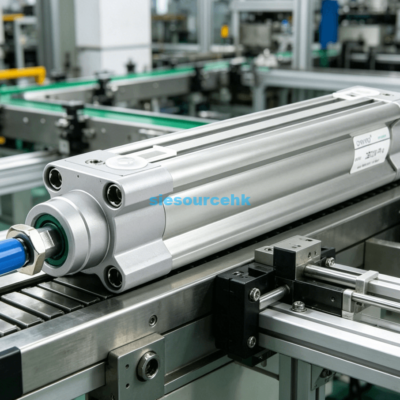
In the modern landscape of industrial automation, “efficiency” is no longer a simple metric of speed. For engineers, OEM project managers, and plant directors, true efficiency is a trifecta of throughput, energy management, and long-term reliability. Festo linear drives have established themselves as the benchmark for this balance, providing the mechanical foundation for systems ranging from high-speed packaging to heavy-duty automotive assembly.
To truly boost efficiency, one must look beyond the basic installation. Optimization requires a deep understanding of motion profiles, air consumption dynamics, and the integration of smart feedback loops. This guide examines the technical pathways to maximizing performance using Festo’s industry-leading linear drive technology.
Key Technical Factors Influencing Efficiency in Linear Motion
The performance of any linear drive system is dictated by its ability to manage kinetic energy and minimize non-productive time (NPT). In many manufacturing environments, machines lose efficiency during the “dwell” phases or through excessive vibration caused by poorly damped end-of-stroke impacts.
Festo drives are engineered with narrow tolerances and high-grade materials to mitigate these losses. By selecting the correct bore size and stroke length, engineers can ensure that the drive operates within its “sweet spot”—the intersection of maximum force and minimum energy waste.
The Role of Pneumatic Precision: Case Study on the Festo DNC Series
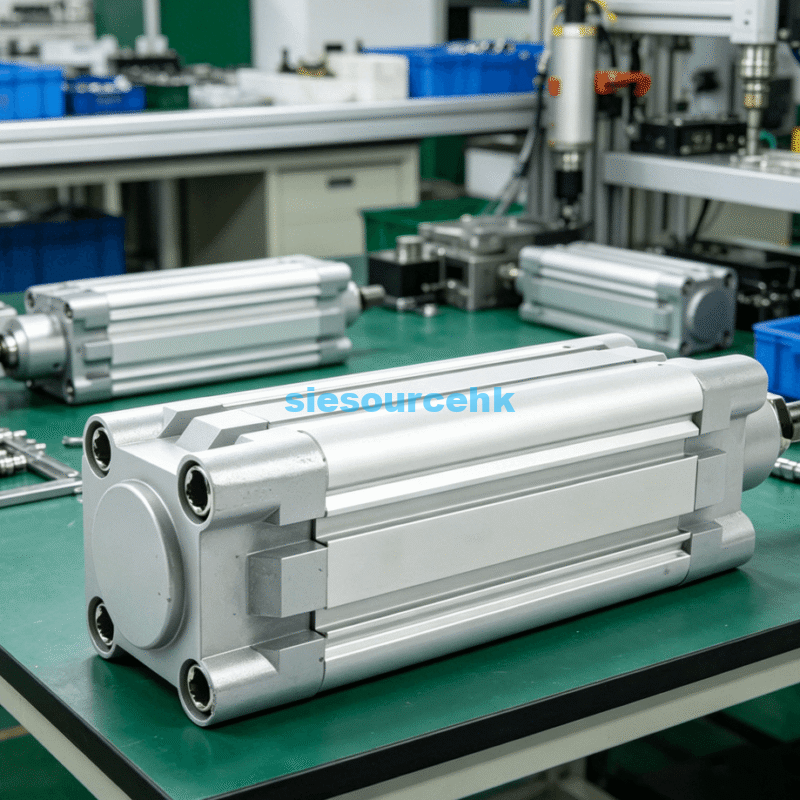
Pneumatic systems remain the primary choice for most industrial applications due to their high power density and cost-effectiveness. The Festo DNC series, specifically models like the DNC-40-250-PPV-A, represents the standard for ISO 15552 compliant cylinders. Achieving peak efficiency with these units involves specific technical adjustments.
Leveraging Adjustable Cushioning (PPV) for Cycle Time Reduction?
The “PPV” designation in Festo’s nomenclature stands for adjustable pneumatic cushioning. Unlike standard fixed-cushion cylinders, the DNC-40-250-PPV-A allows engineers to manually tune the air escape at the end of the stroke. This creates a “pneumatic brake” effect.
When properly adjusted, this cushioning prevents the piston from slamming into the end caps. This not only protects the internal seals but also significantly reduces the vibration transferred to the machine frame. Lower vibration means shorter settling times for sensors and auxiliary equipment, allowing the PLC to initiate the next cycle phase sooner.
Position Sensing and Signal Integration for Automation?
The “A” in the DNC series indicates that the piston is equipped with an internal magnet for proximity sensing. In a high-efficiency workflow, relying on manual timers in a PLC is a major source of wasted time. By using Festo SMT or SME sensors in the cylinder’s integrated T-slots, the system receives real-time confirmation of the piston’s position.
Integrating these signals into the automation logic allows for “overlapping motion profiles.” For example, a horizontal slide can begin moving the moment the vertical DNC cylinder clears a safety threshold, rather than waiting for the entire stroke to finish. This can shave hundreds of milliseconds off every cycle, leading to massive throughput gains over a 24-hour production window.
Strategic Comparison: Choosing Between Pneumatic and Electric Drives
A critical step in boosting efficiency is selecting the correct drive medium. While the DNC series is excellent for point-to-point motion, certain applications require the variable speed and multi-positioning capabilities of electric drives.
| Feature | Pneumatic (e.g., DNC Series) | Electric (e.g., EGC/ELGC Series) |
|---|---|---|
| Speed Control | Controlled via flow control valves | Programmable acceleration/deceleration |
| Positioning | End-to-end (typically) | Multiple intermediate positions |
| Energy Profile | High consumption during stroke | High efficiency, power-on-demand |
| Setup Complexity | Low (Plumbing + Sensors) | Moderate (Servo Drive + Programming) |
| Maintenance | Seal replacement cycles | Minimal (Grease-for-life options) |
For most high-load, high-frequency applications where only two positions are required, the DNC series remains the efficiency leader due to its simplicity and lower initial capital expenditure.
Advanced Energy-Saving Strategies for Industrial Systems
Energy efficiency is often overlooked in favor of cycle speed, yet it directly impacts the Total Cost of Ownership (TCO). A Festo linear drive is only as efficient as the air or power it consumes.
- Reduced Leakage Paths: Modern Festo cylinders use advanced sealing technology that maintains integrity over millions of cycles. Even a 1mm leak in a pneumatic system can cost hundreds of dollars annually in wasted compressor energy.
- Pressure Reduction: Not every movement requires 6 bar. By using a pressure regulator to lower the return stroke pressure on a DNC cylinder, you can reduce air consumption by up to 30% without impacting the working cycle time.
- Weight Optimization: Festo uses high-strength aluminum profiles. Reducing the moving mass of the drive itself allows for faster acceleration with less force required.
Implementing these strategies requires a granular look at the machine’s pneumatic circuit. Using high-flow fittings and correctly sized tubing ensures that the DNC-40-250-PPV-A receives the air volume it needs without the “choking” effect of undersized lines.
Commercial Evaluation: Maximizing Value in Sourcing
From a commercial perspective, efficiency is also tied to procurement and maintenance. Utilizing a standardized drive like the Festo DNC series ensures that spare parts are globally available. This reduces the “efficiency drain” of extended downtime during repairs.
When sourcing for OEM projects, it is vital to evaluate the manufacturer’s technical support and the drive’s compliance with international standards (ISO 15552). Sourcing genuine components ensures that the performance curves provided in the technical data sheets match the real-world output on the factory floor. For specialized configurations, such as the 40mm bore and 250mm stroke variant, working with a supplier that understands the technical nuances of Festo’s catalog can significantly streamline the integration process.
Summary
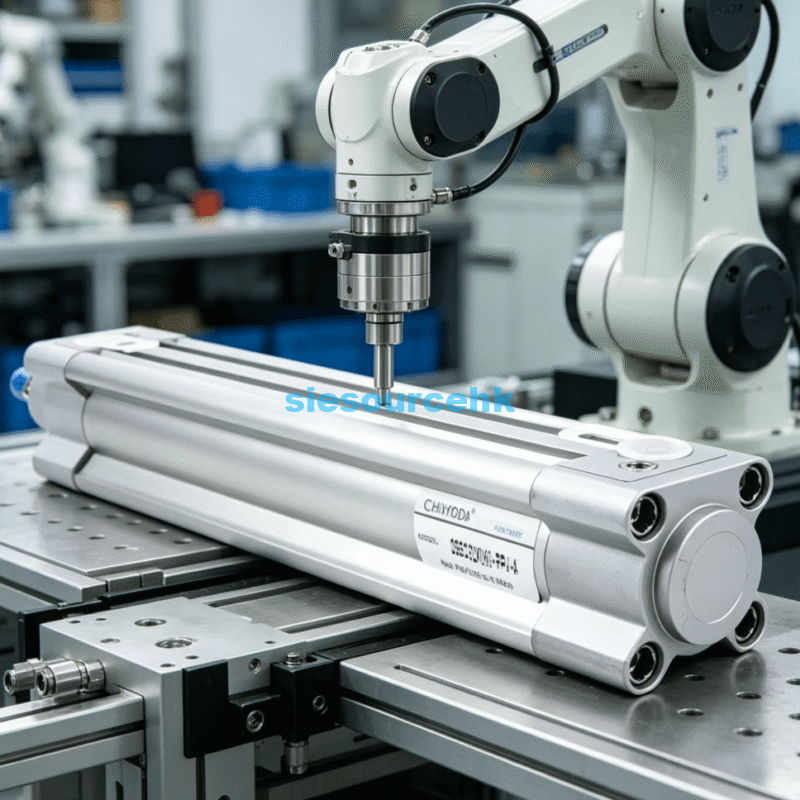
Boosting efficiency with Festo linear drives is a multi-dimensional task that requires attention to mechanical adjustment, electronic integration, and energy management. By utilizing the adjustable cushioning of the DNC series to minimize vibration and leveraging magnetic position sensing for tighter cycle logic, manufacturers can achieve significant performance gains. Whether the priority is reducing energy costs or increasing units-per-hour, the modularity and precision of Festo drives provide the necessary technical foundation for modern industrial success.
FAQ
1. What are the primary benefits of the PPV cushioning in Festo DNC cylinders?
The PPV cushioning allows for a controlled deceleration of the piston at the end of its stroke. This technical feature reduces the impact force on the cylinder’s end caps, which extends the lifespan of the internal seals and prevents mechanical stress from being transferred to the rest of the machine. It is a critical component for maintaining high speeds without causing premature wear.
2. Can I use the DNC-40-250-PPV-A in high-temperature environments?
Standard Festo DNC cylinders are designed for a specific temperature range, typically up to 80°C. However, Festo offers specialized high-temperature seal variants (often designated with an S6 suffix) for environments reaching up to 120°C. Always verify the environmental conditions against the specific model’s data sheet to ensure the efficiency of the seals is not compromised.
3. How does the “A” suffix assist in PLC integration?
The “A” suffix signifies that the cylinder is “sensing-ready.” It contains an internal magnetic ring on the piston. This allows for the attachment of external proximity sensors which send digital signals to the PLC when the cylinder reaches its extended or retracted position. This feedback is essential for automating complex sequences and ensuring safety in multi-axis systems.
4. Why is the ISO 15552 standard important for linear drives?
ISO 15552 is an international standard that defines the mounting dimensions and basic proportions of pneumatic cylinders with detachable fixings. By choosing a Festo DNC drive that adheres to this standard, engineers ensure that the drive is interchangeable with other compliant brands, making maintenance and global sourcing much more efficient.
5. Is it possible to repair a Festo DNC cylinder to regain lost efficiency?
Yes, one of the commercial advantages of the Festo DNC series is that they are fully repairable. Festo provides comprehensive seal kits and replacement parts. Replacing worn seals and lubricating the barrel can restore the cylinder to its original efficiency levels, which is a far more sustainable and cost-effective approach than replacing the entire unit.
Reference Sources
Festo SE & Co. KG – Official Product Documentation and Technical Data Sheets
International Organization for Standardization (ISO) – ISO 15552:2018 Standards