


Blog
How Integrated I/O PLCs Optimize Small Machines?

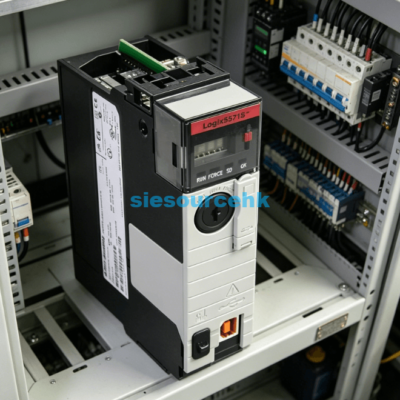
In the current era of industrial automation, the demand for “smaller, faster, and smarter” machinery has never been higher. For Original Equipment Manufacturers (OEMs), the challenge lies in delivering high-performance control within extremely tight physical footprints. This is where the Integrated I/O PLC becomes a critical asset. Unlike traditional modular systems that require separate chassis, power supplies, and individual I/O cards, integrated controllers consolidate these features into a single, compact unit.
For small machines—such as tabletop packaging units, small-scale pumping skids, or standalone conveyor systems—the control architecture must be lean. Using a high-density controller like the Allen-Bradley 2080-LC50-24QWB allows engineers to maintain industrial-grade reliability without the bulk of traditional rack-based systems.
What defines an Integrated I/O PLC in modern automation?
An Integrated I/O PLC, often referred to as a “micro PLC” or “brick PLC,” is characterized by having a fixed number of built-in inputs and outputs. This “all-in-one” design is engineered to handle the logic, power, and connectivity required for localized machine control.
The primary components typically include:
- Central Processing Unit (CPU): Capable of executing real-time logic and arithmetic.
- Embedded I/O: A combination of digital inputs (for sensors and switches) and outputs (for actuators and relays).
- Power Management: Built-in circuitry to convert line voltage to logic-level power.
- Communication Ports: Integrated Ethernet or Serial ports for HMI and SCADA connectivity.
By housing these in one enclosure, the machine’s electrical panel design is significantly simplified, leading to reduced assembly time and lower risk of wiring errors during the manufacturing phase.
How does integrated I/O improve machine footprint?
The most immediate optimization is physical. In small machine design, every square centimeter of the DIN rail is valuable. A modular PLC system might require 200mm to 300mm of width once the CPU, power supply, and four I/O modules are installed.
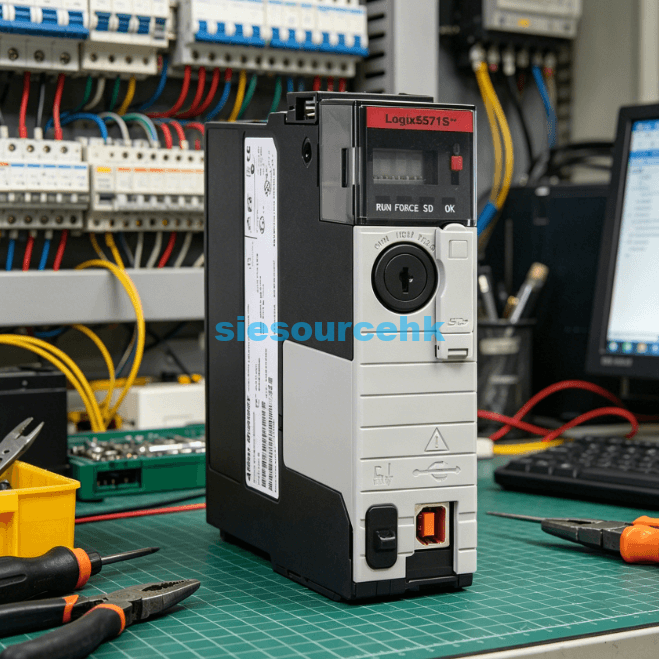
In contrast, the Allen-Bradley 2080-LC50-24QWB provides 24 points of I/O within a fraction of that space. This compactness allows for:
- Smaller electrical enclosures, which reduces the overall machine size.
- More room for other critical components like VFDs (Variable Frequency Drives) or safety relays.
- Direct mounting onto the machine frame in some decentralized control applications.
| Feature | Integrated I/O PLC (e.g., Micro850) | Modular PLC (e.g., ControlLogix) |
|---|---|---|
| Initial Cost | Significantly Lower | High |
| Space Required | Minimal (All-in-one) | Substantial (Requires Chassis) |
| Out-of-the-box Ready | Yes (Built-in I/O) | No (Requires separate I/O cards) |
| Expansion | Limited to plug-ins/small modules | Nearly Unlimited |
| Complexity | Simple (Ideal for standalone) | Complex (System-wide control) |
Why is cost-efficiency critical for small machine OEMs?
For a machine builder, the Bill of Materials (BOM) is the primary driver of competitiveness. Integrated I/O PLCs offer a lower entry price point because they eliminate the need for an expensive backplane or “chassis.”
Beyond the hardware cost, there are “hidden” savings:
- Labor Costs: Wiring 24 integrated points is faster than installing and configuring multiple cards in a rack.
- Software Licensing: Many integrated controllers, such as the Micro800 series, use free or lower-cost programming environments like Connected Components Workbench (CCW).
- Inventory Management: Keeping one SKU (like the 2080-LC50-24QWB) in stock is simpler than managing dozens of different I/O modules.
Can integrated PLCs handle high-speed motion tasks?
A common misconception is that integrated controllers lack the speed for precision tasks. However, modern Integrated I/O PLCs often feature dedicated high-speed counters (HSC) and pulse train outputs (PTO).
In a small labeling machine, for example, the PLC must:
- Read a high-speed input from a product sensor.
- Calculate the delay based on conveyor speed.
- Trigger a stepper motor via PTO to apply the label.
Because these high-speed functions are embedded directly into the CPU’s local bus, signal latency is minimized, ensuring the machine operates with high deterministic precision.
What are the benefits of the 2080-LC50-24QWB for relay applications?
The Allen-Bradley 2080-LC50-24QWB is a standout in the Micro850 family due to its specific hardware configuration. It features 14 digital inputs and 10 relay outputs.
The use of relay outputs is a major optimization for small machines for several reasons:
- Voltage Flexibility: Relays can switch both AC and DC loads, allowing the PLC to control diverse components like small motors, solenoid valves, and indicator lights without needing external interposing relays.
- Isolation: Relay outputs provide inherent electrical isolation between the PLC’s internal logic and the field devices, protecting the controller from external surges.
- High Current Handling: Unlike transistor outputs, relays can handle higher amperage, which is often necessary for direct control of small actuators.
How do plug-in modules provide scalability?
While “integrated” implies a fixed count, the Micro850 series allows for “Plug-in” expansion. This means you can add specific capabilities without increasing the width of the PLC on the DIN rail.
Commonly used plug-ins include:
- Analog I/O: Adding a 0-10V input for a pressure transducer.
- Specialty Modules: Adding a thermocouple or RTD module for temperature-controlled small ovens.
- Extended Communications: Adding an RS232/RS485 port for legacy device integration.
This modularity within an integrated frame gives OEMs the best of both worlds: a compact foundation with the flexibility to adapt to custom customer requirements.
Why is Ethernet connectivity essential for small machines?
Small machines no longer operate in isolation. They are increasingly part of a larger “Connected Enterprise.” An integrated PLC with an embedded Ethernet port allows for:
- Remote Monitoring: Operators can check machine status via a web browser or a mobile app.
- Firmware Updates: Easy maintenance without needing specialized serial cables.
- HMI Integration: Seamless data exchange with panels like the PanelView 800.
The 2080-LC50-24QWB includes an 10/100 Base T Ethernet port, supporting EtherNet/IP for high-speed messaging and Modbus TCP for broader interoperability with third-party devices.
Summary
The use of Integrated I/O PLCs represents a strategic optimization for the small machine market. By consolidating CPU power, diverse I/O types, and modern communication protocols into a single, cost-effective unit like the Allen-Bradley 2080-LC50-24QWB, manufacturers can reduce their machine’s physical footprint and total cost of ownership. These controllers provide the essential balance of “just enough” control power with the rugged reliability required for industrial environments. For any OEM focused on lean manufacturing and high-density design, the integrated architecture is the most logical path forward.
| 2080-L50E-24QWB | 2080-LC10-12QWB | 2080-L20E-20QWB | 2080-L20E-20QWB |
| 2080-L20E-20QBB | 2080-SERIALISOL | 2080-LC20-20QBB | 2080-L70E-24QWBK |
| 2080-LC50-24QWB | 2080-IQ4OB4 | 2080-LC20-20QWB | 2080-L50E-24QBB |
| 2080-L70E-24QWB | 2080-L50E-48QBB | 2080-LC50-48QWB | 2080-OB4 |
| 2080-LC70-24QBBK | 2080-LC50E-48QWBK | 2080-LC50-48QBB | 2080-IF4 |
| 2080-L50E-48QWB | 2080-L70E-24QWB | 2080-IF2 | 2080-SERIALISOL |
| 2080-OF2 | 2080-LC50-48QWB | 2080-L50E-24QBB | 2080-LC10-12QWB |
FAQ
1. Is an Integrated I/O PLC powerful enough for PID control?
Yes, most modern integrated controllers support PID instruction sets. For example, the Micro850 series can handle multiple PID loops, making it suitable for small temperature or pressure control systems in laboratory and chemical processing equipment.
2. What happens if one I/O point fails on an integrated PLC?
If an embedded point fails, you have two options. You can either reassign the logic to an unused spare point on the same controller, or you can add a small plug-in module to provide a new point. In extreme cases, since the unit is cost-effective, the entire controller is replaced, which is often faster than troubleshooting complex modular cards.
3. Can I program the 2080-LC50-24QWB with Standard Ladder Logic?
Absolutely. It supports all standard IEC 61131-3 languages, including Ladder Diagram (LD), Function Block Diagram (FBD), and Structured Text (ST). This ensures that engineers familiar with larger modular PLCs can transition to integrated micro-controllers with no additional learning curve.
4. Does integrated I/O help in high-vibration environments?
Yes, the “all-in-one” construction is generally more resistant to vibration than modular systems. Because there are no card-to-backplane connectors that can loosen over time, integrated PLCs are often preferred for mobile machinery or equipment with significant mechanical movement.
Reference Sources
Rockwell Automation Micro850 Controller Specifications