



Blog
How to Size Rockwell Automation Drives: A Technical Guide

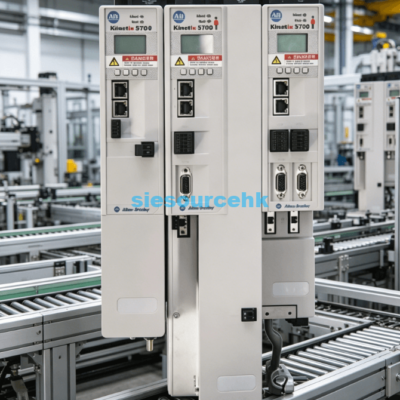
Selecting the optimal Rockwell Automation drive is a foundational task in industrial automation that directly influences the performance, reliability, and lifecycle cost of a machine. For engineers and OEM project managers, sizing is not merely about matching a motor’s horsepower; it is a complex calculation involving mechanical physics, electrical constraints, and environmental variables.
Whether you are implementing a high-precision servo system using the Kinetix series or a robust variable frequency drive (VFD) via the PowerFlex line, the goal is to achieve a system that is neither undersized (leading to premature failure) nor excessively oversized (leading to unnecessary capital expenditure). This guide provides a professional framework for selecting the right hardware, such as the Allen-Bradley 2198-D020-ERS4-2, to meet demanding industrial requirements.
Why is Precise Sizing Critical for Industrial Systems?
In the context of modern manufacturing, “close enough” is rarely acceptable. An incorrectly sized Rockwell Automation drive creates a cascade of technical issues. If a drive is undersized, it will frequently encounter overcurrent trips during peak acceleration or fail to maintain the required holding torque, resulting in production downtime. Conversely, an oversized drive requires larger electrical enclosures, higher-rated circuit protection, and increased cooling capacity, all of which inflate the total cost of ownership (TCO).
Furthermore, modern motion control relies heavily on the “Inertia Ratio.” A drive that is poorly matched to its load will su ffer from resonance and tuning instabilities. This makes it impossible to achieve the high-speed precision required in industries like semiconductor assembly or food and beverage packaging.
What are the Electrical Baseline Requirements?
Before calculating mechanical loads, engineers must establish the electrical boundaries of the facility. Rockwell drives operate across various voltage classes, and mismatching the drive to the incoming power supply is a common but avoidable error.
Voltage and Phase Considerations
Most high-performance Rockwell drives, including the Kinetix 5700 series, are designed for three-phase operation. You must verify if the site provides 200V, 400V, or 600V class power. For international projects, this often involves checking for 50Hz vs. 60Hz compatibility, although most modern Rockwell drives are rated for both.
Continuous vs. Peak Current Ratings
The most important electrical metric is not horsepower, but current (Amperes).
- Continuous Current: The amount of current the drive can provide indefinitely without exceeding its thermal limits.
- Peak Current: The maximum current available for short bursts, typically during acceleration or to overcome static friction.
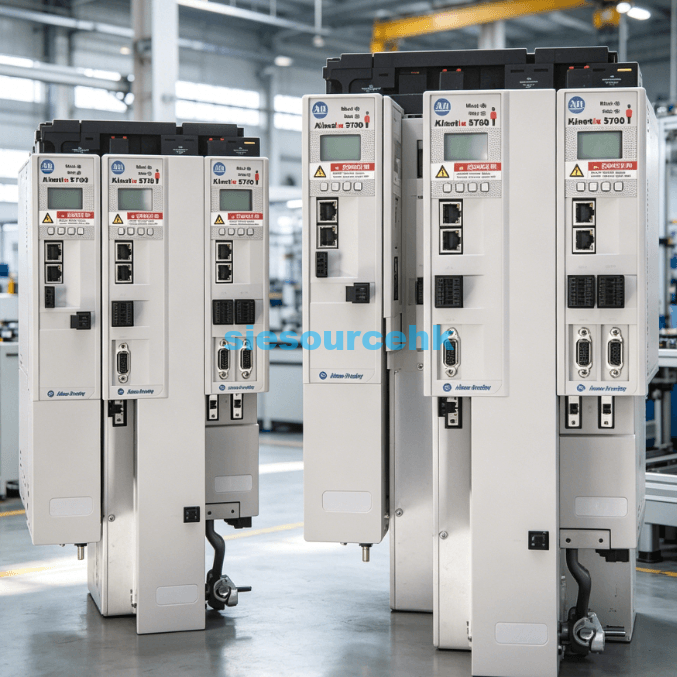
For example, the 2198-D020-ERS4-2 dual-axis drive provides a continuous output current of 7.0 A per axis, but it can surge to 17.5 A for peak requirements. Sizing must ensure that the peak current of the application move profile does not exceed the drive’s peak rating for the specified duration.
How to Calculate Mechanical Load Requirements?
The physics of the load determines the torque required from the motor, which in turn dictates the drive’s capacity.
Determining the Move Profile
A move profile consists of acceleration, constant speed, deceleration, and dwell time. The most stressful part of the cycle for a Rockwell Automation drive is the acceleration phase. During this time, the motor must overcome both the friction of the system and the inertia of the load.
The Inertia Ratio Rule
Inertia matching is the ratio of the reflected load inertia to the motor’s rotor inertia.
- 1:1 to 5:1: Ideal for high-performance, high-dynamic applications.
- 5:1 to 10:1: Suitable for most general-purpose industrial applications.
- Above 10:1: May require advanced tuning or a gearbox to reduce reflected inertia.
If the ratio is too high, the drive’s control loops (PID) will struggle to stabilize the load, leading to overshoot and mechanical wear. Using Rockwell’s Motion Analyzer software is the industry-standard way to simulate these ratios before purchasing hardware.
How do Environmental Factors Impact Sizing?
Drives are sensitive electronic devices. Their performance is derated based on where they are installed.
Ambient Temperature and Enclosure Cooling
Standard ratings for Rockwell drives are typically based on an ambient temperature of 50°C (122°F). If the drive is installed in a non-ventilated cabinet in a hot facility, it may require derating. This means a 20A drive might only be capable of 15A continuous service to prevent overheating.
Altitude and Atmospheric Pressure
At high altitudes (typically above 1000 meters), the air is thinner and less effective at cooling the drive’s heat sinks. Engineers must apply altitude derating factors provided in the Rockwell technical data sheets to ensure the drive does not reach its thermal trip point.
Comparing Rockwell Drive Series for Different Applications
| Feature | Kinetix 5700 (Servo) | PowerFlex 525 (VFD) | PowerFlex 755 (VFD) |
|---|---|---|---|
| Primary Use | High-precision motion | General purpose speed control | High-power/Advanced control |
| Control Mode | Position/Velocity/Torque | Sensorless Vector/VHz | TotalFORCE Technology |
| Networking | EtherNet/IP (Integrated) | EtherNet/IP (Standard) | EtherNet/IP (Dual Port) |
| Safety | Integrated STO/Safe Speed | Hardwired STO | Advanced Safety over Network |
| Typical Load | Robotics, Delta Arms | Conveyors, Simple Pumps | Cranes, Extruders, Mixers |
Integrating the Allen-Bradley 2198-D020-ERS4-2
The 2198-D020-ERS4-2 represents the cutting edge of Rockwell’s Integrated Motion on EtherNet/IP. When sizing for this specific module, engineers benefit from its dual-axis design.
Shared DC Bus Efficiency
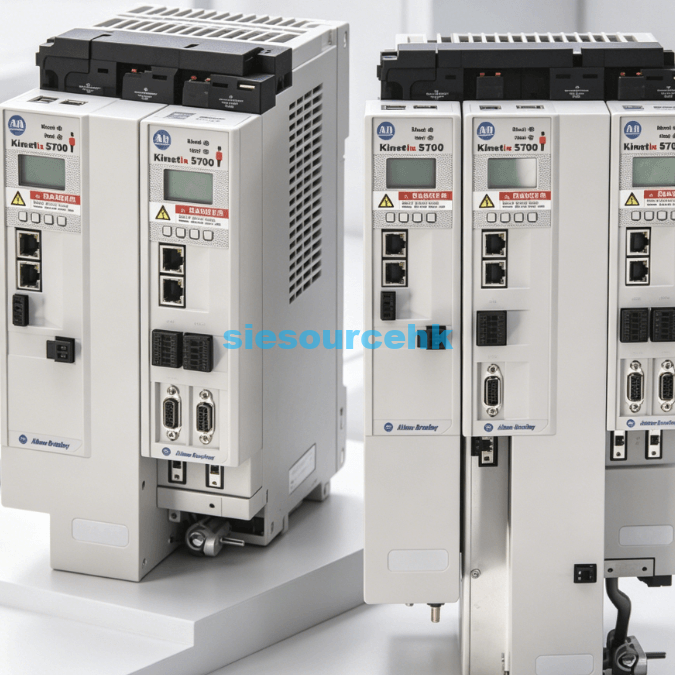
One of the primary advantages of the Kinetix 5700 series is the ability to share a DC bus across multiple drive modules. When one axis decelerates, it acts as a generator. In a standard drive, this energy is wasted as heat in a resistor. With the 2198-D020-ERS4-2, that energy can be consumed by another axis that is currently accelerating. This reduces the total power draw from the facility and can allow for a smaller main power supply module.
Simplified Safety Sizing
The “ERS4” designation in the model number indicates integrated safety via the network. This eliminates the need for complex hardwiring of safety relays for each axis, which simplifies the sizing of the control cabinet and reduces the points of failure in the system.
Strategic Procurement and RFQ Workflow
For B2B buyers and project managers, the technical sizing must be followed by a commercial evaluation.
Step 1: Technical Validation
Provide your supplier with the motor model numbers and the calculated peak torque requirements. If you are using the 2198-D020-ERS4-2, ensure your Logix controller supports the required number of axes and the motion tasking rates.
Step 2: Capacity and Compliance
Ensure the drive meets regional certifications such as UL, CE, or CSA. For global OEMs, choosing Rockwell Automation drives ensures that your machine can be serviced and supported in almost any country.
Step 3: Logistics and MOQ
- Availability: Check stock levels for critical components. The Kinetix 5700 series is high-demand hardware.
- Minimum Order Quantity: While individual modules can be purchased, system-wide upgrades often qualify for project-based pricing.
- Lead Times: Account for global supply chain variables by securing long-lead items early in the design phase.
Summary
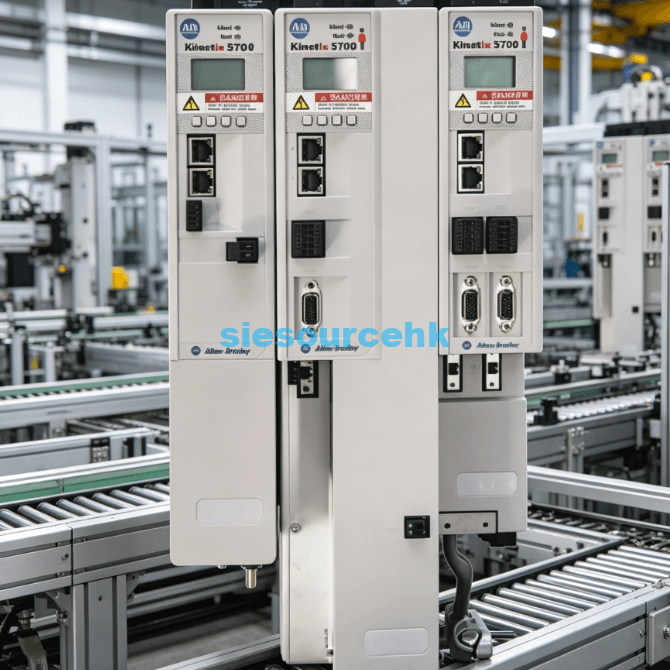
Sizing a Rockwell Automation drive is a rigorous process that balances mechanical demands with electrical and environmental limits. By accurately calculating the inertia ratio, understanding continuous vs. peak current, and leveraging advanced features like the shared DC bus in the 2198-D020-ERS4-2, engineers can build systems that are efficient, safe, and cost-effective. Always utilize official software tools like Motion Analyzer to validate your hardware choices before finalizing procurement.
| 2198-D020-ERS4 | 2198-D102-ERS3 | 2198-H025-ERS2 | 2198-E1020-ERS |
| DUNGS VPS 504 SO1 | DUNGS VPS 504 S04 | DUNGS VPS 504S02 | 2198-C1004-ERS |
| 2198-D012-ERS3 | 2198-H008-ERS | 2198-H040-ERS | 2198-DB20-F |
| 2198-P070 | 2198-P141 | 2198-D057-ERS3 | 2198-K57CK-D15M |
| 2198-D020-ERS3 | 2198-P208 | 2198-E4015-ERS | 2198-C4020-ERS |
| 2198-D032-ERS3 | 2198-H015-ERS2 | 2198-E4007-ERS | 2198-H040-ERS2 |
| 2198-H003-ERS2 | 2198-H015-ERS | 2198-K53CK-D15M | 2198-e4150-ers |
| 2198-D006-ERS4 | 2198-DBR40-F | 2198-S130-ERS3 | 2198-P031 |
| 2198-KITCON-DSL | 2198-BARCON-55DC200 | 2198-BARCON-85DC200 | 2198-KITCON-ENDCAP200 |
| 2198-S263-ERS4 | 2198-CAPMOD-2240 | 2198-H045-ERS2 | 2198-S086-ERS3 |
FAQ
1. Can I use a drive with a higher current rating than my motor?
Yes. Using a drive with a higher current rating is generally safe and provides “headroom” for the system. The drive’s software settings will allow you to limit the current to the motor’s nameplate rating to prevent damage. However, this is more expensive than selecting the correctly matched drive.
2. How do I choose between a single-axis and a dual-axis drive like the 2198-D020-ERS4-2?
Dual-axis drives are ideal for reducing cabinet space and simplifying wiring in machines with many axes of motion. Single-axis drives are typically used when the power requirements for one axis exceed the capacity of dual-axis modules or when physical separation between drives is necessary.
3. What is the impact of “Safety over EtherNet/IP” on drive sizing?
Safety over the network does not change the physical power sizing of the drive, but it significantly reduces the size of the control enclosure. It eliminates safety contactors and associated wiring, allowing for a more compact and lower-cost panel design.
4. When should I use a gearbox instead of a larger drive?
If your inertia ratio is higher than 15:1, it is usually more effective to add a planetary gearbox. A gearbox reduces the reflected inertia by the square of the gear ratio, which allows a much smaller motor and drive to control a large load with high precision.
5. Does altitude really affect my drive selection?
Yes. Above 1000 meters (approx. 3300 feet), the decreased air density reduces the cooling efficiency of the heat sinks. Without derating the drive (choosing a larger capacity than nominally required), the drive may suffer from “Over-Temperature” faults during heavy operation.
Reference Sources
Rockwell Automation Kinetix 5700 Servo Drives User Manual