



Blog
How High Voltage VFD Power Units Enhance Motor Torque

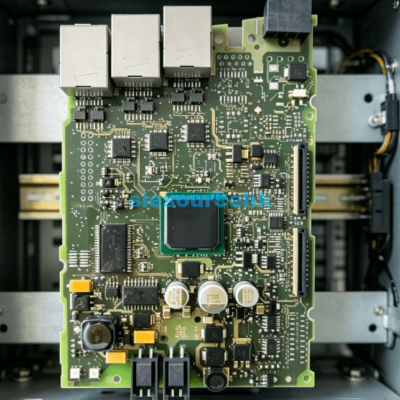
Heavy industrial operations require immense force to move massive loads. Mining crushers, large water pumps, and oil compressors all face the same challenge. They must overcome static friction and inertia. The High Voltage VFD Power Unit is the core component that enables this movement. It transforms raw electrical energy into precisely controlled mechanical torque.
Understanding the relationship between power electronics and physics is essential for engineers. A VFD does not just change speed. It manages the very heart of the induction motor’s magnetic field. This article explores the technical mechanisms that allow these units to deliver superior performance.
The Physics of Torque in High Voltage Motors?
Torque production in an induction motor relies on the interaction of magnetic fields. The standard formula is $T \propto \Phi \times I_r$. Here, $T$ represents torque, $\Phi$ is the magnetic flux, and $I_r$ is the rotor current.
In a direct-on-line start, the motor draws massive current. However, it often fails to produce efficient torque. This happens because the phase angle between flux and current is poorly aligned. The High Voltage VFD Power Unit solves this by controlling both voltage and frequency.
The power unit ensures the motor maintains the correct air-gap flux. This allows the motor to produce maximum torque without overheating the windings. By managing the ratio of Volts to Hertz, the drive keeps the magnetic field saturated but stable.
How Modular Topology Boosts Torque Performance?
High voltage systems often use a modular “power cell” design. This topology is also known as a Cascaded H-Bridge (CHB). Multiple power units are linked in series to reach the required voltage level.
Reducing Harmonic Distortion and Torque Ripple?
Standard low-voltage drives can produce “choppy” waveforms. These waveforms create harmonics that interfere with smooth rotation. In a high voltage modular drive, the units use phase-shifted PWM. This technique offsets the switching timing of each individual power unit.
The result is a near-perfect sinusoidal output waveform. This clean power eliminates “torque ripple.” Torque ripple causes mechanical vibrations that damage couplings and gearboxes. By providing a smooth waveform, the High Voltage VFD Power Unit ensures steady, continuous torque delivery.
Enhancing Low-Speed Breakaway Torque?
Starting a loaded conveyor belt requires high “breakaway” torque. Modular power units can handle high current pulses at very low frequencies. This allows the drive to provide 150% or even 200% of rated torque at startup.
The modular design distributes the thermal load across many units. This prevents any single transistor from overheating during a difficult start. Engineers value this reliability in harsh environments like cement plants or deep-sea pumping stations.
Control Strategies for Maximum Torque Output?
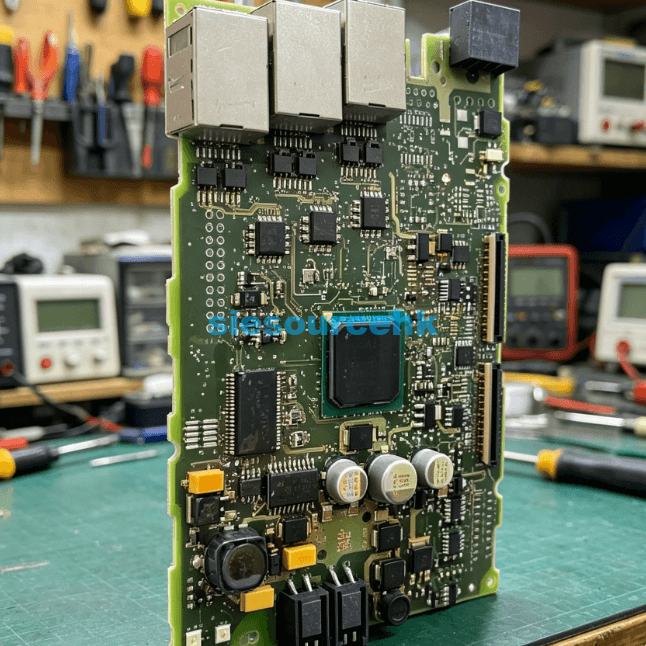
The intelligence of the power unit depends on the control board. Modern drives use sophisticated algorithms to calculate the exact needs of the motor in real-time.
V/f Control and Voltage Boosting?
Volts-per-Hertz (V/f) control is the most common method for pumps and fans. At low speeds, the resistance of the stator causes a voltage drop. This drop weakens the magnetic flux and reduces torque.
High Voltage VFD Power Units use “Torque Boost” functions. The unit increases the output voltage at the low-frequency end of the curve. This compensates for internal losses. It ensures the motor has enough “grunt” to begin rotation under load.
Field Oriented Control Precision?
Field Oriented Control (FOC), or Vector Control, is the gold standard for performance. The control board treats the motor current as two separate vectors. One vector controls the magnetic flux. The second vector controls the torque.
The power units execute these commands with microsecond precision. This allows a motor to hold a load at zero speed without a mechanical brake. It provides a dynamic response to load changes that is impossible with simpler control methods.
Managing Dynamic Loads and Flux Optimization?
Industrial loads are rarely constant. A rock crusher may be empty one moment and full the next. The High Voltage VFD Power Unit must adapt instantly to these changes.
Over-Fluxing for Transient Spikes?
When a sudden load spike occurs, the drive can “over-flux” the motor. This temporarily increases the magnetic strength in the air gap. The power unit delivers the extra current required to maintain speed.
This capability prevents the motor from stalling. It also reduces the need to over-size the motor for occasional peak loads. The drive acts as a protective buffer for the entire mechanical system.
Energy Storage in DC Bus Capacitors?
Each High Voltage VFD Power Unit contains a bank of high-quality capacitors. These capacitors store energy in the DC link. During a sudden demand for torque, the capacitors provide an immediate burst of power.
This internal energy reservoir is critical for stability. It helps the drive ride through minor voltage dips in the factory power supply. Without this storage, the motor would lose torque and potentially trip the entire process.
Integration with Siemens Control Board Technology?
The synergy between the power unit and the control hardware is vital. High-quality components ensure that commands are translated into motion without delay.
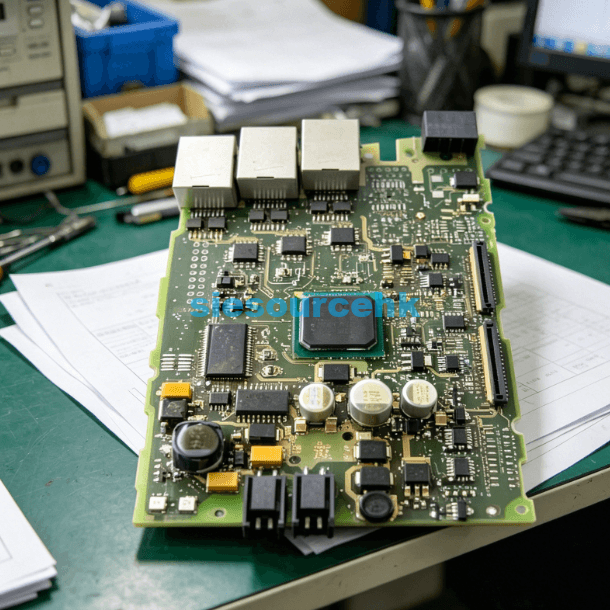
The use of specific Siemens board components allows for high-speed data processing. Control units like the CU320-2 or CUA31 manage the synchronization of multiple power units. They use fiber-optic communication to prevent electromagnetic interference.
These boards calculate the complex pulse patterns required for multi-level inversion. When the control board detects a change in load, it adjusts the PWM signals to the power units. This happens thousands of times per second. This precision is what allows Siemens-based systems to lead the industry in torque control and reliability.
| Technical Feature | Impact on Motor Torque | Industrial Benefit |
|---|---|---|
| Multi-level PWM | Eliminates torque ripple and vibration. | Extends mechanical equipment life. |
| Active Torque Boost | Increases voltage at low frequencies. | Enables starting of heavy conveyors. |
| Vector Control | Independent control of flux and torque. | Precise positioning for hoists/cranes. |
| Cell Bypass Logic | Maintains torque during unit failure. | Prevents costly unscheduled downtime. |
| Fiber Optic Sync | Rapid response to load transients. | High stability in unstable power grids. |
Thermal Efficiency and Continuous Torque Delivery?
Torque is limited by heat. If a power unit gets too hot, it must reduce its current output. This reduces the available torque. Efficient cooling is therefore a torque-enhancement feature.
Advanced Cooling Mechanisms?
Many High Voltage VFD Power Units utilize liquid cooling or sophisticated air-flow designs. Heat pipes and aluminum fins pull heat away from the IGBTs (Insulated Gate Bipolar Transistors).
By keeping the semiconductors cool, the unit can sustain high torque for longer periods. This is essential for continuous processes like paper milling or chemical mixing.
Switching Frequency Adjustments?
The drive can dynamically change its switching frequency. At very low speeds where high torque is needed, the drive may lower the frequency. This reduces “switching losses” in the power unit.
Lower losses mean more capacity for torque-producing current. The system balances the need for a clean waveform with the need for raw power. This intelligent thermal management is a hallmark of high-end industrial drives.
Summary?
The High Voltage VFD Power Unit is the engine of modern heavy industry. It enhances torque through a combination of modular power electronics and advanced control math. By managing the magnetic flux and providing a clean, multi-level output, these units allow motors to perform beyond their traditional limits.
From providing breakaway torque for massive crushers to maintaining precision for high-speed turbines, the power unit’s role is indispensable. When paired with high-performance control boards, these systems provide the reliability and strength required for the world’s most demanding applications. Engineers must continue to focus on the integration of these components to maximize process efficiency and equipment longevity.
| A5E00297617 | A5E00135620 | A5E00166828 | A5E00288852 |
| A5E00296891-002 | A5E00444033 | A5E00470541 6SE7090-0XX84-0AJ0 | A5E00714561 |
| A5E00994796-0 | A5E01195872 | A5E01341031 | A5E02282294 |
| A5E02625805-H2 | A5E03432411FA | A5E03894526 | A5E30947477 |
| A5E30947477 H3 | A5E30947477-H3 | A5E31006890-K8 | A5E31006890-K9 |
| A5E32100313 | A5E32401109 AA | A5E32401109 AB | A5E35931202 |
| A5E36717813 | A5E36968571 | A5E43516128 | A5E00825002 |
| A5E36717788 | A5E36717799 | A5E43382223 | A5E00104.118 |
| A5E00151017 | A5E00215466 | A5E00244584 | A5E00314745 |
| A5E00331143 | A5E00357869 | A5E00369843 | A5E00684817 |
| A5E00714562 | A5E00755411 | A5E00765725 | A5E00768956 |
| A5E01187909 | A5E01708486 | A5E02083152 | A5E02320423 |
| A5E02326861 | A5E02547143 | A5E02630232 | A5E02645922001 |
| A5E02951937 | A5E03915589 | A5E30947477-H4 | A5E32352515-AA |
| A5E32401109 | A5E34345932 | A5E36128806004 | A5E36563512 |
| A5E38083935 | A5E40873334 | A5E42881257 | A5E43523091 |
| A5E45777827001 |
FAQ?
1. Can a High Voltage VFD provide 100% torque at zero speed?
Yes, when using Field Oriented Control (Vector Control). The power unit can maintain full magnetic flux and torque current even when the motor shaft is not turning. This is common in crane and hoist applications.
2. How does a power unit failure affect system torque?
If a drive has “Cell Bypass” capability, it can isolate a failed power unit. The remaining units adjust their output to maintain operation. While the maximum voltage might drop, the system can often maintain enough torque to continue the process at a lower speed.
3. What is the difference between constant torque and variable torque VFDs?
Constant torque VFDs are designed for loads like conveyors and crushers that require the same torque regardless of speed. Variable torque VFDs are for pumps and fans where torque requirements drop significantly as speed decreases. The power units in constant torque drives are typically more robust.
4. Why do high voltage power units use fiber optics?
High voltage environments create massive electromagnetic interference (EMI). Fiber optics are immune to this noise. They allow the control board to send perfectly timed signals to the power units, ensuring smooth torque production without signal jitter.
5. Does the VFD power unit protect the motor from mechanical shock?
Yes. The VFD can be programmed for “S-curve” acceleration. This gradually increases torque rather than applying it all at once. This prevents “snapping” of belts and chains, protecting the entire mechanical drivetrain.
Reference Sources?
IEEE 519-2022 Standard for Harmonic Control in Power Systems