


Blog
Yaskawa SGMSV-30DDA6F: Optimizing Precision in CNC Machining?

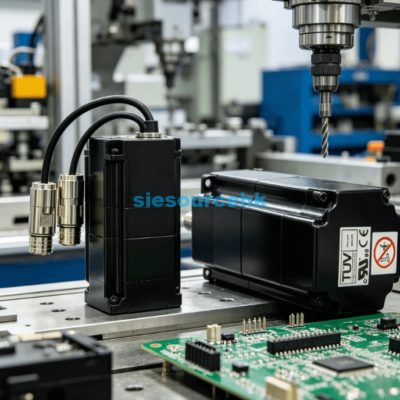
In the high-stakes environment of CNC machining, the difference between a profitable production run and a scrapped batch often comes down to the responsiveness of the motion control system. For project managers and engineers overseeing high-speed milling or precision grinding, the Yaskawa Servo Motor SGMSV-30DDA6F represents a specific technical solution to the challenges of vibration and settling time.
As a cornerstone of the Sigma-5 series, this 3.0kW motor is engineered to bridge the gap between high-torque requirements and the need for nimble movement. Understanding how this hardware integrates into a CNC architecture is essential for optimizing machine uptime.
What Are the Core Specifications of SGMSV-30DDA6F?
The SGMSV series is categorized by its medium inertia profile. In CNC applications, inertia matching is critical. The SGMSV-30DDA6F hits a “sweet spot” for mid-sized CNC tools, ensuring the drive can control mechanical loads without resonance.
| Feature | Specification | Impact on CNC |
|---|---|---|
| Rated Output | 3.0 kW | Handles heavy-duty cutting loads |
| Voltage | 400V (D-code) | Reduced heat and cabling costs |
| Encoder | 24-bit Absolute | 16.7M pulses for micron accuracy |
| Rated Speed | 3000 RPM | High-speed rapid traverse cycles |
| Inertia Type | Medium | Balanced stability for various axes |
The 24-bit encoder is the most significant aid to CNC operations. High resolution allows the PID loops to correct tracking errors before they manifest as physical surface defects on a workpiece.
How Does High-Resolution Feedback Eliminate Ghosting?
In multi-axis CNC machining, “ghosting” or ripple patterns on the surface of a part often stem from the motor’s inability to maintain constant velocity under varying loads. When a cutting tool hits a hard knot in a material, the load shifts instantly.
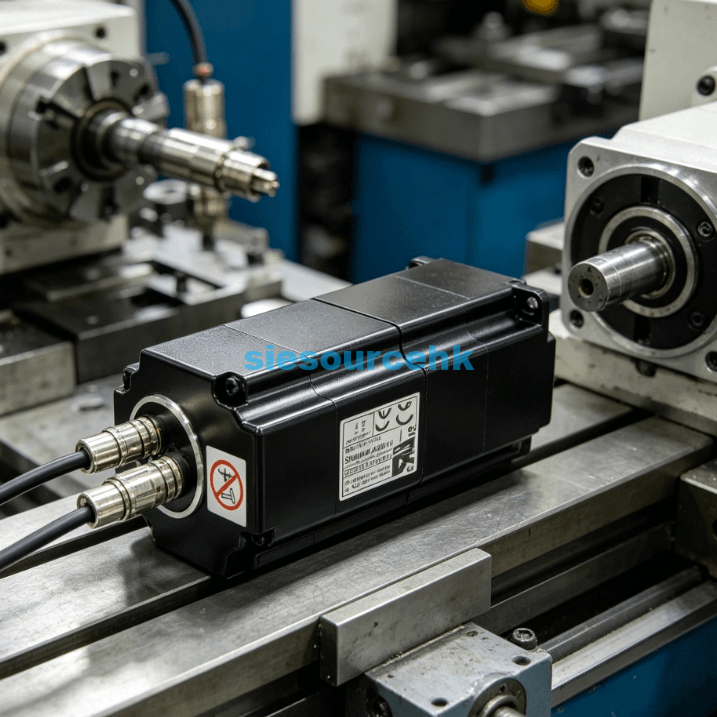
The Yaskawa SGMSV-30DDA6F Motor addresses this through its integrated feedback system. Because the encoder provides over 16 million pulses per turn, the controller detects deviations of a fraction of a micron.
Why Is Settling Time Important?
- Reduced Settling Time: The motor reaches its target position and stops vibrating almost instantly.
- Backlash Compensation: High-fidelity feedback allows the software to compensate more aggressively for mechanical play.
- Thermal Stability: Advanced feedback reduces unnecessary micro-adjustments that generate heat.
Is the 400V Architecture Better for Heat Management?
The “D” in the SGMSV-30DDA6F part number signifies a 400V winding. In industrial shop floors, transitioning from 200V to 400V systems offers several hidden ROI factors.
What Are the Key Benefits of 400V Systems?
- Lower Current: Doubling the voltage allows for a significant reduction in current for the same power output.
- Torque Consistency: 400V systems maintain peak torque further into the high-RPM range.
- Component Longevity: Cooler operation extends the life of motor windings and encoder electronics.
By utilizing the 400V architecture of the SGMSV-30DDA6F, facilities can reduce the cooling requirements for their electrical cabinets and extend the Mean Time Between Failures (MTBF).
How Does the Sigma-5 Ecosystem Suppress Vibration?
The hardware is only as capable as the drive controlling it. The SGMSV-30DDA6F is designed to pair seamlessly with Yaskawa’s SGDV or SGD7 amplifiers. These drives feature “Advanced Autotuning” and “Vibration Suppression” algorithms.
How Does Anti-Resonance Improve Surface Quality?
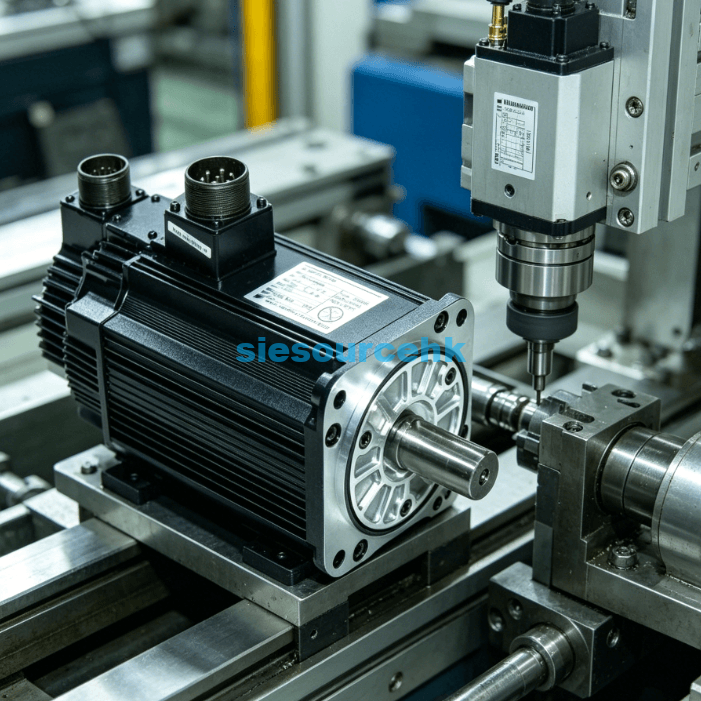
CNC machines often suffer from structural resonance—frequencies at which the machine frame vibrates. The Yaskawa ecosystem allows the SGMSV-30DDA6F to act as a sensor and an actuator. The drive detects the frequency of a machine’s vibration and applies a “notch filter” to cancel it out.
This allows for deeper cuts and higher feed rates without the “chatter” that normally limits tool life. In a heavy-duty CNC lathe, this translates directly to better surface finishes and less secondary polishing.
Why Choose SGMSV-30DDA6F for CNC Retrofits?
When evaluating a servo motor for a CNC build or a legacy machine retrofit, the decision involves balancing cost, availability, and performance.
Is This Motor Compatible with Older Systems?
The SGMSV series remains one of the most widely supported motor lines in the world. For retrofitting a CNC machine from the early 2010s, this model is often a drop-in replacement that requires minimal mechanical modification while offering a massive upgrade in encoder technology.
What Is the Value of Absolute Positioning?
Because this motor uses an absolute encoder, the CNC machine does not need to perform a “homing sequence” every time it is powered on. Saving 5 minutes of homing time per machine, per shift, adds up to significant annual productivity gains.
Summary
Investing in a Yaskawa Servo Motor SGMSV-30DDA6F is a strategic move to lower the Total Cost of Ownership (TCO) of a CNC system. By providing higher resolution, better thermal management, and superior vibration suppression, this motor allows a CNC machine to run faster and longer with fewer errors. For manufacturers moving toward Industry 4.0, the data-rich feedback from the Sigma-5 series provides the foundation for predictive maintenance.
| SGMSV-30DDA6F | SGMRV-30ANA-YR11 | SGMPH-02ANA-YR13 | SGMSV-10ADA61 |
| SGMP-06AFTF23 | SGMGH-30ACA21 | SGMAV-01A3A21 | SGMAH-02BAA21 |
| SGME-08VF12 | SGMAH-04A4A6S | SGMGH-13DCA6C | SGMGH-09DCA6C |
| SGMGV-09DDA6F | SGM-04UWB4L | SGM7A-70AFA6c | SGMGH-09ACA6S |
| SGMPS-01ACA21 | SGMPS-01ACA21-E | SGMGV-13DDA6F | SGMGH-05DCA6F-OY |
| SGMGH-09DCA6F-OY | SGMAV-08ADK-HA21 | SGMGV-1ADDA61 | SGM7A-15A7A6C |
| SGMAH-A5BAA21 | SGMGV-30ADA6S | SGMGV-13ADA2D | SGMGV-30A3A61 |
| SGM-01VGNK92 | SGMGH-75ACA61 | SGMJV-04AAA61 | SGMGV-20DDA6H |
| SGMEV-04D3A61 | SGMAV-02ANA-YR31 | SGM7G-55AFC61 | SGMJV-A5ADA21 |
| SGMRS-12A2B-YRA1 | SGMAV-04ANA-YR22 | SGMRV-37ANA-YRA2 | SGMRS-37A2A-YRA1 |
| SGMRV-13ANA-YRA1 | SGMAH-04AAA41D-OY | SGM7P-08AFA61 | SGMGV-55D3A61 |
| SGMRV-05ANA-YR21 |
FAQ
1. Can I use the SGMSV-30DDA6F with a Sigma-7 drive?
Yes. Yaskawa maintains high levels of backward compatibility. A Sigma-7 amplifier can drive a Sigma-5 motor, often resulting in better performance due to improved processing speeds.
2. What is the difference between SGMSV and SGMGV series?
The SGMSV is a medium-inertia motor designed for high-speed applications. The SGMGV is a high-inertia motor better suited for heavy loads where stability is prioritized over acceleration.
3. Does this motor require a separate encoder power supply?
No, power is supplied through the standard encoder cable from the amplifier. However, a battery unit is required on the drive side to retain absolute position data during power-off.
4. What are the lead times for industrial Yaskawa servos?
Lead times vary by distributor. However, standard models like the SGMSV-30DDA6F are usually available for immediate dispatch from specialized suppliers like Siesource HK.
5. How does the 400V power impact my facility?
You will need a 400-480V 3-phase power supply. This is standard in most industrial environments but may require a transformer if your facility operates on a 200V grid.
Reference Sources
Official technical specifications for Yaskawa Sigma-5 motors.
IEEE research on high-resolution encoders in motion control.
Standard certifications for industrial automation components.