


Blog
Allen-Bradley Servo Drive Module 2094: Features, Specifications and Industrial Applications Guide

Modern manufacturing demands precise motion control and scalable power architectures. The Allen-Bradley Servo Drive Module 2094 serves as the backbone of high-performance multi-axis control systems. This guide details its capabilities, technical specifications, and real-world industrial installations.
1. Hardware Architecture and the Multi-Axis Power Rail Concept
The Kinetix 6000 multi-axis system centers around a physical power rail. This design simplifies physical mounting and electrical distribution. The power rail distributes control power, DC bus power, and communication signals. This approach eliminates complex individual wiring harnesses.
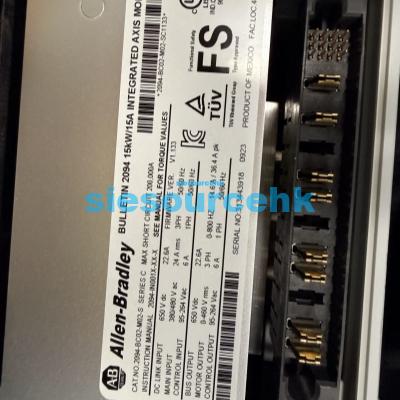
Each complete drive system requires an Integrated Axis Module. The Integrated Axis Module manages incoming three-phase AC input power. It converts this power to a regulated DC bus voltage. It also occupies the first position on the shared rail.
The remaining rail slots house individual Axis Modules. These modules receive DC power from the common bus. They control individual permanent magnet servo motors. They slide into place using standard locking pins. This physical assembly reduces cabinet footprint significantly.
The modular rail design also decreases assembly labor costs. Engineers can swap individual drives in minutes. The common DC bus also allows energy sharing. Decelerating axes regenerate power back to the common bus. Accelerating axes draw this energy immediately. This sharing optimizes overall thermal efficiency.
2. Technical Specifications and Voltage Classes
The system operates across two main voltage categories. These are the 230V AC and 460V AC classes. Selecting the proper class depends on motor power requirements.
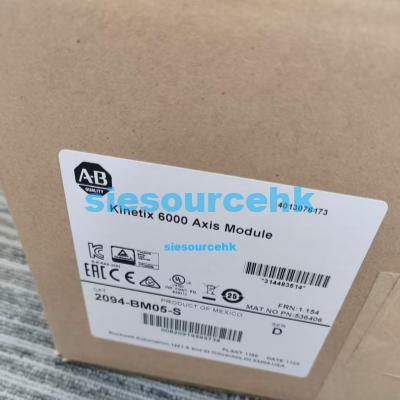
Each Allen-Bradley Servo Drive Module 2094 belongs to specific series codes. The prefix 2094-AC designates 230V AC operating modules. The prefix 2094-BC designates 460V AC operating modules. These designations ensure correct electrical planning.
Continuous output current ratings vary across the module range. The smallest units deliver three amperes of continuous current. The largest units deliver forty-five amperes of continuous current. Peak currents can reach up to double the continuous ratings.
This range accommodates fractional and high-power industrial motors. The physical dimensions also correspond to the output rating. Larger modules require wider slots on the power rail. Heat sink depths also scale with current ratings.
3. Integrated Safety and Safe Torque Off Features
Modern industrial machinery must protect operators from hazardous motions. The Allen-Bradley Servo Drive Module 2094 incorporates integrated safety functions. The primary safety function is Safe Torque Off.
Safe Torque Off prevents the drive from generating rotational torque. It removes control power from the gate driver circuits. This function meets ISO 13849-1 Performance Level d requirements. It also complies with SIL 2 safety standards.
The drive maintains control power during a safety event. This keeps the position feedback loop active. The drive does not require a complete power cycle. This allows rapid machine restarts after safety gate closures.
Integrated safety reduces the need for external redundant contactors. It simplifies safety cabinet wiring by up to seventy percent. It also reduces mechanical wear on power relays. Engineers achieve high-integrity safety profiles using simple dual-channel wiring.
4. Key Industrial Applications in Modern Manufacturing
High-speed packaging systems require extremely precise synchronized motion. Rotary knife cutters and smart conveyors rely on rapid drive response. The module meets these strict timing demands.
Converting machinery demands precise tension control during web winding. Unwinders and rewinders utilize the drive for dynamic torque regulation. This prevents material stretching or tearing. The high-bandwidth loop ensures smooth web handling.
Automotive assembly lines utilize multi-axis configurations for robotic positioning. Component pick-and-place systems require reliable repeatable tracking. The drive delivers consistent torque profiles under varying payloads. This consistency ensures high assembly quality.
Food processing environments require reliable washing and sealing motions. Cartesian sorting robots benefit from the compact rail design. The drives operate reliably within control enclosures. This operation minimizes downtime in demanding ambient conditions.
5. Diagnostic Codes and Predictive Maintenance Protocols
An integrated seven-segment display provides local status information. This display shows real-time operating conditions and error codes. Understanding these diagnostic codes speeds up troubleshooting.
The code E05 indicates an overcurrent condition in the power circuit. This fault occurs when output current exceeds safe limits. It often stems from a mechanical jam. It can also indicate a short circuit in motor wiring.
The code E19 points to a control system communication failure. This suggests a fiber optic cable disruption. It can also mean a faulty transceiver module. Checking the digital optical link usually resolves this error.
Predictive maintenance involves tracking thermal sensor logs. The drives report heat sink temperatures continuously. High temperatures suggest fan failure or blocked airflow. Addressing these issues early prevents unplanned shutdowns.
6. Digital Integration and Communication Protocols
The module utilizes standard digital interfaces for system integration. Older configurations rely on SERCOS fiber optic ring networks. Modern iterations incorporate EtherNet/IP communications.
SERCOS rings provide deterministic high-speed synchronization. The fiber optic links isolate electrical noise. This isolation is critical in welding and heavy machining environments. It supports up to sixteen axes per ring.
EtherNet/IP integration simplifies network architecture. It uses standard copper or fiber Ethernet cabling. This allows unified control and diagnostic data transmission. Plant engineers can access parameters via standard industrial switches.
The drives integrate seamlessly with Logix controller platforms. Add-on profiles simplify drive configuration in Studio 5000. This software integration speeds up system commissioning. It also enables automatic device replacement protocols.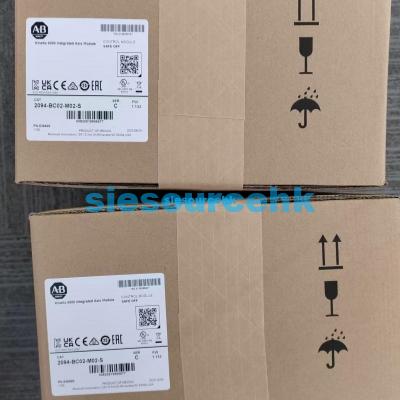
Product Model
| 2094-8M01-S Series B | 2094-AC09-M02-S | 2094-AM02-S | 2094-BC01M01 |
| 2094-BC01-M01 | 2094-BC01-M01-M | 2094-BC01-M01-S | 2094-BC01-MP5-S |
| 2094-BC02M-02M | 2094-BC02-M02-M | 2094-BC02-M02-S | 2094-BC02-MO2-S |
| 2094-BC04-M03-M | 2094-BC04-M03-S | 2094-bc07-m05-m | 2094-BC07-M05-S |
| 2094-BC07-MO5 | 2094-BL50S | 2094-BL75S | 2094-BM01 |
| 2094-BM01-M | 2094-BM01-S | 2094-BM02-M | 2094-BM02-S |
| 2094-BM03-S | 2094-BM05-S | 2094-BM05-SA0196 | 2094-BMP5-M |
| 2094-BMP5-S | 2094-BSP2 | 2094-EN02D-M01-S0 | 2094-EN02D-M01-S1 |
| 2094-PRS6 | 2094-PRS7 | 2094-PRS8 | 2094-SE02F-M00-S0 |
Frequently Asked Questions (FAQ)
What is the primary function of the Integrated Axis Module in a 2094 system?
The Integrated Axis Module acts as the central power converter. It accepts three-phase AC input and rectifies it to DC power. This DC power is then distributed across the common power rail to all other connected Axis Modules.
How does the physical power rail reduce wiring complexity?
The physical power rail distributes power and control signals internally. This replaces individual three-phase AC wiring, control power wiring, and DC bus cables for each drive. As a result, engineers save panel space and reduce mounting labor.
What is the difference between Safe Torque Off and complete power removal?
Safe Torque Off removes power from the drive gate drivers but keeps control circuitry alive. The motor cannot rotate, but the system retains position feedback. This eliminates the need for full power cycling and speeds up recovery times.
Can 230V and 460V modules be mixed on the same physical power rail?
No, modules of different voltage classes cannot be mixed on the same physical power rail. The power rail operates on a common DC bus voltage. Mixing voltage classes violates safety rules and can damage electrical components.
What does an E47 error code signify on the 2094 drive display?
The E47 error code represents a Safe Torque Off fault. This occurs when the dual-channel safety inputs are in mismatch states. This is typically resolved by checking safety relays, interlocks, or safety input wiring.
Reference Sources
- Rockwell Automation: Kinetix 6000 Multi-axis Servo Drives User Manual – Official Manufacturer Documentation
Comprehensive installation, wiring, and diagnostic guidelines for the Bulletin 2094 series. - ISO 13849-1: Safety of Machinery – Safety-related parts of control systems – International Testing Standard
Standard outlining performance level (PL) criteria for integrated safety systems like Safe Torque Off. - IEC 61508: Functional Safety of Electrical/Electronic/Programmable Electronic Safety-related Systems – International Compliance Standard
The base standard defining safety integrity level (SIL) requirements for industrial drive controllers.