



Blog
Eaton DILM Contactor Selection Guide: Specs, Models & Replacements

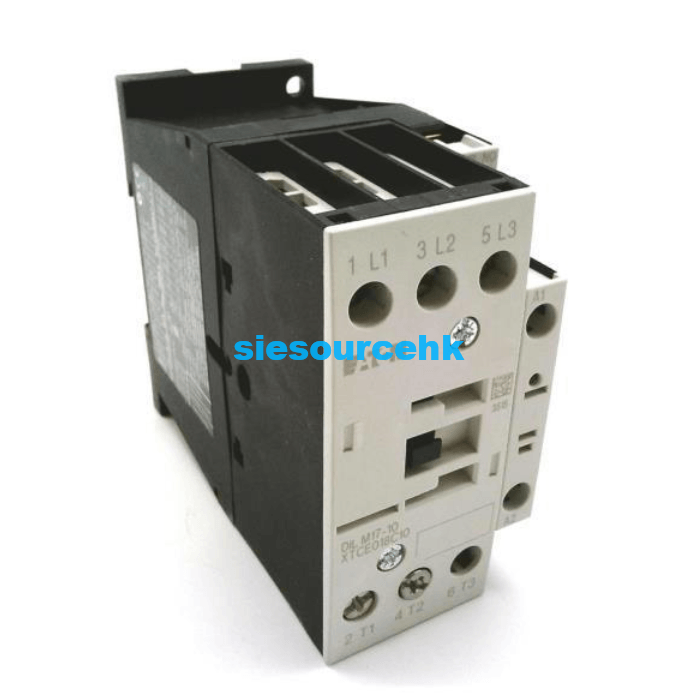
Selecting the right contactor is more than just matching a horsepower rating; it is about ensuring the longevity of your motor control center and minimizing downtime in high-duty cycle environments. The Eaton DILM series (formerly Moeller) has long been the industry benchmark for reliability, offering a modular system that scales from small 7A auxiliary tasks to massive 1600A industrial loads.
When engineers specify an Eaton DILM contactor, they are looking for more than a switch. They are looking for a component that integrates seamlessly into a SmartWire-DT system, offers consistent coil performance, and maintains thermal stability under fluctuating voltages. This guide breaks down the technical nuances of the DILM range to help procurement managers and maintenance engineers make informed decisions.
Understanding the Eaton DILM Nomenclature and Frame Sizes
The DILM series is structured by “Frame Sizes,” which dictate the physical footprint and the electrical capacity of the unit. Understanding this hierarchy is the first step in either designing a new panel or finding a drop-in replacement.
- Frame Size 1 (DILM7 to DILM15): These are compact contactors used primarily for small motors (up to 7.5 kW at 400V). They share common accessories, such as front-mount auxiliary contacts.
- Frame Size 2 (DILM17 to DILM38): A mid-range solution for motors up to 18.5 kW. These are frequently found in HVAC systems and pump controls.
- Frame Size 3 (DILM40 to DILM72): Heavy-duty units designed for demanding industrial machinery, supporting up to 37 kW.
- Frame Size 4 (DILM80 to DILM170): High-capacity contactors for large-scale infrastructure and manufacturing plants.
When sourcing from specialized distributors like Siesource, you will notice that the model number typically indicates the Rated Operational Current (Ie) at AC-3 (400V). For example, a DILM32 is rated for 32 Amps under standard motor-starting conditions.
AC-1 vs. AC-3: Why the Utilization Category Dictates Lifespan
A common error in procurement is selecting a contactor based solely on the maximum amperage without considering the Utilization Category. The Eaton DILM series provides different ratings for different types of loads:
- AC-3 (Squirrel Cage Motors): This is the most common application. It involves starting, plugging, and inching. The contactor must handle high inrush currents (typically 6-8 times the rated current). If you are running a conveyor or a compressor, the AC-3 rating is your primary metric.
- AC-1 (Non-Inductive or Slightly Inductive Loads): This applies to resistive loads like industrial heaters or lighting. Because there is no significant inrush current, a DILM contactor can handle a much higher AC-1 rating than its AC-3 counterpart. For instance, a DILM17 (17A AC-3) may be rated for 40A under AC-1 conditions.
Failing to distinguish between these can lead to premature contact pitting or coil burnout, especially in applications with frequent start-stop cycles.
Technical Comparison of Popular Eaton DILM Models
To assist in the selection process, the following table summarizes the performance data for the most frequently specified models in the DILM range.
| Model | AC-3 Rating (400V, Amp) | Max Motor Power (kW) | AC-1 Rating (Amp) | Conventional Thermal Current (Ith) |
| DILM7 | 7 A | 3 kW | 22 A | 22 A |
| DILM9 | 9 A | 4 kW | 22 A | 22 A |
| DILM12 | 12 A | 5.5 kW | 22 A | 22 A |
| DILM17 | 17 A | 7.5 kW | 40 A | 40 A |
| DILM32 | 32 A | 15 kW | 45 A | 45 A |
| DILM65 | 65 A | 30 kW | 98 A | 98 A |
Note: Always verify the specific coil voltage (e.g., 230V 50Hz, 24V DC) before finalizing a purchase, as many DILM models offer “Electronically Controlled” coils (XTCE series) that reduce power consumption and heat dissipation.
Retrofitting and Replacement: Upgrading Legacy Moeller Units
Many facilities still operate on legacy Moeller DILM hardware. Fortunately, Eaton has maintained a high degree of backward compatibility. When replacing an older unit, consider the following checklist:
- Footprint Check: While the electrical specs might match, ensure the frame size has not changed in newer iterations. Most DILM models from the last 15 years remain dimensionally consistent.
- Auxiliary Contact Configuration: Check if your existing unit uses top-mounted or side-mounted auxiliary contacts. Newer DILM contactors (DILM7 through DILM38) feature built-in auxiliary contacts (1NO or 1NC), which may eliminate the need for an external block.
- DC Coil Advantage: If upgrading, consider switching to DC-operated contactors (e.g., DILM…-24VDC). Modern Eaton DC coils have a significantly lower “hold” power consumption and do not require additional RC suppressors, as the suppression is often integrated.
Application Logic: Where to Deploy the DILM Series
The versatility of the Eaton DILM series allows it to function across diverse industrial sectors:
- Material Handling: In high-frequency start/stop environments like sorting conveyors, the DILM’s high mechanical lifespan (up to 10 million operations) reduces maintenance intervals.
- Water Treatment: Used for pump control where reliability is non-negotiable. Pairing a DILM contactor with a ZB thermal overload relay provides a complete motor protection solution.
- Renewable Energy: The DILM series is frequently used in wind turbine pitch control and solar inverters due to its ability to operate in wide temperature ranges (-25°C to +60°C).
Sourcing Genuine Eaton Components
In the global supply chain, the risk of counterfeit electrical components is a reality that can lead to catastrophic fire hazards. To ensure the safety of your personnel and equipment, it is critical to source DILM contactors through reputable distributors who provide traceable stock.
For teams managing multiple projects, utilizing a platform like Siesource’s Eaton DILM database allows for rapid comparison of technical parameters and real-time availability. Whether you need a standard DILM9-10(230V50HZ) or a high-current DILM150, verifying the manufacturer’s part number against the specific application requirements is the final step in a successful procurement workflow.
Available Models and Specifications
| Product Model | Product Model | Product Model | Product Model |
|---|---|---|---|
| DILM17-10(230V50HZ,240V60HZ) | DILM12-10 (230V50HZ,240V60HZ) | DILM15-01(24V50/60HZ) | DILM9-01 XTCE009B01 |
| DILM150 | DILM32-XHI22 | DILM32-XHI11 XTCEXFDC11 | DILMP20 |
| DILM95C(220-230V50HZ) | DILM17-01(RDC24) | DILM32-01(RDC24) | DILM12-32 (240VAC) |
| DILM40 (230V 50HZ, 240V 60HZ) | DILM80(230V50HZ,240V60HZ) | DILM65(230V50HZ.240V60HZ) | DILM50(230V50HZ,240V60HZ) |
| DILM95-XSPR240 | DILM115(RAC240) | DILM32-XHI11-S | DILM32C-XHI11-S |
| DILM15-10 290073 | DILM150-XHI22 | DILM7-01(24VDC) | 107013 DILM170(RAC240) |
| 239598 DILM150-22(RAC240) | 276550 DILM7-10(230V50HZ,240V60HZ) | DILM650/22(RA250) | DILM95(230V50Hz,240V60Hz) |
| DILM9-10(220V50Hz,240V60Hz) | DILM12-XSPD | DILM7-01(230V50Hz,240V60Hz) | DILM9-10 (230VAC) |
| DILM32-10(230V50HZ,240V60HZ) | DILM25-32 = DILM25-10(230V50HZ,240V60HZ)+DILM32-XHI22 | DILM185-5-22 (2NO+2NC) | DILM7-32 = DILM7-10(230V50HZ,240V60HZ)+DILM32-XHI22 |
| DILM65 XTCE065D 230V | DILM32-01 | 277132 DILM25-10(230V50Hz,240V60Hz) | DILM15-10 |
| DILM32-10 | DILM25-10 (RDC24) | DILM12-10 220V 50/60HZ | DILM150 XTCE150G 220V |
| DILM50(RDC24) | DILM150(239587) | DILM115 | DILM32-XHI02 |
| DILM9-10(24VDC) | DILM12-10 3P 12A AC 230-240V 190033 | DILM38-10(230V50HZ,240V60HZ) | DILM65-22 |
| 277004 DILM17-10 | 277004 DILM17-10(230V50Hz,240V60Hz) | 276830 DILM12-10(230V50Hz,240V60Hz) | DILM12-10 276830 |
| DILM7-10 | DILM32-10(RDC24) | DILM7-10 230VAC | DILM150(RAC240) |
| DILM250/22(RA250) | DILMC32-10 |
FAQ
Q: Can I use an AC-rated DILM contactor for a DC motor load?
A: While Eaton produces dedicated DC contactors (DILDC series), some DILM units can be used for DC loads by wiring contacts in series. However, you must refer to the “DC Utilization Category” (DC-1 to DC-5) in the Eaton technical manual to derate the current significantly.
Q: What is the difference between DILM and DILA?
A: DILA units are “Contactor Relays” used for switching control signals and small loads (up to 16A AC-15). DILM units are “Power Contactors” designed to switch motors and high-power loads.
Q: Do Eaton DILM contactors require external surge suppressors?
A: DC-operated DILM contactors (up to 170A) generally have integrated suppressors. AC-operated models may require an optional RC or varistor suppressor block to protect sensitive electronics in the same control circuit.
Q: How do I identify the coil voltage on an installed DILM contactor?
A: The coil voltage is typically printed on the front or side of the contactor housing, near the A1/A2 terminals. It will specify both the voltage (e.g., 24V, 110V, 230V) and the frequency (50Hz, 60Hz, or DC).
Reference Sources
- IEC 60947-4-1: Low-voltage switchgear and controlgear – Part 4-1: Contactors and motor-starters. Official IEC Webstore.
- Eaton Wiring Manual: “Motor Control and Protection” – Technical documentation for Moeller series. Eaton Support.
- UL 60947-4-1: Standard for Safety for Low-Voltage Switchgear and Controlgear. UL Solutions.