



Blog
Yaskawa CIPR VFD Drive: Technical Selection & Replacement Guide

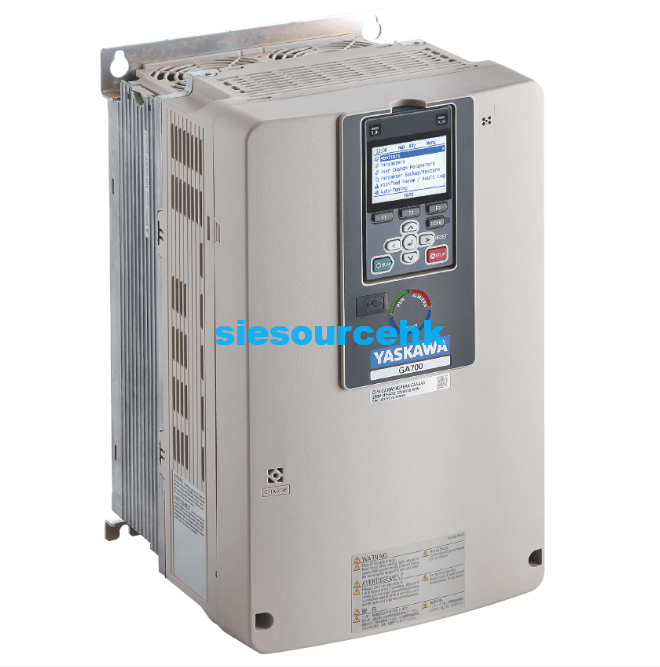
Selecting the right Variable Frequency Drive (VFD) is a critical decision that impacts the operational efficiency and longevity of industrial motor systems. The Yaskawa CIPR series—encompassing modern powerhouses like the GA500 and GA700, alongside the legendary V1000—represents the gold standard in Japanese inverter engineering. Whether you are an OEM project manager specifying a new production line or a maintenance engineer tasked with replacing a legacy unit, understanding the technical nuances of the CIPR designation is essential for minimizing downtime and maximizing torque performance.
Understanding the Yaskawa CIPR Designation and Architecture
In the Yaskawa ecosystem, the “CIPR” prefix is typically associated with specific regional model designations (often found in Asian and international markets) for their flagship inverter series. While the core technology mirrors the standard GA or V series, the CIPR-coded units are optimized for global compliance and diverse voltage environments.
At its core, a Yaskawa CIPR VFD utilizes advanced Pulse Width Modulation (PWM) to control AC motor speed and torque. Unlike generic inverters, Yaskawa’s architecture focuses on “Flexible Motor Control,” allowing a single drive to operate induction motors (IM), permanent magnet motors (PM), and even synchronous reluctance motors (SynRM) without requiring complex reconfiguration.
Key Technical Specifications Across the CIPR Range
To select the correct drive, engineers must evaluate the specific performance tiers within the CIPR inventory. Most current industrial requirements fall into three categories available through specialized distributors like Siesource HK.
1. CIPR-GA500: The Compact Powerhouse
The GA500 series is designed for dimensions-constrained environments where high performance is still non-negotiable.
- Capacity Range: Up to 30 kW.
- Control Logic: Current Vector Control for high starting torque (200% at 0.5 Hz).
- Key Feature: Built-in EMC filter and a 24 VDC external power supply input, which allows the control circuit to remain active even if the main power is disconnected.
2. CIPR-GA700: The High-End Industrial Specialist
For heavy-duty applications requiring sophisticated networking and massive power, the GA700 is the industry benchmark.
- Capacity Range: Up to 630 kW.
- Integration: Supports all major industrial protocols including EtherNet/IP, PROFINET, and Modbus TCP/IP.
- Safety: Integrated STO (Safe Torque Off) SIL3/PLe, reducing the need for external contactors.
3. CIPR-V1000: The Legacy Reliability King
The V1000 remains a staple in the B2B sector due to its “Install and Forget” reliability. It is frequently sought after for direct replacements in existing CNC machinery and conveyor systems.
| Feature | CIPR-GA500 | CIPR-GA700 | CIPR-V1000 |
| Max Power | 30 kW | 630 kW | 18.5 kW |
| Motor Compatibility | IM, PM, SynRM | IM, PM, SynRM | IM, PM |
| Enclosure Rating | IP20 / UL Type 1 | IP20 / IP55 | IP20 / IP66 |
| Network Support | Advanced (Built-in RS485) | Comprehensive (Modular) | Standard (Modbus) |
Strategic Application Scenarios
The success of a Yaskawa CIPR implementation depends on matching the drive’s control method to the mechanical load requirements of the application.
- Pumping and HVAC: Here, energy savings are the priority. Using the GA500’s “Energy Saving” mode can reduce power consumption by up to 30% compared to across-the-line starters. The PID control loop is exceptionally stable, preventing water hammer effects in centrifugal pumps.
- Conveyors and Material Handling: These systems require high starting torque and precise braking. The CIPR-V1000’s Heavy Duty (HD) rating ensures the drive can handle 150% overload for 60 seconds, which is crucial for starting fully loaded belts.
- Precision Machining (CNC): For spindle control, the GA700 offers the frequency response and low-speed stability needed for high-quality surface finishes.
Commercial Buying Guide: Selection and Replacement Logic
When procuring Yaskawa CIPR drives, especially for replacement projects, the decision-making process must account for both electrical compatibility and physical mounting constraints.
Step 1: Verify Load Type (Normal Duty vs. Heavy Duty)
Yaskawa drives are dual-rated. A drive might be rated for 5.5 kW in Normal Duty (Fans/Pumps) but only 4.0 kW in Heavy Duty (Extruders/Hoists). Always check the “Current” rating (Amps) rather than just the “Power” rating (kW) to ensure the drive can handle the motor’s Full Load Amps (FLA).
Step 2: Environmental Compatibility
In textile or woodworking facilities, dust is a major factor. The CIPR-GA700 offers IP55-rated versions that eliminate the need for expensive, oversized electrical cabinets. Conversely, for cleanroom electronics manufacturing, the standard IP20 models are sufficient.
Step 3: Legacy Replacement (V1000 to GA500)
If you are replacing an aging V1000, the GA500 is the intended successor. While the GA500 is smaller (saving cabinet space), you must verify the terminal layout. Modern GA series drives often feature “DriveWizard Mobile,” allowing technicians to clone parameters via a smartphone, which significantly reduces commissioning time compared to manual keypad entry on older units.
Step 4: Sourcing and Lead Times
In the current global supply chain, availability is as important as technical spec. Accessing a centralized inventory of Yaskawa CIPR products allows for faster cross-referencing of regional models. When ordering, specify the voltage code (e.g., “B” for Single-phase 200V, “4” for Three-phase 400V) to avoid incompatible hardware arrivals.
Industrial EEAT: Maintenance and Longevity
To ensure your Yaskawa CIPR VFD reaches its 10-year design life, professional maintenance is required.
- Capacitor Health: Heat is the primary enemy. Ensure the cooling fans are clear of debris. Most GA-series drives provide a “Maintenance Monitor” that tracks the percentage of life remaining in the electrolytic capacitors.
- Firmware Updates: In multi-drive synchronized systems (e.g., paper mills), ensure all drives are running compatible firmware versions to prevent communication lag over the fieldbus.
Available Yaskawa CIPR VFD Drive Models and Specifications
| CIPR-GA70B4044ABBA-AAAAAA | CIPR-GA50T4023ABAA-CAAAAA | CIPR-GA50B4018ABBA-CAAASA | CIPR-GA50B4004ABBA |
| CIPR-GA70B4031ABBA | CIPR-GA50B4018EBBA-CAAASA | CIPR-GA50B4004АВBA | GA500CIPR-GA50B4007ABBA |
| CIPR-GA50C4018 | CIPR-GA50B4007ABBA | CIPR-GA70D4044ABMA-AAAABA | CIPR-GA50C4038EBAA-BAAASA |
| CIPR-GA70T4031ABAA-CAAAAA | CIPR-GA70T4007ABAA-САAАAА | CIPR-GA70T4023ABAA-САAAАА | CIPR-GA70TA168ABAAA |
| CIPR-GA50T2010ABAA-CAAASA | CIPR-GA50B4031ABBA | CIPR-GA50B4012ABBA | CIPR-GA50C4004-EBAA-BAAASA |
| CIPR-GA50C4002-EBAA-BAAASA | CIPR-GA50C4001-EBAA-BAAASA | CIPR-GA50C4060EBAA-BAAASC | CIPR-GA60B4168ABBA 75KW |
| CIPR-GA70D4089ABMA | CIPR-GA70T4018ABAA-CAAAAA | CIPR-GA70B4168ABBA | CIPR-GA70B4371ABBA-AAAAAA |
| CIPR-GA70B4060ABBA-AAAAAA | CIPR-GA50C4031ABAA-BAAASA | CIPR-GA70B4675ABBA-GAAAAA-AAAAAA | CIPR-GA70B4296ABBA-AAAAAA-8015 |
| CIPR-GA70B4675ABBA-AAAAAA-8015 | CIPR-GA50B4009ABBA-CAAASA | CIPR-GA50B4007ABBA-CAAASA | CIPR-GA50B4012ABBA-CAAASA |
| CIPR-GA70B416ABBA-AAAAAA | CIPR-GA50B4009ABBA-AAAAAA | CIPR-GA70B4007ABBA | CIPR-GA50U4009ABAA-AAAASA |
| CIPR-GA70B4103ABBA-AAAAAA | CIPR-GA50B4031ABBA-CAAASA | CIPR-GA50B4023EBAA-BAAASA C | CIPR-GA50B4018EBAA-BAAASA C |
| CIPR-GA50B4009EBAA-BAAASA | CIPR-GA70B4060ABBA-AAAAAA (22KW) | CIPR-GA70D4371ABMA | CIPR-GA70D4208ABMA |
| CIPR-GA50T2008 |
FAQ
Q1: Can I replace a CIPR-V1000 with a CIPR-GA500 directly?
Yes, in most cases. The GA500 is designed to be the modern replacement for the V1000. It offers a smaller footprint and better motor control. However, you should check the physical mounting holes; while the GA500 is smaller, you may need an adapter plate or new drill holes in your sub-panel.
Q2: What does the “4” in a model like CIPR-GA50C4004 signify?
In Yaskawa’s nomenclature, the digit “4” in that position typically denotes the input voltage class, which is 400V (Three-phase). A “2” would indicate 200V. Always verify this to prevent catastrophic hardware failure upon power-up.
Q3: Are Yaskawa CIPR drives compatible with third-party motors?
Absolutely. One of Yaskawa’s core strengths is “Motor Agility.” The CIPR series can run standard induction motors, permanent magnet motors, and even high-efficiency Synchronous Reluctance (SynRM) motors by simply changing the motor parameter settings during the auto-tuning process.
Q4: How do I handle a “Ground Fault” alarm on a new CIPR installation?
Ground faults (GF) often occur due to moisture in the motor windings or damaged cable insulation. However, in long cable runs, parasitic capacitance can trigger a false GF. Ensure your carrier frequency is adjusted correctly and check that the motor cable length does not exceed the drive’s technical limits without an output reactor.
Q5: What is the typical lead time for bulk OEM orders?
Lead times vary by model and global stock levels. For common sizes (under 15kW), stock is often available for immediate shipping. For high-capacity GA700 units (above 100kW), lead times may extend to several weeks. It is recommended to consult Siesource HK for real-time inventory status.
Reference Sources:
- Yaskawa America, Inc. – GA500 Technical Manual (Document No. SIEP C710617 52).
- International Electrotechnical Commission (IEC) – Standard 61800-3: Adjustable speed electrical power drive systems.
- IEEE 519 Standard – Harmonic Control in Electric Power Systems.
- Official Yaskawa Global Product Documentation – “Flexible Motor Control Technology Whitepaper.”