


Blog
Fluke Test Equipment Guide: Industrial Electrical Testing & Safety

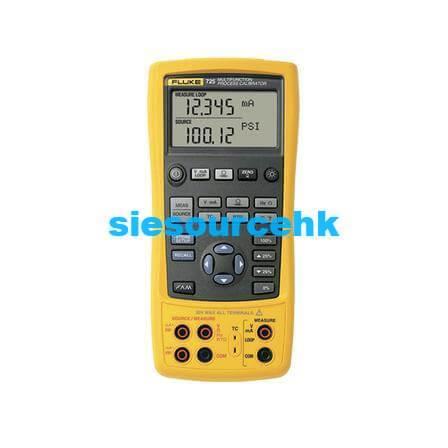
Precision in industrial electrical testing is not merely a matter of convenience; it is a prerequisite for operational safety and system uptime. In the high-stakes environment of manufacturing plants, data centers, and utility grids, the “Fluke” brand has become synonymous with the “Gold Standard” of measurement.
For electrical engineers and maintenance managers, selecting the right Fluke test equipment involves understanding the intersection of hardware durability, measurement accuracy, and the evolving landscape of wireless data integration. This guide breaks down the core categories of industrial testing tools and how they function within a modern predictive maintenance framework.
Why Fluke Test Equipment Defines Modern Industrial Standards
Industrial environments are notoriously “noisy” in an electrical sense. Variable frequency drives (VFDs), switching power supplies, and heavy motor loads create harmonics and transients that can baffle lower-grade testing tools. Fluke equipment is engineered to filter this noise, providing True-RMS measurements that reflect the real-world state of the electrical system.
Beyond accuracy, the primary driver for Fluke’s dominance is safety. Industrial technicians frequently work in environments where arc flash risks are high. Fluke tools are designed to meet and exceed stringent IEC safety ratings, ensuring that a voltage spike on the line doesn’t result in a catastrophic tool failure or injury to the user.
Core Categories of Industrial Fluke Tools
Understanding the Fluke ecosystem requires categorizing tools based on their specific diagnostic purpose. While a Digital Multimeter (DMM) is a general-purpose powerhouse, specialized tools are required for deeper system analysis.
1. Digital Multimeters (DMMs)
The DMM is the foundational tool for any technician. Models like the Fluke 87V are industry staples because they provide the resolution and accuracy needed to troubleshoot motor drives and automation systems.
- Key Features: Low-pass filters for accurate voltage/frequency on VFDs, built-in thermometers, and high-impedance measurement modes.
2. Clamp Meters
In scenarios where breaking the circuit is impossible or impractical, clamp meters allow for non-contact current measurement. The Fluke 370 FC series, for example, utilizes the iFlex flexible current probe to reach into tight cabinets or around large busbars where a standard hard-jaw clamp cannot fit.
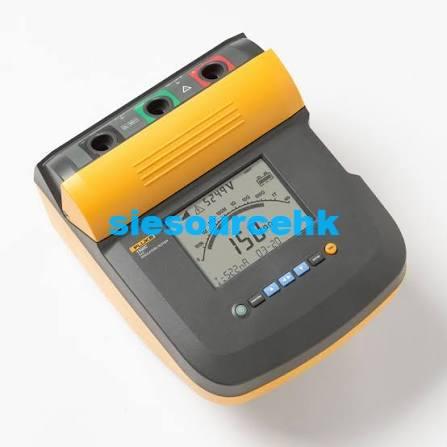
3. Insulation Resistance Testers
Predictive maintenance relies heavily on insulation testing. Tools like the Fluke 1587 FC combine a high-performance DMM with an insulation tester. This allows technicians to detect winding degradation in motors or insulation breakdown in cabling before a ground fault causes an unscheduled shutdown.
4. Power Quality Analyzers
For facilities experiencing “ghost” trips or overheating transformers, power quality analyzers are essential. These tools capture sags, swells, and harmonics, allowing engineers to identify the root cause of electrical inefficiency or equipment failure.
The Impact of Fluke Connect (FC) Technology
A significant shift in industrial testing is the move toward the Fluke Connect (FC) ecosystem. Traditional testing required a technician to stay physically near the test point to read the display—often within the “arc flash boundary.”
The integration of FC technology, as seen in the Fluke Connect series, allows tools to communicate wirelessly. Using the pc3000 FC Wireless Adapter or mobile applications, a team can:
- Log Data Remotely: Monitor a motor’s current draw from outside the hazardous zone.
- Synchronize Measurements: View live feeds from multiple modules (voltage, current, and temperature) on a single screen to understand complex system interactions.
- Baseline Trend Analysis: Save measurements directly to the cloud to compare current performance against historical data, which is critical for ISO 9001 and high-level maintenance compliance.
Technical Specifications: Understanding CAT Ratings
When selecting Fluke test equipment, the “Measurement Category” (CAT) rating is the most critical technical specification. It defines the tool’s ability to withstand high-energy transients.
| Category | Typical Location | Hazards |
| CAT II | Receptacles, long branch circuits | Low-energy transients |
| CAT III | Distribution panels, 3-phase feeders, lighting systems | High-energy transients in fixed installations |
| CAT IV | “Origin of Installation,” utility meters, service entrance | Massive transients from lightning or utility switching |
For industrial manufacturing, CAT III 1000V or CAT IV 600V is the standard requirement. Using a tool with an insufficient CAT rating is a leading cause of electrical accidents in the workplace.
Critical Applications: From Motor Drives to HVAC
Fluke tools are not restricted to the electrical room; their application spans the entire facility’s infrastructure.
- VFD Troubleshooting: Variable Frequency Drives produce non-sinusoidal waves. A True-RMS Fluke meter is necessary to accurately measure the output voltage and frequency that the motor is actually “seeing.”
- HVAC/R Maintenance: Technicians use Fluke temperature and humidity modules to balance air systems and troubleshoot refrigeration compressors, often using wireless modules to monitor parameters while the system is under load.
- Solar/Renewable Energy: With the rise of DC systems in solar farms, Fluke’s specialized DC clamp meters and insulation testers are used to verify string performance and inverter efficiency.
Selecting the Right Tool for the Job
Choosing the right equipment depends on the complexity of the facility and the skill level of the team. For a standard facility maintenance team, a “Combo Kit” (such as the Fluke 87V/E2 Industrial Electrician Combo Kit) provides the best balance of value and capability.
However, for specialized OEM project managers or high-voltage engineers, the focus should be on modularity. Investing in the Fluke 3000 FC series allows for a “building block” approach, where individual voltage or current modules can be added to the kit as the facility’s needs grow.
Conclusion: The Value of Reliability
In the world of industrial electrical testing, the cost of the tool is almost always lower than the cost of a single hour of unplanned downtime. Fluke test equipment provides the accuracy needed to diagnose problems fast and the safety features required to protect the workforce. By integrating wireless technology like Fluke Connect, modern facilities can transition from reactive repairs to a sophisticated, data-driven predictive maintenance strategy.
FAQ
1. What is the difference between a standard DMM and a True-RMS DMM?
A standard (average-responding) DMM assumes a perfect sine wave. In industrial settings with electronic loads (computers, VFDs, LED lighting), the wave is distorted. A True-RMS meter like the Fluke 87V uses complex formulas to measure the actual power dissipated, providing an accurate reading regardless of wave shape.
2. Can Fluke Connect tools be used in environments with heavy EMI?
Yes. Fluke Connect modules use low-power radio frequencies designed to operate in industrial environments. However, for extreme EMI environments, it is recommended to use the internal memory logging feature of the modules and download the data once the test is complete.
3. How often should Fluke test equipment be calibrated?
Most manufacturers and ISO standards recommend an annual (12-month) calibration cycle. This ensures that the instrument’s accuracy remains within the specified tolerances and provides a traceable record for quality audits.
4. Is the Fluke pc3000 FC adapter compatible with all Fluke tools?
The pc3000 FC adapter is specifically designed to bridge the gap between Fluke Connect-enabled wireless modules and a PC. It is compatible with the 3000 FC series and other modules that carry the “FC” designation.
5. Why are Fluke leads and accessories just as important as the meter?
The safety rating of the meter is only as good as the leads. Fluke leads are designed with double insulation and finger guards to prevent accidental contact with live circuits. Using third-party, unrated leads can compromise the safety of a CAT III or CAT IV environment.
Reference Sources
- IEEE Standard 1584: Guide for Performing Arc-Flash Hazard Calculations. IEEE Xplore
- NFPA 70E: Standard for Electrical Safety in the Workplace. NFPA Official Site
- IEC 61010-1: Safety requirements for electrical equipment for measurement, control, and laboratory use. IEC Webstore
- Fluke Corporation Technical Library: “ABC’s of Multimeter Safety.” Fluke Official Documentation