



Blog
Mitsubishi MDS-A-BT-4: Price, Specs & Servo Drive Guide

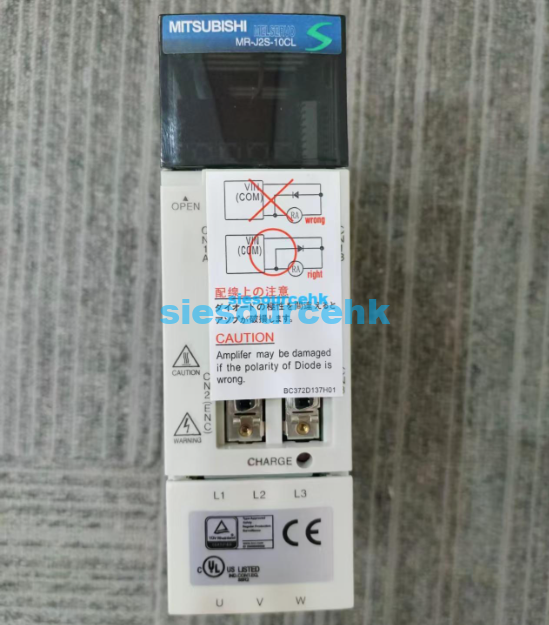
The Mitsubishi MDS-A-BT-4 is a sealed AC servo drive from Mitsubishi Electric’s MDS-A series, engineered for CNC machine tool applications where precision motion control and long-term reliability are non-negotiable. For procurement teams and maintenance engineers sourcing this discontinued-but-still-active component, understanding its technical envelope, system compatibility, and realistic pricing is the difference between a smooth retrofit and a costly mismatch.
What Is the Mitsubishi MDS-A-BT-4 and Where Does It Fit?
The MDS-A/B series represents Mitsubishi’s centralized-rectification, distributed-drive architecture for CNC systems. A typical configuration includes a power supply unit (MDS-A-CV or MDS-A-CR), one or more servo drives for feed axes (MDS-A-V1/V2), a spindle drive (MDS-A-SP), and a battery unit for absolute encoder position retention.
The MDS-A-BT-4 falls within this ecosystem as a sealed AC servo driver. Key specifications gathered from supplier documentation and platform listings:
| Parameter | Value |
| Type | AC Servo Driver (sealed) |
| Input Voltage | AC 200–240V |
| Output Current | 2.0 A |
| Weight | 2.5 kg |
| Dimensions | 200 × 130 × 120 mm |
| Sealing | Yes (sealed enclosure) |
| Certification | CE |
| Origin | Japan |
The sealed enclosure matters in environments where coolant mist, metal dust, or oil vapor are present — conditions typical on shop floors running lathes and machining centers. In such settings, an open-type IP00 drive would require a separate sealed cabinet, adding cost and thermal management complexity.
Technical Specifications: What the Numbers Mean in Practice
A 2.0 A rated output current positions the MDS-A-BT-4 in the low-to-mid power range within the MDS-A family. For context, the broader MDS-A/B servo drive lineup spans 0.1 kW to 15 kW per single axis (V1 series), while spindle drives reach up to 30 kW.
What the specs tell an engineer:
- AC 200–240V input aligns with standard three-phase industrial supply in most Asian and European markets. If your facility runs on 380V or 460V, a step-down transformer or the correct power supply unit variant is required.
- 2.0 A output suits smaller servo motors — typically in the 0.2–0.5 kW class. Think feed axes on compact CNC lathes, tool changers, or auxiliary positioning axes rather than heavy-cutting spindle applications.
- Sealed construction eliminates the need for a dedicated dust-proof enclosure in moderately contaminated environments, reducing panel footprint.
The MDS-A series uses three-loop control — current loop → speed loop → position loop — with standard encoder resolution of 100,000 pulses/rev and nanometer-level command input when paired with Mitsubishi’s MELDAS CNC controllers. This makes the drive inherently compatible with the HA series servo motors, which span from 0.05 kW (HA053) up to 15 kW (HA-LH15K2).
How the MDS-A-BT-4 Integrates with CNC Machine Tools
Real-world deployment scenarios for this drive include:
- CNC lathe feed axes — X and Z axis positioning with rigid tapping synchronization accuracy of ±0.01 mm when paired with a spindle drive supporting M19 positioning.
- Machining center auxiliary axes — tool turret indexing, pallet changer positioning, or door automation where compact size and sealed protection are valued over raw torque.
- Grinding machine feed control — torque control mode enables constant-force grinding with pressure fluctuation held within ±5%, critical for surface finish requirements of Ra ≤0.8 μm.
- Retrofit and legacy maintenance — many shops operating Mitsubishi MELDAS 50/60 series CNC controllers still run MDS-A drives. When one fails, a direct replacement avoids controller reconfiguration.
The architecture requires a DC bus shared across all drives via the power supply unit. Each MDS-A-BT-4 connects to the L+/L− bus and outputs U/V/W to the motor. Control power arrives via L11/L21 terminals. This bus-based design means a single power supply unit failure takes down the entire axis group — a consideration for maintenance planning.
MDS-A-BT-4 Price Factors and Cost Drivers
Pricing for the Mitsubishi MDS-A-BT-4 varies significantly based on condition, availability, and supplier channel. Here is what drives the numbers:
| Factor | Impact on Price |
| New vs. refurbished | New units command 40–80% premium over tested refurbished stock |
| Sealed vs. open variant | Sealed construction adds 10–15% over equivalent open-frame models |
| Supplier location | Japan-origin stock carries premium; China-based distributors offer lower list prices |
| Warranty period | Extended warranty (12–18 months) adds 8–12% to unit cost |
| Quantity | Single-unit purchases pay list price; volume orders see 5–15% discount |
Current market pricing observed across multiple B2B platforms:
- SieSource HK: $235.71 per unit (listed, new condition)
- Chinese B2B distributors: ¥277–¥996 per unit depending on supplier and condition
- European/US industrial suppliers: typically
200–400 for equivalent MDS-A series units in tested condition
The wide range reflects the component’s legacy status. Mitsubishi has progressively shifted focus to the MELSERVO J4/J5 series for general automation, but the MDS-A line remains supported for CNC machine tool applications where system-level replacement is impractical.
For buyers, the real cost question is not just unit price — it is total cost of ownership including:
- Shipping time (3–7 business days for stocked items vs. 4–8 weeks for special orders)
- Pre-sale testing and quality verification
- Technical support availability for integration questions
- Return policy and warranty claim process
Evaluating Suppliers: A Practical Checklist
Since the MDS-A-BT-4 sits in the legacy-but-active category, supplier selection carries more weight than for current-production parts. Here is what to verify before committing:
- Stock verification: Request actual photos and serial numbers, not stock images. Many listings show generic product photos.
- Testing protocol: Confirm whether the unit has been bench-tested under load. A powered-on LED display is not the same as a functional test.
- Firmware and parameter backup: Ask whether the supplier can provide the original parameter set or expects you to reconfigure from scratch. Parameter mismatch is the most common cause of post-installation faults.
- Motor compatibility: The MDS-A-BT-4 must pair with the correct HA-series motor and encoder combination. Mismatched encoder resolution triggers position error alarms immediately.
- Power supply unit pairing: Verify that your existing MDS-A-CV or MDS-A-CR unit provides sufficient DC bus capacity. The formula: required power > total spindle power + (0.7 × total servo power) for multi-axis systems.
- Compliance documentation: CE marking is standard. If your facility requires UL or specific regional certifications, confirm availability before purchase.
SieSource HK (siesourcehk.com) lists the MDS-A-BT-4 at $235.71 with new-condition availability, positioning it as a competitive option for buyers who need a verified unit without waiting for special-order lead times. The listing also references the broader MELSERVO servo system family, which is useful if your application can accept a newer-series replacement rather than a strict drop-in match.
Replacement Strategy: MDS-A-BT-4 vs. Newer Alternatives
When a drive fails and the production line is down, the fastest path to restoration is a direct replacement. But for long-term planning, consider the upgrade trajectory:
- Direct replacement (MDS-A-BT-4): Zero reconfiguration, immediate drop-in. Best for maintaining legacy CNC systems where downtime cost exceeds component price.
- Upgrade to MELSERVO J4 series: Higher speed response (2.0 kHz vs. MDS-A’s older architecture), 17-bit encoder (131,072 pulses/rev), built-in STO safety function. Requires interface adaptation and motor compatibility check.
- Upgrade to MELSERVO J5 series: Multi-protocol support (EtherCAT, EtherNet/IP, CC-Link IE TSN), firmware-upgradeable network functionality. Significant integration effort but future-proofs the system.
The decision hinges on the machine’s remaining service life. A 15-year-old CNC lathe with three more years of planned production justifies a direct MDS-A-BT-4 replacement. A machine slated for another decade of operation may warrant a series upgrade — but only if the CNC controller supports the newer drive’s communication interface.
FAQ
Is the Mitsubishi MDS-A-BT-4 still in production?
Mitsubishi Electric continues to support the MDS-A series for CNC machine tool applications, though the product is considered a legacy line. New units are available through authorized distributors and specialized industrial suppliers, but lead times can extend during supply constraints.
What is the typical price range for the MDS-A-BT-4?
Pricing ranges from approximately 235 to 400 per unit for new condition, depending on supplier channel, warranty terms, and region. Refurbished units in tested condition may be available at 40–60% of new-unit pricing.
Which servo motors are compatible with the MDS-A-BT-4?
The MDS-A-BT-4 is designed to drive Mitsubishi HA-series servo motors. The correct motor-drive pairing depends on power rating and encoder type. Always verify encoder resolution compatibility (standard 100,000 pulses/rev for MDS-A architecture) before installation.
What is the lead time for ordering the MDS-A-BT-4?
For stocked items from suppliers like SieSource HK, shipping typically occurs within 3–7 business days. Special orders or units requiring sourcing from Japan may take 4–8 weeks. Confirm stock availability and testing timeline before placing urgent orders.
Does the MDS-A-BT-4 require a separate power supply unit?
Yes. The MDS-A/B architecture uses a shared DC bus powered by a dedicated power supply unit (MDS-A-CV for power regeneration type or MDS-A-CR for resistive regeneration type). The servo drive connects to the DC bus, not directly to AC mains.
What safety functions does the MDS-A-BT-4 include?
The MDS-A series incorporates dual-channel emergency stop circuitry, overcurrent protection, overload protection, overvoltage protection, and overheating protection. The system requires 3rd-class or higher grounding. After power-off, wait at least 10 minutes before servicing to allow residual charge dissipation.
Reference Sources
- Mitsubishi Electric MELSERVO Series Official Documentation — MELSERVO-J4/J5/J3/JE series technical specifications, safety functions, and encoder standards. Available at: https://www.mitsubishielectric.com/fa/en/products/motion-control/servo
- Mitsubishi MDS-A/B Series CNC AC Servo/Spindle System Technical Overview — Architecture, wiring specifications, power capacity calculation, and safety requirements. Source: https://www.gbplc.com/2026/05/26/mitsubishi-mds-a-b-series/
- IEC 61800-5-1: Adjustable Speed Electrical Power Drive Systems Safety Requirements — International standard for servo drive safety functions including STO compliance.
- IEC 60204-1: Safety of Machinery — Electrical Equipment of Machines — Grounding and emergency stop circuit requirements referenced in MDS-A series installation guidelines.
- SieSource HK Product Listing — MDS-A-BT-4 specifications, pricing, and availability. Available at: https://siesourcehk.com/product/mitsubishi-servo-drive-mds-a-bt-4/
- ISO 13849-1: Safety of Machinery — Safety-Related Parts of Control Systems — Framework for evaluating safety function reliability in servo drive emergency stop circuits.