



Blog
What is the Festo ISO Cylinder DNC? Core Pneumatic Working Principles & Engineering Classifications

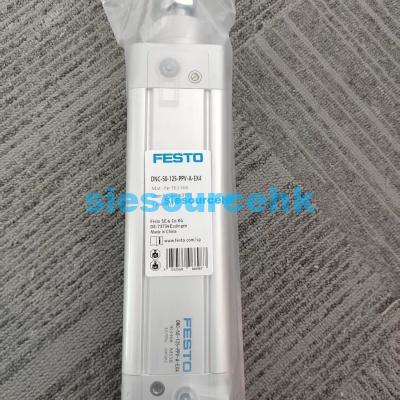
The Festo ISO Cylinder DNC is a double-acting profile pneumatic actuator designed to convert compressed air energy into linear motion. Engineered to conform with historical ISO 6431 and contemporary ISO 15552 standards, this cylinder serves as a reliable workhorse in high-throughput factory automation systems worldwide.
In industrial automation environments, linear actuators face high cyclic loads, temperature extremes, and particulate contamination. The Festo ISO Cylinder DNC addresses these challenges by incorporating high-tensile profile aluminum barrels, magnetic pistons for non-contact position sensing, and optimized sealing compounds. Understanding its core operation helps engineers optimize machinery duty cycles.
Core Working Principle of Double-Acting Actuators
A double-acting pneumatic cylinder operates by applying compressed air alternately to the advance and retract chambers. When air enters the rear port, pressure forces the internal piston forward, extending the piston rod. Conversely, venting the rear chamber while pressurizing the front port retracts the rod back into the aluminum profile barrel.
Unlike single-acting cylinders that rely on mechanical springs for return stroke energy, double-acting systems deliver consistent force in both directions. This design makes the Festo ISO Cylinder DNC highly suited for applications requiring controlled extension and high-force retraction.
- Piston Rod Options: Standard single rod, heat-resistant coatings, or through piston rod configurations (S2) for balancing lateral forces.
- Profile Housing: Closed slot profiles that allow integration of proximity sensors directly into the cylinder body to save space.
- Standard Compliance: Designed strictly according to the ISO 15552 envelope dimensions to guarantee complete dimensional swap-ability.
Decoding ISO 15552 Standards: The Foundation of Cross-Brand Cylinder Interchangeability
Modern automation projects rely heavily on standardized components to reduce design cycles and simplify global spare parts procurement. The ISO 15552 standard specifies the mounting interface, flange dimensions, bore sizes, and accessory clearances for profile cylinders. Because the Festo ISO Cylinder DNC complies with these ISO parameters, it provides seamless dimensional swap-ability.
By establishing absolute dimensional standards, ISO 15552 allows engineers to replace legacy units with equivalent actuators from other manufacturers. This cross-brand compatibility prevents single-source supply chain bottlenecks and minimizes unplanned machinery downtime during maintenance events.
| Component Dimension Parameter | ISO 15552 Compliance Standard | Practical Engineering Advantage |
|---|---|---|
| Bore Diameters (mm) | 32, 40, 50, 63, 80, 100, 125 | Predictable force profiles across multiple brands. |
| End Cap Mounting Pattern | Square matrix with ISO metric threads | Guarantees standard accessory swap-ability (e.g., clevises). |
| Piston Rod Threads | Standardized metric male or female threads | Simplifies coupling selection for linear alignment couplers. |
| Cylinder Envelope Cross-section | Profile or tie-rod geometry with sensor slots | Direct installation of non-contact proximity sensors. |
Technical Sizing & Force Profile of ISO Actuators
When sizing the Festo ISO Cylinder DNC or selecting an ISO 15552 equivalent, calculating theoretical forces is a fundamental starting point. Pneumatic output force is a direct function of the active piston surface area and the working system pressure.
The general engineering formula for calculating theoretical advance force (F_adv) in Newtons is:
Where represents the operating pressure in bar, and represents the internal cylinder bore size in centimeters. For retraction force (), the cross-sectional area of the piston rod () must be subtracted from the total piston area, resulting in slightly lower retraction forces:
Industrial Automation Case Studies: Heavy-Duty Applications of DNC Series in Packing & Assembly Lines
In high-volume manufacturing, linear actuators are deployed across a variety of demanding applications. The Festo ISO Cylinder DNC is frequently selected for material handling, heavy assembly, and industrial secondary packaging systems. Its rugged construction enables it to perform reliably over millions of continuous duty cycles.
Case Study 1: High-Payload End-of-Line Palletizers
In large-volume production, palletizing lines require actuators capable of handling heavy boxes and pallets continuously. For outdoor or variable-temperature storage terminals, components are subject to condensation and thermal fluctuations. Under these conditions, the Festo ISO Cylinder DNC with a large bore size (such as the DNC-125-100-PPV-A-S2) is frequently deployed to position and clamp heavy pallets.
The adjustable pneumatic cushioning (PPV) plays a crucial role here, absorbing kinetic energy at the end of the stroke. Without proper PPV adjustment, high inertial mass can cause mechanical shock, leading to end-cap stress and premature fatigue in the mounting brackets.
Case Study 2: Pneumatic Clamping & Punching Fixtures
Metal stamping and robotic welding assembly cells require robust actuators to secure raw sheet metal in place. These environments are characterized by welding spatter, high dust loads, and aggressive ambient oils.
By utilizing slot-integrated proximity sensors (such as Festo SME/SMT series) within the cylinder profile, the control system receives reliable feedback without exposing wiring to external physical hazards. Additionally, using a double-rod “S2” configuration distributes high offset loads evenly, preventing guide rod deflection under extreme lateral stress.
Sizing and Selecting the Right Cylinder Configurations: A Step-by-Step Technical Tutorial
Selecting the correct pneumatic actuator is critical to avoiding component failure or system over-engineering. Sizing too small results in stalled movements, while oversized cylinders waste valuable compressed air. This technical checklist outlines a robust path for choosing a Festo ISO Cylinder DNC or equivalent.
Step 1: Identify Load and Speed Requirements
│
├── Determine vertical/horizontal payload mass
└── Establish required cycle times and stroke velocity
│
Step 2: Calculate Force Margin
│
├── Calculate theoretical force at 6 bar working pressure
└── Apply a standard safety factor (typically 1.3 to 1.5)
│
Step 3: Define Mechanical Parameters
│
├── Select internal bore size (e.g., 125mm) and stroke (e.g., 100mm)
└── Choose piston rod options: through rod (S2) or standard
│
Step 4: Configure Cushioning and Sensing
│
├── Specify PPV (adjustable pneumatic cushioning) for high kinetic energy
└── Confirm 'A' configuration (magnetic piston) for sensor feedback
The Role of End-Position Cushioning (PPV vs. PPS)
A primary differentiator among ISO 15552 actuators is the method of end-stroke deceleration. Kinetic energy dissipation is critical to extending the life of the cylinder and protecting adjacent mounting frames.
- Adjustable Pneumatic Cushioning (PPV): Uses adjustable needle valves integrated into the cylinder end caps. This allows maintenance engineers to manually throttle the escaping exhaust air at the very end of the stroke. PPV is ideal for varying payloads or high-speed operations where custom tuning is mandatory.
- Self-Adjusting Pneumatic Cushioning (PPS): Features factory-machined exhaust channels that automatically adapt to incoming loads and speeds. While PPS reduces installation and commissioning labor, it is not recommended for environments with extreme variations in product weights.
- Elastomeric Cushioning (P): Relies on basic rubber bumpers at both ends of the stroke. This is suitable only for lightweight, low-speed applications with low kinetic energy.
Transitioning Legacy Systems: Modern ISO 15552 Standard Replacement Solutions
Pneumatic cylinders are wear-and-tear components. Over years of high-cycle operation, dynamic seals naturally degrade, leading to internal air leakage and reduced force output. When planning replacements for legacy installations of the Festo ISO Cylinder DNC, engineers must evaluate upgrade options that align with current automation standards.
While original legacy cylinders are highly reliable, newer standards have introduced lighter profile geometries that maintain identical mounting footprints.
Upgrading Legacy DNC to Modern Festo DSBC Cylinders
The Festo DSBC series is the direct modern successor to the legacy Festo ISO Cylinder DNC line. Both cylinders strictly conform to the ISO 15552 standard, ensuring that they share identical core physical envelopes and mounting points. Upgrading to the newer series offers several technical advantages:
- Weight Reduction: The DSBC features a highly optimized aluminum extrusion profile that reduces the overall weight of the cylinder by up to 15%. This is especially beneficial in moving gantry or robotic arm end-of-arm tooling (EOAT) applications.
- Standard Self-Adjusting Cushioning: The modern replacement introduces the PPS self-adjusting cushion option, reducing setup times for high-speed automated packaging machines.
- Sensor Slot Optimization: Modern profiles feature sensor slots on multiple faces, allowing for more flexible sensor mounting angles compared to older designs.
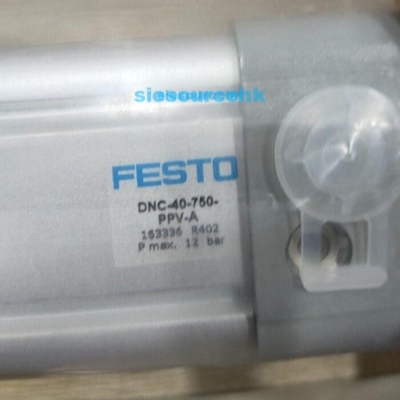
Product model
| DNC-32-150-PPV-A | DNC-63 | DNC-32-PPV-A | DNC-40-PPV-A |
| DNC-50-PPV-A | DNC-50-PPVA | DNC-63-PPV-A | DNC-80-PPV-A |
| DNC-100-PPV-A | 369195 | DNC-125-PPV-A | 163302 |
| DNC-32-75-PPVA-N3 | DNC-40-100-PPV-A | 163307 | DNC-32-80-PPV |
| DNC-32-50-PPV-A | DNC-63-PPVA | DNC-40-140-PPV-A | DNC-40-30-PPV |
| DNC-125-PPVA-CS 1646385 | DNC-32-80-PPV-A | DNC-32-125-PPV-A | DNC-40-430-PPV-A |
| DNC-80-PPV-A-2 | DNC-40-100-PPV-A 163341 | DNC-32-100-PPV-A | DNC-40-75-PPV-A /DSBC-4 |
| DNC-63-80-PPV-A | DNC-50-50-PPV-A | DNC-50-25-PPV | DNC-50-320-PPV-A |
| DNC-32-180-PPV-A-S2 | DNC-63-60-PPV-A | DNC-63-100-PPV | DNC-63-25-PPV-A |
| DNC-50-60-PPV | DNC-63-160-PPV-A | DNC-50-115-PPV-A | DNC-63-100-PPV-A |
| DNC-63-150-PPV-A | DNC-32-125-PPV-A-S2 163302 | DNC-50-25-PPV-A | DNC-63-200-PPV-A |
| DNC-50-260-PPV-A | DNC-50-250-PPV-A | DNC-32-500-PPV-A | DNC-40-750-PPV-A |
| DNC-80-20-PPV | DNC-80-80-PPV-A | DNC-50-80-PPV-A | DNC-40-25-PPV-A |
| DNC-63-320-PPV-A | 1376664 DNC-40250-PPV-A | DNC-63-100-PPVA-N3 1383582 | DNC-80-65-PPV-A |
| DNC-80-300-PPV-A | DNC-80-160-PPV | DNC-32-700-PPV-A | DNC-100-228-PPV-A |
| DNC-63-PPVA(369198) | DNC-50-125-PPV-A-EX4 | DNC-63-510-PPV-A | DNC-100-200-PPV-A |
| DNC-100-160-PPV-A | DNC-32-500-PPV-A (163316) | DNC-63-650-PPV-A-R3 | DNC-32-170-PPV-A |
| DNC-100-450-PPV-A | DNC-100-400-PPV-A16 | DNC-100-400-PPV-A | DNC-125-250-PPV-A |
| DNS-125-420-PPV-A-EX4 | DNC-125-300-PPV-A | DNC-125-300-P-A-S11 | DNC-63-1620-PPV-A |
| DNC-50-600-PPV-A-S2-KP | DNC-125-420-PPV-A-EX4 | DNC-125-100-PPV-A-S2 |
Complete Cross-Brand Interchangeability
Because the mounting interface is strictly governed by ISO 15552, maintenance teams are not locked into a single brand. When a replacement is urgent, cross-brand replacement units can be directly substituted. For instance, the Festo ISO Cylinder DNC can be replaced by:
- SMC CP96 / C96 Series: Known for excellent dust-resistant seals and high-precision piston guide rings.
- Airtac SE Series: Offers a highly cost-effective profile cylinder line that matches all ISO 15552 dimensions perfectly.
- Aventics PRA Series: Optimized for hygienic washdown environments, popular in food and beverage processing plants.
When swapping brands, it is critical to confirm that the rod-end threads, overall length, and port sizing match perfectly. This ensures that existing rod clevises, foot mounts, and sensor switches can be re-used directly, maximizing the value of your existing hardware investments.